

More news on this day
Delta Air Lines has been swept into a fresh wave of turbulence rocking U.S. airline stocks, as investors recalibrate expectations for the country’s biggest carriers amid higher fuel costs, heavy debt loads and a shifting outlook for travel demand going into 2026.
A Sector Rallies, Then Reverses in a New Stock Market Cycle
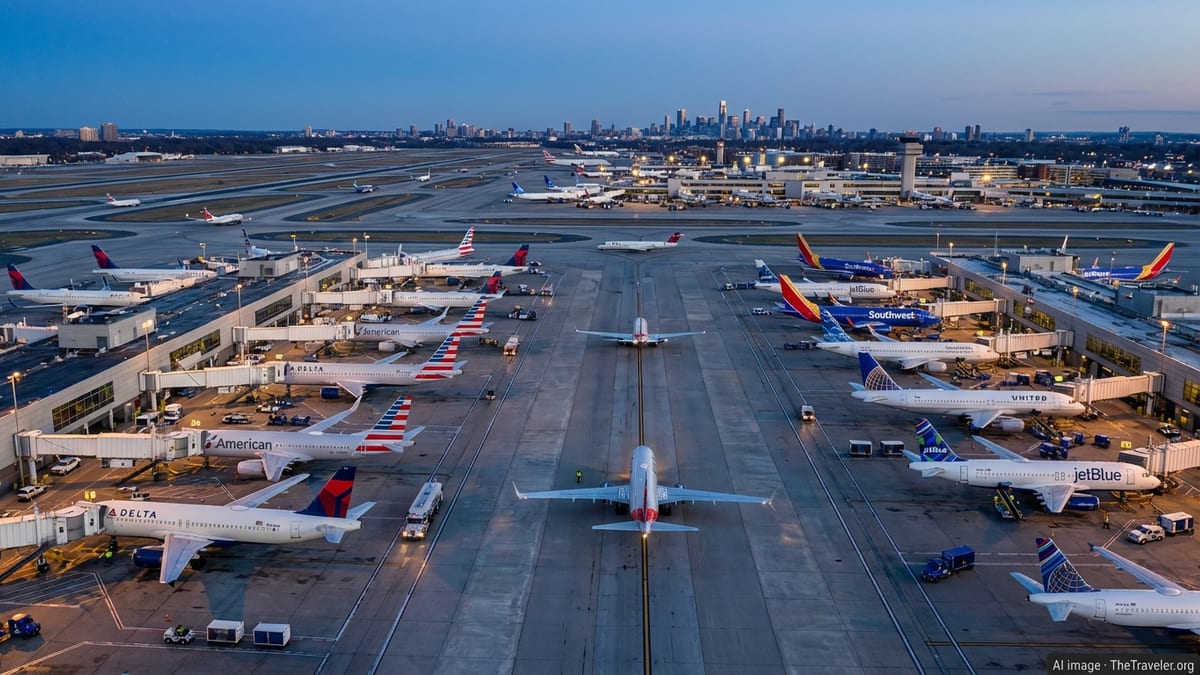
The past year has marked a dramatic turn for U.S. airline stocks. After a powerful, multi-quarter rally that saw Delta Air Lines, United Airlines, American Airlines, Southwest Airlines and JetBlue Airways recover sharply from the pandemic slump, the group is now wrestling with a harsher market reality. Rising oil prices, lingering debt and signs of softer domestic demand have triggered renewed volatility and a sweeping reassessment of the sector’s earnings power.
Delta, long viewed by Wall Street as the industry bellwether, has become emblematic of this new phase. Its shares touched an all-time closing high in early February before sliding back as fuel costs climbed and investors rotated out of more cyclical names. American, United, Southwest and JetBlue have traced similar arcs, rallying on hopes of a multi‑year profit boom, only to give back gains as forecasts were trimmed and operating risks resurfaced.
The result is what some analysts describe as a new American stock revolution in the airline space: a rapid repricing that is sorting perceived winners from laggards in real time. Rather than trading as a single high-beta bloc, the major carriers are being judged airline by airline, balance sheet by balance sheet, and route by route, with valuations moving accordingly.
This shift is playing out against a backdrop of broader market strength. While the major U.S. equity indices remain near record highs, the S&P 500 passenger airlines index has lagged, reflecting investor unease with the sector’s thin margins and vulnerability to economic and geopolitical shocks, even as travel demand stays historically robust.
Delta’s Premium Pivot Under the Microscope
Delta’s stock performance in early 2026 illustrates how quickly sentiment can turn. Data from market trackers show the carrier closing at 69 dollars on February 13 after notching a record high a week earlier, a remarkable recovery from its 52‑week low in the mid‑30s. Yet shares dropped nearly 5 percent in afternoon trading on February 19 as rising oil prices reignited concerns over profit margins.
Investors have been balancing that volatility against an otherwise strong fundamental story. Delta’s management has outlined guidance targeting roughly 20 percent earnings growth in 2026, with an earnings per share range that analysts estimate between the mid‑6 dollar and mid‑7 dollar levels. The airline is forecasting more than 3 billion dollars in free cash flow and continues to command a valuation premium over many domestic peers based on its larger share of premium cabins, strong loyalty revenue and operational reliability.
Strategically, Delta is deepening its premium pivot. The carrier has announced a major order for Boeing 787‑10 widebody aircraft, signaling confidence in long‑haul international demand and fuel‑efficient fleet renewal. Investments in onboard connectivity, including free high‑speed Wi‑Fi across much of its fleet, and the expansion of premium seating are designed to secure higher-yield customers and partially insulate earnings from cyclical swings in basic leisure demand.
Even so, the stock’s recent pullback highlights persistent structural challenges. Operating margins remain well below the broad market average, and the airline still carries significantly more leverage than many blue-chip industrial peers. For investors, the question is whether Delta’s premium strategy can sustain earnings through a period of higher fuel costs and a more cautious consumer, or whether recent highs marked the peak of the post‑pandemic rebound trade.
American Airlines: Debt, Labor Tensions and a Delicate Repricing
American Airlines has been one of the most closely watched names in this new stock market phase, both for its heavy debt load and for the sharp swings in its share price. The carrier entered 2026 still working through the financial overhang of the pandemic, even after meeting a high‑profile goal of cutting total debt by 15 billion dollars from its 2021 peak.
Recent earnings underscored that tension. American reported fourth‑quarter 2025 results that fell short of Wall Street’s expectations, with adjusted earnings per share roughly half of prior forecasts and revenue growth that, while solid, failed to close the profitability gap with Delta and United. Management projected 2026 adjusted earnings between 1.70 and 2.70 dollars per share and reiterated plans to reduce total debt to below 35 billion dollars in the coming years.
Markets have responded with cautious skepticism. American’s stock has swung between sharp rallies on days when guidance or revenue trends appear to improve and steeper selloffs when fuel prices rise or storm disruptions, labor unrest and regulatory scrutiny dominate headlines. A sector-wide decline on February 19 left American down more than 5 percent intraday as higher crude prices pressured the group.
Leadership dynamics have added another layer of uncertainty. Flight attendant unions have escalated public pressure on the company, including a no‑confidence vote in the chief executive and calls for more aggressive changes to improve operational performance and profit sharing. At the same time, senior commercial leadership has been reshaped to repair relationships with corporate clients and travel agencies after a controversial direct‑booking strategy backfired in 2024. The interplay between those internal shifts and market expectations is now a key driver of American’s stock trajectory.
United and Southwest: Diverging Paths in the Same Turbulent Sky
United Airlines and Southwest Airlines have both been swept into the latest airline stock swing, but the market is treating them very differently. United, which has leaned heavily into international expansion and premium seating, has largely been grouped with Delta as a perceived structural winner, while Southwest faces tougher questions about its evolving business model and new ancillary revenue push.
Analyst commentary in early 2026 has maintained a generally constructive view on United, with price targets lifted into the low‑130 dollar range and expectations for more than 2 billion dollars in free cash flow over the next year. As operational disruptions ease and its global network expansion continues, United is seen as one of the best‑positioned carriers to capitalize on persistent demand for long‑haul and premium travel, even as domestic growth shows signs of slowing.
Southwest’s story is more unsettled. Once viewed as the sector’s most reliable low‑cost growth engine, the Dallas‑based carrier is in the midst of a strategic pivot that includes the introduction of bag fees, extra‑legroom seating and more complex network structures. Those moves are expected to lift earnings over time, with some analysts penciling in mid‑single‑digit earnings per share for 2026, but they also carry execution risk and threaten to blur the brand’s longstanding simplicity message.
The market’s verdict so far has been mixed. While Southwest shares participated in last year’s airline rebound and have rallied on announcements of new revenue initiatives, they have also been hit hard when the sector sells off, particularly on days when fuel prices spike or travel demand appears to soften. Within the broader American stock reset, United and Southwest embody the bifurcated investor view: favoring scale and premium exposure on one side, but demanding clear, credible transformation plans on the other.
JetBlue and Smaller Carriers Fight for Relevance With Investors
JetBlue Airways and other mid‑tier U.S. carriers have felt the tremors of the new airline stock environment acutely. For these smaller players, which lack the global scale of Delta or United and the sprawling domestic networks of American and Southwest, each shift in sentiment can mean outsized moves in their share prices.
JetBlue, in particular, is still navigating the fallout from a failed merger attempt and the unwinding of alliances that once promised greater scale along the U.S. East Coast. The carrier has refocused on cost control and network optimization, trimming unprofitable routes while trying to defend its brand as a customer‑friendly alternative in crowded leisure markets. Yet its stock has remained volatile, often swinging more sharply than larger rivals on days when airline headlines turn negative.
Investors have zeroed in on whether JetBlue can carve out a sustainable niche in an increasingly consolidated industry. Its balance sheet is more constrained than those of the largest network carriers, and unit costs are higher than many ultra‑low‑cost competitors. That has left the airline particularly vulnerable to shifts in domestic leisure demand and fuel prices, two of the most important variables in the current market reset.
For now, market participants appear to be rewarding carriers that can demonstrate either clear scale advantages or a credible premium strategy. JetBlue and similarly sized airlines are working to convince investors they can deliver consistent returns without the same breadth of network or loyalty economics, an uphill battle when risk appetite is being repriced across the airline complex.
Fuel, Debt and Demand: The Macro Forces Behind the New Revolution
Behind the daily stock moves of Delta, American, United, Southwest, JetBlue and their peers lie three powerful macro forces: fuel costs, debt burdens and evolving demand patterns. Together they form the backbone of the new American stock revolution playing out in the airline sector.
The most immediate pressure point is fuel. Oil prices have climbed in recent weeks, and airline stocks have sold off in tandem as investors rerun their models with higher assumptions for jet fuel expenses. Because fuel is one of the industry’s largest variable costs, even modest increases can quickly erode operating margins, especially for carriers with less ability to pass on higher costs through fares or fees.
Debt is the second key variable. Nearly every major U.S. airline borrowed heavily during the pandemic to survive the collapse in air travel, and while several carriers have made substantial progress in paying down obligations, balance sheets remain stretched compared with pre‑2020 levels. Markets are now sorting between airlines that can comfortably service and reduce that debt using free cash flow and those for which interest costs and refinancing risks will be ongoing headwinds.
Finally, demand is normalizing from the extraordinary post‑pandemic surge. Domestic leisure travel, which powered much of the initial recovery, has shown pockets of softness amid broader economic uncertainty and fluctuating consumer confidence. By contrast, premium and long‑haul international traffic has held up better, benefiting carriers like Delta and United that have invested heavily in those segments. How this demand mix evolves through 2026 will shape not just earnings, but also which airlines are viewed as long‑term winners by equity investors.
From Index Trade to Stock Picker’s Market
One of the defining features of the latest airline stock cycle is the shift from broad, index‑style trading to more granular stock selection. In the immediate aftermath of the pandemic, investors tended to buy or sell the entire sector at once, treating airline shares largely as a leveraged bet on the global travel rebound.
That phase is fading. As financial results and balance sheet trajectories diverge, fund managers are increasingly differentiating between carriers. Delta and United have attracted support on the basis of relative profitability, premium exposure and more disciplined capacity growth. American, while still a core part of many airline baskets, is often discussed through the lens of its higher leverage and more fragile margins. Southwest is under scrutiny as it retools its model, and JetBlue is being judged on its ability to restore profitability in a challenging competitive landscape.
This stock picker’s market has real implications for volatility. Individual airline names now routinely post high‑single‑digit percentage moves in a single session in response to fuel headlines, labor news or updated guidance. While the sector as a whole remains highly sensitive to macro forces, the spread in valuation multiples between carriers has widened, reflecting a more nuanced investor approach.
For airline executives, that evolving market structure raises the stakes for strategic clarity and communication. Earnings calls, investor days and guidance updates are being dissected not just for near‑term numbers, but for evidence that management teams can navigate a more demanding shareholder base that is no longer willing to reward the group uniformly.
What This Means for Travelers and the Broader Travel Economy
The stock market’s repricing of U.S. airlines carries implications that stretch beyond trading screens and earnings calls. For travelers, the new environment is likely to mean a continued focus on premium experiences, new fees and evolving route networks as carriers chase profitable growth and try to reassure investors about return on capital.
Delta and United’s tilt toward higher‑yield cabins and long‑haul routes will likely preserve and even expand premium offerings at major hubs, while American’s efforts to rebuild its reputation as a global carrier may translate into more consistent operations and product upgrades on key international corridors. Southwest’s introduction of additional revenue streams, from bag fees to differentiated seating, will test customer loyalty but could also support network expansion if the strategy succeeds.
At the same time, carriers under greater financial pressure may trim marginal routes, scale back seasonal capacity or delay fleet investments, particularly in smaller markets where demand is more variable. That dynamic could affect connectivity for secondary cities and the leisure destinations that depend on them, even as big coastal and Sun Belt hubs remain well served.
For the broader travel economy, which includes tourism boards, hotels, airports and local businesses, the stakes are significant. Airline capacity decisions driven by stock market expectations can reshape visitor flows, while investment in new aircraft and airport infrastructure can unlock fresh routes and markets. As Delta and its peers navigate this volatile new stock market phase, the ripple effects will extend well beyond Wall Street, influencing how, where and at what price Americans and international visitors travel in the years ahead.