

More news on this day
A routine Delta Air Lines hop between Atlanta and Tallahassee was forced to divert mid‑air, underscoring how quickly short regional flights can be disrupted and what options travelers have when plans suddenly change.
Get the latest news straight to your inbox!
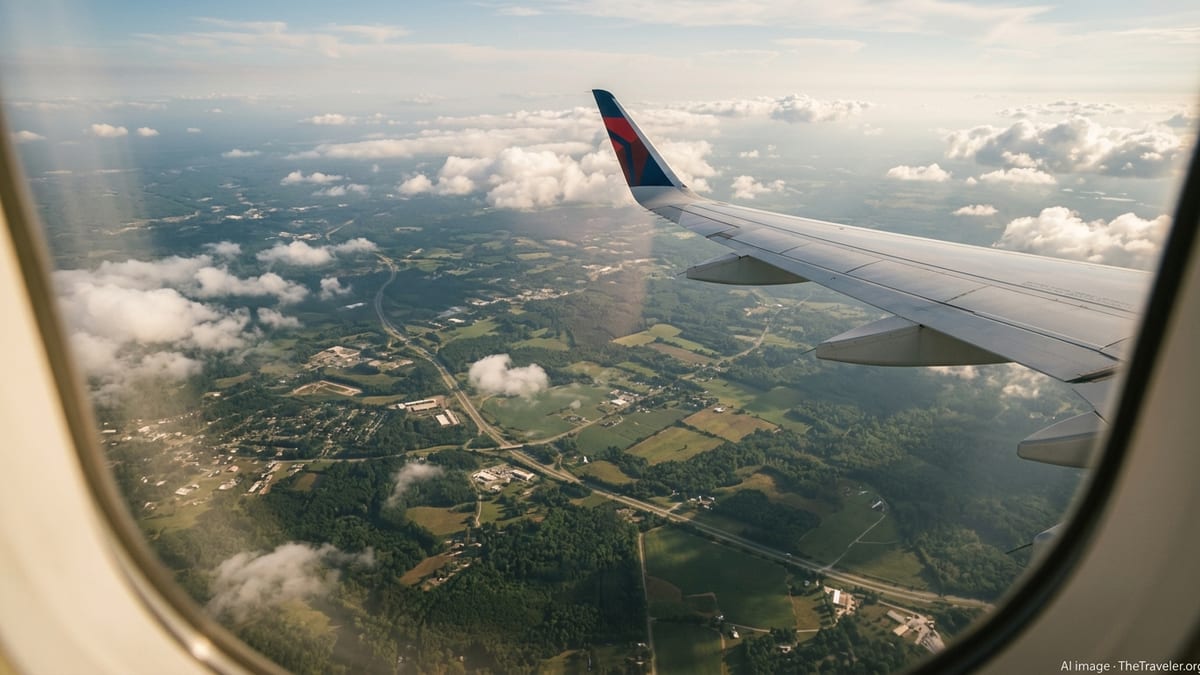
What Is Known About the Atlanta–Tallahassee Diversion
Publicly available flight tracking and traveler reports indicate that a recent Delta Air Lines service between Hartsfield–Jackson Atlanta International Airport and Tallahassee International Airport did not complete its planned route, instead diverting to an alternate airport en route. The flight, typically operated by a short‑haul narrow‑body aircraft on a sector of just over an hour, was part of the airline’s busy shuttle‑style schedule linking the Georgia hub with the Florida Panhandle.
Early indications point to a mid‑flight decision taken after departure from Atlanta, with the aircraft changing course and landing at another airport so that conditions could be reassessed on the ground. While such events are rare on the busy Atlanta–Tallahassee corridor, they are not unprecedented on Southeastern routes, particularly during periods of unsettled weather or congestion around the nation’s busiest hub.
Operational summaries for the route show that Delta runs multiple daily frequencies between the two cities, giving the airline some flexibility to rebook passengers after a disruption. In this case, affected travelers were left facing missed connections in Atlanta, delayed arrivals into Tallahassee, and the need to navigate reissued tickets and altered itineraries once the aircraft was safely on the ground.
At the time of the diversion, other services into and out of Atlanta were also experiencing delays and reroutings, according to real‑time tracking logs and traveler accounts. That broader backdrop suggests the diversion formed part of a wider pattern of operational strain rather than an isolated incident limited to a single flight.
Why Airlines Divert Short Regional Flights
On paper, a short leg between Atlanta and Tallahassee might appear straightforward, but regional routes are often among the first to be adjusted when conditions tighten. Airspace congestion around a major hub, fast‑changing thunderstorms common in the Southeast, and ground restrictions such as ramp closures or temporary runway constraints can all quickly narrow the margin for on‑time arrivals.
When crews determine that continuing to the scheduled destination is no longer the safest or most practical option, procedures require a diversion to an alternate airport with suitable runway length, weather, and ground services. For flights originating or ending in Atlanta, alternates may be scattered across neighboring states, which can leave passengers suddenly arriving in an unexpected city with limited advance notice.
Even short flights carry fuel reserves calculated to account for potential holding patterns and diversions. However, extended time in holding stacks around a busy hub can erode those reserves, making a refueling stop necessary to maintain safety margins. In such situations, a diversion can be a proactive step to avoid more serious complications later in the flight.
Because these decisions are shaped by real‑time conditions, passengers typically receive only limited advance warning. Instead, travelers experience the consequences in the form of updated arrival times on mobile apps, in‑cabin announcements about route changes, and gate screens that abruptly shift to show a new destination or status.
Immediate Impact for Passengers On Board
For travelers seated on the diverted Atlanta–Tallahassee service, the most immediate effect was time. A journey that should have taken a little over an hour extended into several hours of uncertainty, including unscheduled ground time at an alternate airport and the subsequent process of refueling, inspections, or crew reassignment before any onward travel could resume.
Passengers connecting onward from Tallahassee or Atlanta were especially vulnerable. Tight layovers rapidly evaporated as the aircraft left its planned route, resulting in missed domestic and international connections farther down the line. Some travelers faced overnight stays or same‑day rebookings onto later flights within Delta’s network or, in some cases, on partner carriers operating alternative routings.
Disruptions of this kind can also affect baggage flows. When a flight does not reach its planned destination, checked bags may remain on the diverted aircraft until operations teams can process and reroute them. That can introduce a lag between when passengers are rebooked and when their luggage catches up, particularly if the eventual itinerary involves a different aircraft type or a separate airport.
For families, business travelers on tight schedules, and visitors with fixed check‑in times at hotels or rental properties around Tallahassee and the Gulf Coast, the diversion introduced a ripple effect of rearranged ground transport, delayed meetings, and extra calls to accommodation providers to renegotiate late arrivals.
How Affected Travelers Can Navigate Rebooking and Care
When a flight diverts or is significantly disrupted, passengers are generally encouraged to rely first on digital channels rather than queuing at airport counters. Airline mobile applications and websites often display rebooking options within minutes of a schedule change, allowing travelers to select new flights from a list of available alternatives. For a short‑haul route like Atlanta to Tallahassee, that may include later same‑day departures, routings via another hub, or in some cases ground transport alternatives organized on an ad hoc basis.
Customer‑service agents at airports typically prioritize those with the most urgent needs, such as passengers facing missed international connections or those who require special assistance. Others may find faster solutions by using self‑service tools to confirm a new seat, then speaking with airport staff only if additional help is needed with items such as seat assignments for families or confirmation of baggage handling.
Travelers are also encouraged to keep boarding passes, baggage tags, and any receipts for incidental expenses, such as meals or local transport incurred during a prolonged disruption. These documents can be useful later when submitting feedback or inquiries through airline customer‑relations channels or, where applicable, via travel insurance providers that offer trip interruption coverage.
For those with time‑sensitive commitments at either end of the route, it can be worth exploring alternate airports in the region. The broader Southeast is served by multiple commercial airports, and in some cases it may be faster to accept a rebooking into a nearby city and complete the final leg by road rather than waiting for a direct replacement flight into Tallahassee itself.
What the Diversion Signals for Future Southeast Travel
The diversion on the Atlanta–Tallahassee route highlights how travel across the Southeastern United States is intertwined with conditions at Atlanta’s primary hub. When operations there come under pressure from weather or congestion, shorter spokes such as Tallahassee can feel the impact quickly, even when local conditions at the smaller airport seem relatively calm.
Recent patterns of delays and reroutings into alternate airports around the region, described in multiple public flight‑tracking logs and traveler accounts, suggest that passengers should treat tight same‑day connections through Atlanta with added caution during periods of active weather. Padding itineraries with extra connection time and maintaining flexible ground plans at the final destination can reduce the stress that accompanies sudden mid‑air changes.
For Tallahassee in particular, reliance on a small number of daily mainline or regional services into a single large hub means that any disruption can temporarily narrow the city’s air links with the rest of the country. That makes it especially important for visitors attending major events, government business, or university‑related activities to build contingency time into their schedules.
While diversions remain relatively uncommon when measured against the total number of daily flights on the route, the latest incident serves as a reminder that even short, familiar sectors are subject to the same complex operational pressures as long‑haul journeys. For passengers, understanding those dynamics and planning with them in mind can make an unexpected turn in the flight path a logistical challenge rather than a full‑blown travel crisis.