

More news on this day
Delta Air Lines passengers in Minneapolis and New York are facing a fresh wave of flight cancellations and delays as late-season winter weather and broader operational strains disrupt schedules across the eastern United States.
Get the latest news straight to your inbox!
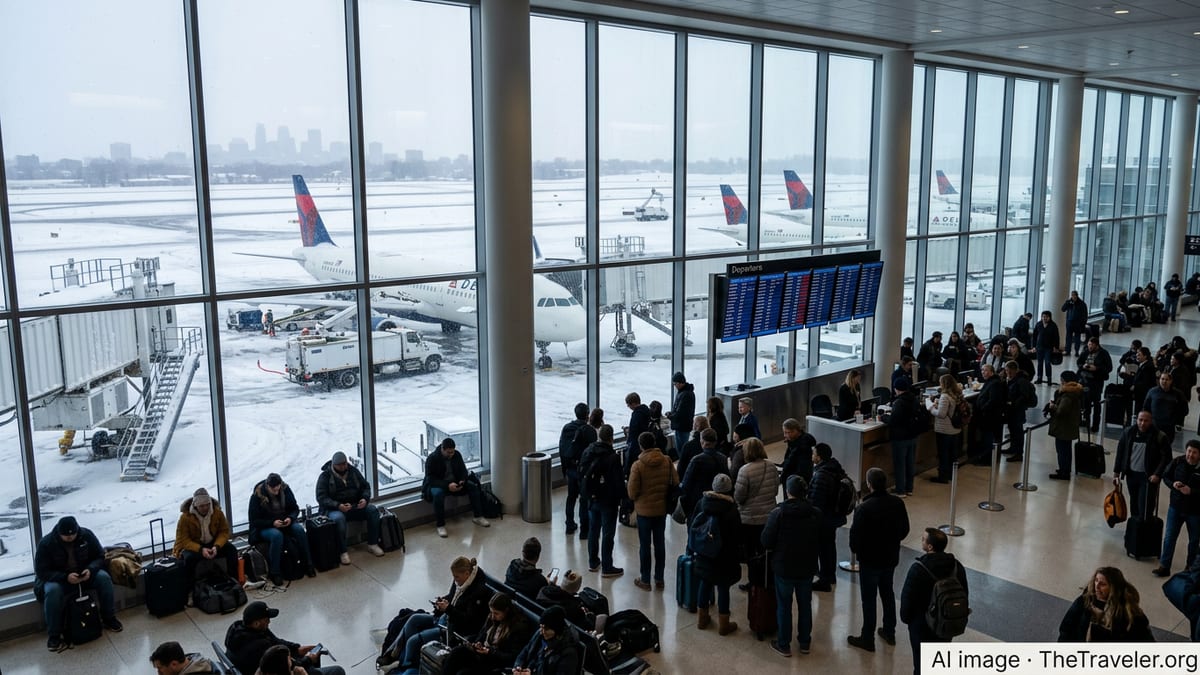
Late-Winter Storms Hit Key Delta Gateways
Publicly available airport status boards and traveler reports indicate that Minneapolis–Saint Paul International Airport has seen a sharp increase in Delta cancellations since the weekend, coinciding with a mid-March snowstorm that dropped several inches across the Twin Cities. The storm arrived as part of a broader North American system affecting the Upper Midwest and Great Lakes, tightening capacity on an already busy spring travel corridor.
Flight-tracking data and anecdotal accounts from passengers show that Delta has proactively thinned its schedule at Minneapolis, including some long-haul departures, in an effort to keep aircraft and crews positioned for later in the week. Travelers connecting through Minneapolis have reported being rebooked onto alternative routings or pushed to later dates as the carrier attempts to stabilize operations.
In New York, operational pressures are building on top of a winter season that has already seen elevated disruption levels for all major carriers. Recent winter storms across the Northeast affected airports in the New York region, and network adjustments in response to earlier weather events continue to ripple through Delta’s schedule. The combination of residual crew and aircraft imbalances with renewed weather concerns has left many itineraries vulnerable to last-minute changes.
Warnings of Continuing Disruptions for Eastern Cities
According to published coverage on U.S. aviation and travel platforms, Delta has been issuing updated travel advisories and weather-related waivers for parts of the Midwest and Northeast, signaling that irregular operations could persist for several days. These notices typically encourage customers traveling through affected hubs, including Minneapolis and New York, to consider shifting their plans within a defined date range without change fees or fare differences.
Industry analysis suggests that the airline is using these advisories to reduce day-of-travel strain on its network by prompting voluntary rebookings ahead of the worst of the disruption. By moving flexible passengers onto alternate flights before the storm peaks or before anticipated air traffic control constraints, the carrier can free up seats and resources for travelers with fewer options, such as those on international connections or essential-business itineraries.
Travel media reports also point to the possibility of additional schedule adjustments if the current storm system intensifies or if secondary impacts, such as deicing backlogs or crew duty-time limits, prove more severe than forecast. That outlook means travelers heading to or from New York and Minneapolis this week should prepare for continuing uncertainty, even if local weather appears to be improving at the time of departure.
Impact on Passengers and Key Routes
The surge in cancellations is particularly disruptive for passengers relying on Minneapolis and New York as connection points for domestic and international travel. Minneapolis serves as a major Delta hub for routes across the Upper Midwest, the Mountain West, and transatlantic destinations, while New York provides critical links to Europe, the Caribbean, and business centers along the East Coast.
Recent traveler accounts shared on public forums describe missed long-haul departures, unexpected overnight stays, and complex rebookings as Delta restructures its schedules. Some customers have reported being automatically rerouted through other hubs such as Atlanta or Detroit, resulting in longer travel times but preserving same-day arrival where possible. Others have faced multi-day delays when peak-demand flights filled quickly after the initial wave of cancellations.
On high-demand corridors between New York and Midwest cities, tighter capacity has translated into fewer available seats and limited flexibility once disruptions begin. Analysts note that when a carrier preemptively cancels flights in response to severe weather, the goal is to avoid large numbers of travelers stranded at airports late at night, but the trade-off is that some passengers may need to adjust travel dates entirely.
What Travelers Can Do Now
Consumer travel guidance emphasizes that affected passengers should first verify the status of their trips using Delta’s official channels and airport information displays, which typically update more quickly than third-party tools. Publicly available advisories suggest that travelers whose flights have been canceled or significantly delayed are being offered the option to change to nearby dates or alternate routes, subject to seat availability.
Experts in airline operations recommend that passengers with essential or time-sensitive trips out of Minneapolis or New York build in additional buffers, such as earlier departure days or longer connection times. For those yet to depart, monitoring multiple potential routings and being prepared to accept an alternative hub, aircraft type, or time of day can improve the chances of securing a workable itinerary.
Given the dynamic nature of the current storm system and the lingering effects of prior disruptions in the eastern United States, further cancellations remain possible with limited notice. Travelers planning to pass through Delta’s Minneapolis or New York operations over the coming days are being advised, in publicly available guidance, to stay alert to schedule changes, remain flexible, and allow extra time at the airport for rebooking and boarding procedures.