

More news on this day
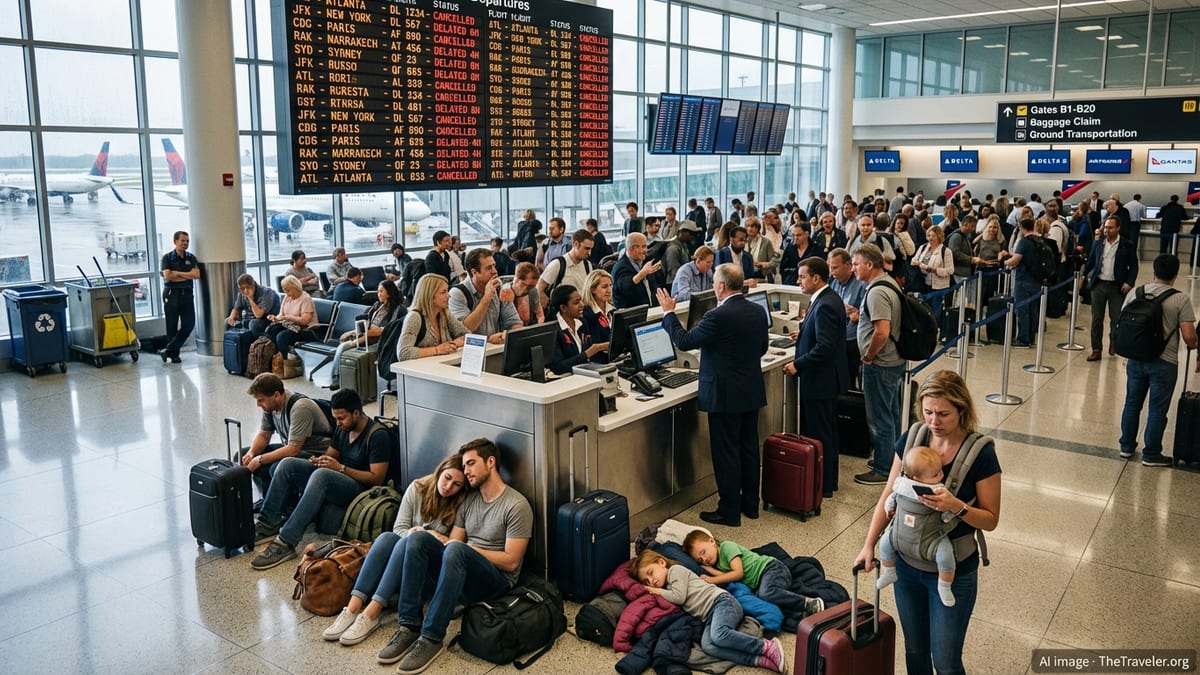
Delta Air Lines passengers faced a fresh wave of travel disruption this week as more than 70 flight cancellations and over 330 delays rippled across key routes linking the United States, Europe, North Africa and Australia, snarling journeys through major hubs including Atlanta, New York, Paris, Marrakech and Sydney.
Disruptions Hit Key Transatlantic and Long-Haul Gateways
The latest operational turmoil has been most visible at Delta’s core US hubs, with Hartsfield Jackson Atlanta International and New York’s John F. Kennedy and LaGuardia airports reporting clusters of cancellations and rolling delays throughout the day. Knock on effects quickly spread across the domestic network, as aircraft and crews were left out of position and later services struggled to depart on time.
Internationally, passengers connecting through Paris Charles de Gaulle, Marrakech Menara and Sydney Kingsford Smith were among those most affected, with Delta operated and partner services facing extended waits on the ground. Travelers on routes linking Atlanta and New York with Paris and Marrakech reported boarding, only to be held on stand or returned to the terminal as departure times were repeatedly revised.
At Sydney, long haul passengers arriving from or destined for the United States encountered disrupted connections and altered routings, as the carrier worked to reset schedules and consolidate lightly loaded services. Some flights operated significantly behind schedule while others were scrubbed entirely, forcing travelers to rebook onto later departures or overnight in the city.
Operational Strain Exposes Lingering Vulnerabilities
Industry analysts say the latest wave of disruption underscores how sensitive complex global networks remain to pockets of operational strain, particularly for carriers with extensive connecting hubs such as Delta. Even a limited cluster of cancellations can cascade into hundreds of delayed departures as aircraft, flight crews and airport ground staff struggle to realign.
Delta has been investing heavily in restoring confidence following last year’s high profile meltdown tied to a global IT outage, which forced the airline to cancel more than 7,000 flights over several days and affected more than one million travelers. Since then, the carrier has pledged to build additional resilience into both technology and scheduling, including greater staffing buffers and more flexible aircraft rotations.
Yet the latest disruptions highlight how day to day factors such as localized staffing shortages, air traffic control restrictions and adverse weather at one or two key airports can still trigger systemwide headaches. For passengers, the distinction between a broad based network failure and a more contained operational wobble is largely academic when they find themselves stranded overnight far from their intended destination.
Scenes of Frustration in Atlanta, New York and Paris
At Atlanta, the world’s busiest passenger airport and Delta’s largest hub, long lines quickly formed at customer service counters as travelers attempted to secure alternative flights or hotel vouchers. With many services fully booked days in advance at the height of the summer and shoulder season travel rush, some were offered lengthy detours through secondary hubs or overnight stays before the next available seat.
In New York, passengers at both JFK and LaGuardia described crowded departure halls and departure boards dominated by orange and red status updates as delays mounted. While some services eventually pushed back, others were canceled late in the day, leaving customers to reclaim checked baggage and seek last minute accommodation in an already tight hotel market.
Similar scenes played out at Paris Charles de Gaulle, where Delta’s transatlantic partnership with Air France makes the airport a major transfer point for US bound travelers. Stranded passengers reported lengthy waits at rebooking desks and confusion over whether they would be reprotected on partner flights or required to wait for the next Delta operated service on their original route.
Ripple Effects Reach Marrakech, Sydney and Regional Markets
While headline hubs drew most of the attention, smaller and secondary destinations also felt the ripple effects as the airline shuffled its fleet. Services to leisure focused markets such as Marrakech and regional US cities saw schedule changes, aircraft swaps and, in some cases, outright cancellations as equipment was reassigned to protect busier trunk routes.
In Morocco, where Marrakech has emerged as a popular city break and gateway to the Atlas Mountains and Sahara tours for North American and European travelers, local tourism operators reported last minute changes to arrival times and missed connections to domestic flights and ground itineraries. Some inbound visitors were forced to cut short prebooked excursions, while others arrived a full day late.
On the other side of the globe, disruptions to transpacific links into Sydney complicated onward travel for passengers heading to destinations across Australia and the wider Asia Pacific region. Even when flights did eventually depart, missed connections and curfew constraints meant some international arrivals were pushed into the next day, putting pressure on airport staffing and hotel capacity around the city.
Thousands Scramble for Rebookings, Refunds and Overnight Stays
As the tally of affected flights climbed, thousands of passengers were forced into a now familiar routine of scrambling for rebookings, refunds and somewhere to sleep. At major hubs, airport hotels around Atlanta, New York and Paris quickly filled, prompting some travelers to head into city centers in search of last minute rooms at elevated prices.
Others opted to abandon their original itineraries altogether, requesting refunds or future travel credits in order to make alternative plans on competing carriers, trains or long distance coaches. For families and business travelers with nonrefundable accommodation, tours and event tickets at their destinations, the financial and logistical impact went well beyond the cost of a flight.
Social media platforms were soon filled with images of passengers sleeping on terminal floors or improvising makeshift resting spots on benches and luggage trolleys as they waited for updated departure information. For some, repeated gate changes and rolling delay estimates compounded the sense of uncertainty and eroded trust in the carrier’s ability to provide accurate timeframes.
Delta’s Response: Waivers, Flexibility and Apologies
In response to the growing disruption, Delta issued travel flexible policies designed to give affected customers more control over their plans. These included fee free changes for passengers booked on impacted services, the option to shift travel to alternative dates, and, in certain cases, eligibility for refunds when flights were canceled or severely delayed.
Customer communications emphasized the airline’s regret for the inconvenience and pointed travelers toward digital self service tools for rebooking, including the carrier’s mobile app, website and automated notifications. However, with many customers still preferring in person assistance for complex multi segment itineraries, lines at airport counters remained lengthy during peak periods.
Delta has also been directing travelers to its established guidance on compensation and reimbursement for out of pocket expenses such as meals and accommodation in the event of significant disruption. The precise level of support varies by jurisdiction and the reason for the delay or cancellation, and the airline has urged customers to retain receipts and documentation to support any subsequent claims.
What Affected Travelers Should Do Now
For those whose flights have already been impacted, the first step is to verify the current status of their booking and any automatic rebooking that may have been applied. Passengers are advised to check both their original reservation and any new itinerary issued by the airline to ensure that seat assignments, special requests and checked baggage details carry across correctly.
Experts recommend that travelers heading to or from the worst affected hubs build in additional buffer time, particularly if they are connecting to cruises, packaged tours or long distance rail services that may not offer flexible rebooking. Where possible, avoiding tight layovers and the last flight of the day on key routes can reduce the risk of being stranded overnight.
Those yet to travel are also being urged to monitor their flights regularly in the 24 hours before departure and to arrive at the airport earlier than usual, especially at Atlanta, New York, Paris, Marrakech and Sydney. An early arrival increases the likelihood of securing same day alternatives if a cancellation occurs and gives more room to adjust onward connections.
Broader Questions Over Airline Reliability and Passenger Rights
The latest bout of travel chaos is likely to renew scrutiny of airline reliability and passenger protections on both sides of the Atlantic and in other regions served by Delta. Consumer advocates have repeatedly argued that carriers should be required to offer clearer, more consistent compensation and rebooking guarantees when operational issues disrupt travel, particularly for long haul international journeys.
In the United States, regulators continue to review how airlines communicate passengers’ rights to refunds for cancellations and significant schedule changes, while in Europe and parts of North Africa, stronger statutory compensation regimes already apply on many routes. For travelers moving between these frameworks on a single ticket, understanding which rules apply to each leg of the journey can be complex.
For now, the latest cancellations and delays serve as a reminder that even well resourced global carriers remain vulnerable to sudden operational shocks. For those planning trips that pass through critical hubs such as Atlanta, New York, Paris, Marrakech or Sydney, building flexibility into itineraries and staying informed about evolving conditions can be just as important as securing the best fare.