

More news on this day
Delta Air Lines has canceled hundreds of flights across the United States as a powerful late-winter storm slams into the Upper Midwest, severely disrupting operations at the carrier’s key hubs in Minneapolis–St. Paul and Detroit and creating knock-on delays throughout the national air network.
Get the latest news straight to your inbox!
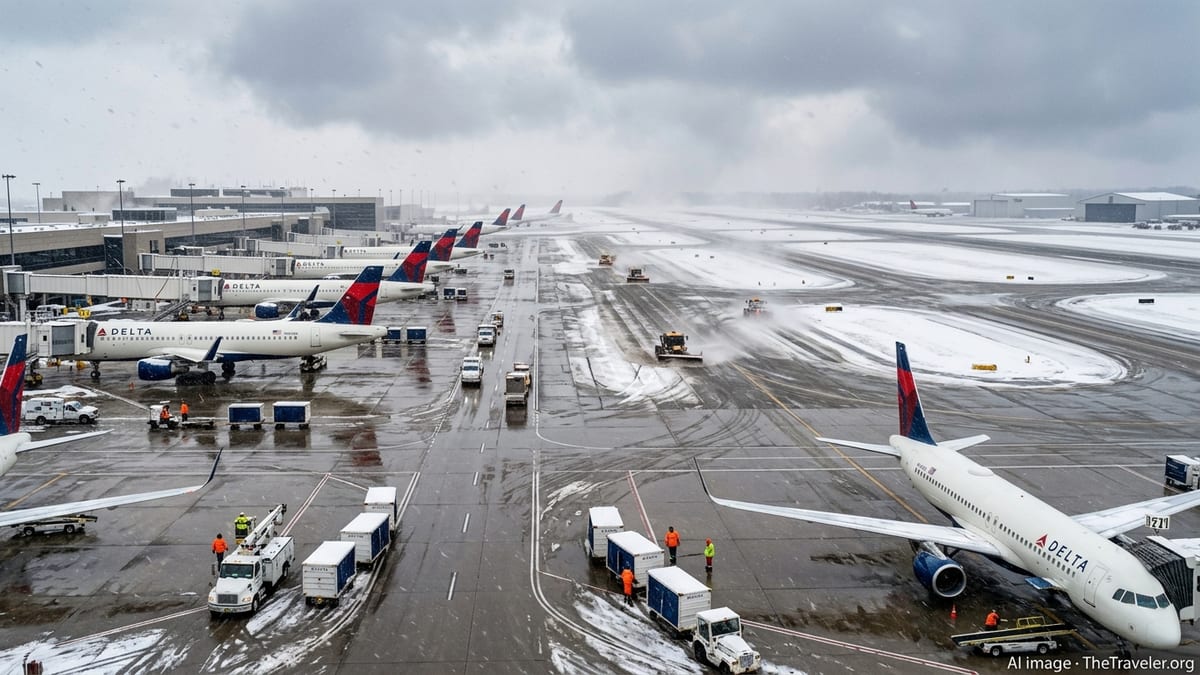
Major Midwest Hubs Struggle Under Heavy Snow and High Winds
Publicly available flight-tracking data indicates that the latest winter storm, associated with a sprawling March 13–17, 2026 storm system, has brought blizzard conditions and treacherous ice to large parts of Minnesota, Wisconsin, Michigan and neighboring states. Minneapolis–St. Paul International Airport and Detroit Metropolitan Wayne County Airport, both critical Delta hubs, have seen some of the heaviest operational disruption as runways, taxiways and de-icing pads strain under continuous snowfall and gusty winds.
Reports from travelers and airport operations dashboards show that Delta has proactively canceled numerous departures and arrivals at Minneapolis–St. Paul, trimming schedules to a bare minimum of core connections and overnighting aircraft. At Detroit, waves of cancellations and rolling delays have extended into connecting banks, affecting passengers traveling to and from smaller regional Midwest cities as well as long-haul domestic routes.
The storm’s footprint reaches beyond the immediate blizzard zone. Flight-status feeds for major U.S. hubs such as Atlanta, New York and Salt Lake City show rising numbers of delays linked to aircraft and crew originating in the Midwest, creating a complex recovery challenge for Delta’s tightly timed hub-and-spoke system.
While both Minneapolis–St. Paul and Detroit are accustomed to operating in harsh winter weather, the intensity and duration of this storm have forced ground crews to cycle aircraft through repeated de-icing and snow clearance, reducing hourly capacity and leading to large blocks of preventive cancellations on Delta’s schedule.
Hundreds of Delta Flights Cut as Network Ripple Effects Grow
According to aggregated data from flight-tracking platforms, Delta’s cancellations have climbed into the hundreds over the peak of the storm period, with the majority clustered around Midwest hubs and their regional spokes. Many of the affected services involve short-haul connections that feed into Minneapolis–St. Paul and Detroit, amplifying disruption for travelers attempting to reach the airline’s broader network.
Published coverage of the broader March storm complex describes several thousand U.S. flights canceled across all airlines, underscoring how Delta’s difficulties are part of a wider industry struggle to keep traffic moving as snow totals in parts of the Upper Midwest reach one to three feet, accompanied by whiteout conditions and dangerous wind chills. For Delta, the cancellations at its core Midwest hubs have an outsized impact because many itineraries depend on precise connections that cannot be preserved when multiple legs are scrubbed.
Network analysts note that Delta has increasingly relied on preemptive cancellations during major winter events, clearing large swaths of the schedule in advance rather than attempting to operate through the worst of the conditions. Current operational patterns suggest that approach is being used again, with same-day cuts followed by additional reductions as the storm’s severity and timing have become clearer.
As the system moves east and begins to weaken, Delta’s challenge will shift from immediate safety-driven shutdowns to repositioning aircraft and crews, particularly those stranded at outstations and secondary airports across the Midwest. Recovery flights and added sections may appear in booking engines in the days after the storm as the airline works to close gaps in its network.
Passengers Face Long Delays, Missed Connections and Limited Options
For travelers, the storm-related cancellations have translated into long waits, missed events and a scramble for alternatives. Posts on public forums dedicated to Delta travel over the past several days describe passengers experiencing multiple cancellations in a single itinerary, overnight stays in Minneapolis–St. Paul or Detroit while waiting for rebooked flights, and extended lines at customer-service counters as schedules continue to shift.
Some travelers report that flights were canceled days in advance, giving time to adjust plans, while others describe last-minute disruptions after arriving at their departure airport. Public commentary highlights particular difficulties for those connecting in the Midwest on their way to international destinations, where a single cancellation can disrupt multi-leg journeys and require complex rebooking across partner airlines.
Standard airline policies allow passengers on canceled flights to be rebooked on the next available service at no additional fare, subject to space. When large winter storms affect multiple hubs simultaneously, however, available seats can be scarce for several days, and travelers with fixed commitments often resort to driving long distances to alternative airports or shifting to competing carriers where space permits.
Publicly accessible guidance from consumer advocates emphasizes the importance for passengers of monitoring flight status frequently, using airline apps to self-service rebooking where possible, and documenting out-of-pocket expenses. While weather-related disruptions are typically categorized as events outside an airline’s control, and therefore not eligible for compensation in many cases, airlines may still offer meal vouchers or hotel discounts at their discretion during severe, multi-day disruptions.
Operational Recovery Could Take Days Despite Improving Weather
Even as forecasts call for conditions to gradually improve across the Upper Midwest, analysis of previous major winter disruptions suggests that Delta’s full recovery could take several days. Aircraft and crews are currently scattered around the network in atypical patterns as the airline has diverted flights, shortened rotations and parked jets to ride out the storm.
Public information from prior large-scale disruptions shows that airlines often need multiple schedule cycles to restore normal connectivity, even after runways are clear and skies have brightened. Factors such as crew duty limits, maintenance requirements, and the need to reposition widebody aircraft for long-haul services can all slow the return to normal operations.
Airports in the region are also expected to manage significant backlogs. Snow and ice accumulation around gates, ramp areas and service roads mean that ground handling can remain slow long after the last flakes fall. At busy hubs like Minneapolis–St. Paul and Detroit, even modest reductions in takeoff and landing rates translate directly into lingering delays for passengers and for airlines trying to rebuild their schedules.
For now, publicly available data suggests that Delta is prioritizing mainline trunk routes and key connecting banks as it rebuilds its operation, while some regional and low-frequency routes may continue to see cancellations or reduced service until aircraft and crews are back in position.
Travelers Urged to Monitor Flights and Build Flexibility Into Plans
With the late-season storm coinciding with a busy period for business and leisure travel, industry observers recommend that anyone planning to fly through Midwest hubs in the coming days take extra precautions. That includes checking flight status repeatedly before departure, ensuring contact details are up to date in airline profiles, and allowing generous connection times when itineraries route through Minneapolis–St. Paul, Detroit or other weather-affected airports.
Travel experts who track airline operations suggest that passengers consider booking earlier departures in the day when possible, as morning flights often have a higher chance of operating during recovery periods. They also note that accepting reroutes through less-affected hubs, even if less convenient, can improve the odds of reaching a final destination on the same day.
For travelers already en route, airport display boards and airline mobile apps remain key tools for navigating the evolving situation. Given the scale of Delta’s cancellations tied to this Midwest winter storm, those with time-sensitive commitments may benefit from having contingency plans, such as alternate airports, rail options on shorter corridors, or the flexibility to delay travel by a day or two while the airline stabilizes its schedule.
As the storm system gradually lifts out of the region, federal aviation data and airline schedules will provide a clearer picture of when Delta’s Midwest hubs can return to more typical levels of reliability. Until then, passengers connecting through the affected airports are likely to encounter residual delays, limited seat availability and a dynamic operational environment shaped by one of the strongest winter storms of the season.