

More news on this day
A serious turbulence incident on a recent Delta Air Lines trans-Pacific flight into Sydney, which left multiple crew members hospitalized, is intensifying scrutiny of how airlines manage increasingly volatile upper-atmosphere conditions on some of the world’s longest routes.
Get the latest news straight to your inbox!
A Violent Descent on a Long-Haul Route
According to published coverage from Australian and U.S. outlets, the Delta flight was approaching Sydney after an overnight trans-Pacific crossing when it encountered a sudden, intense burst of turbulence that violently jolted the aircraft. The incident occurred during the latter phase of the journey, a period when many passengers are often unbuckled, moving around the cabin or resting with loosened seatbelts.
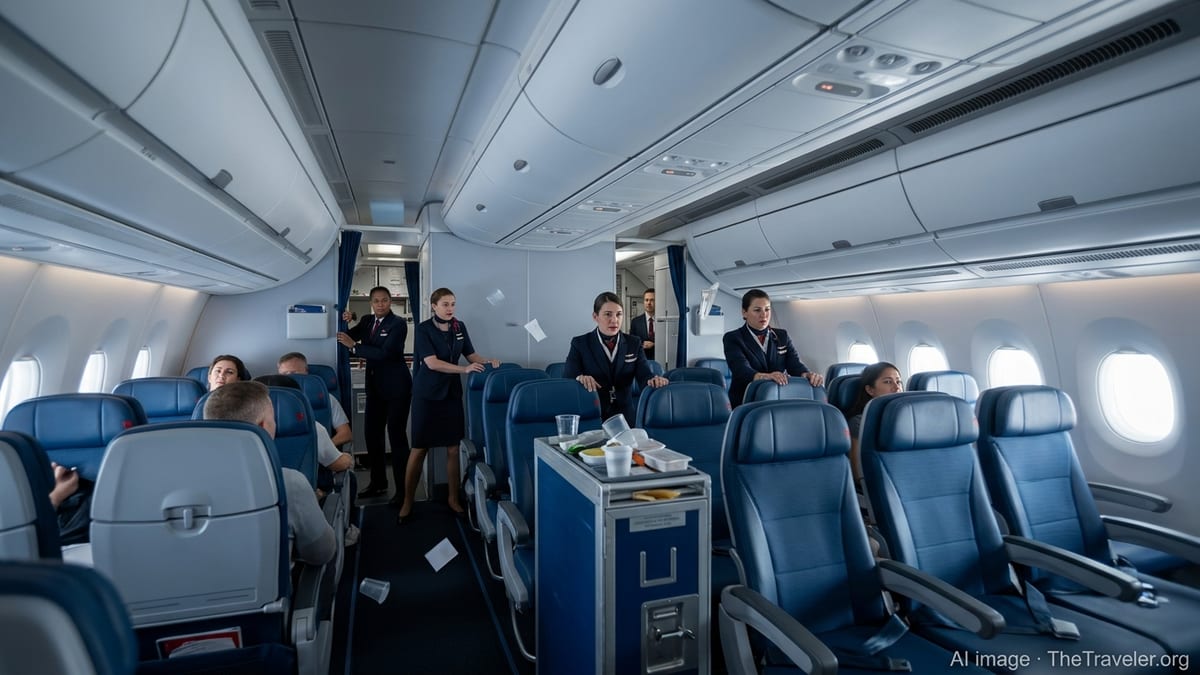
Reports indicate that several flight attendants were thrown against fixtures and ceiling panels as the aircraft rapidly shifted altitude, suffering injuries serious enough to require hospital treatment on arrival. Early accounts suggest that passengers also reported minor injuries, though initial focus has centered on the crew, who were on their feet performing cabin duties when the turbulence struck.
Publicly available information shows that the aircraft was able to land safely in Sydney, where emergency medical teams met the flight on the tarmac. Visuals shared across news and social platforms have shown dislodged ceiling panels, scattered catering equipment and cabin debris, underscoring the sudden violence of the event despite the lack of structural damage to the airframe.
The episode fits a pattern of recent long-haul turbulence events over the Pacific and other oceanic regions, where crews report abrupt, difficult-to-predict jolts that can occur even in apparently clear skies.
Cabin Crew on the Front Line of Turbulence Risk
While turbulence can injure anyone not securely strapped in, data and past investigations indicate that cabin crew bear a disproportionate share of the risk. Flight attendants are routinely moving through the aisle during cruise, handling hot beverages and heavy service carts, and often have only seconds of warning before a sudden drop or violent lateral motion.
Industry safety reports show that in many recent turbulence incidents worldwide, the most serious injuries have been sustained by cabin crew rather than passengers, including broken bones, head trauma and long-term musculoskeletal issues. The Sydney incident has drawn renewed attention to this reality, with images and accounts emphasizing how crew members were thrown upward and sideways as the aircraft jolted.
Publicly accessible commentary from aviation safety analysts highlights that trans-Pacific flights present particular challenges. These routes cross large, data-sparse oceanic regions where turbulence forecasting can be less precise, and flight times that can exceed 14 hours mean crews spend long stretches on duty while managing fatigue and maintaining service levels.
In the wake of the event, online discussions among current and former cabin crew have pointed to a growing culture of caution, with more airlines instructing staff to suspend service preemptively when forecast or reported turbulence is possible, even if conditions look calm at the time.
How Climate and Jet Streams Are Shaping the Skies
Researchers studying aviation meteorology have been warning for several years that climate change is likely to increase the frequency and intensity of clear-air turbulence, a type that occurs without visible storm clouds and cannot be detected by standard onboard radar. Published academic work has linked warmer air at high altitudes to stronger wind shear along jet streams, which are critical highways for long-haul flights between North America, Asia and Australia.
On trans-Pacific routes that connect U.S. hubs with Sydney and other Australasian gateways, flight paths are often designed to take advantage of these high-altitude winds to save time and fuel. However, the same strong gradients that improve efficiency can also harbor sudden pockets of intense turbulence that challenge even the most experienced pilots and sophisticated forecasting tools.
Reports from recent seasons suggest that crews have been encountering more frequent “rough patches” on these long oceanic legs, with some flights forced to divert or descend to lower altitudes to find smoother air. The Sydney hospitalization incident has therefore become part of a broader conversation about whether current turbulence forecasting, data sharing and route-planning practices are keeping pace with rapidly evolving atmospheric patterns.
Aviation observers note that while significant turbulence remains relatively rare compared with the huge number of flights that cross the Pacific daily, the consequences when it does occur can be severe, particularly for unrestrained occupants in the cabin.
Seatbelts, Safety Briefings and Passenger Behavior
Events like the Sydney turbulence episode also illuminate persistent gaps between safety briefings and passenger habits. Airlines routinely urge travelers to keep seatbelts fastened whenever seated, even when the sign is off, but surveys and anecdotal accounts suggest that many people ignore this advice once cruising appears smooth.
Reports from previous incidents describe passengers being thrown into overhead panels or across aisles because they were unbuckled during meal service or while resting. In contrast, those who remained belted often escaped with little more than a scare. In the Sydney case, early accounts indicate that most serious injuries occurred among crew who had no choice but to be on their feet, highlighting how much protection a simple lap belt can still provide for seated passengers.
Travel industry commentators point out that long-haul flights, particularly overnight segments across the Pacific, may foster a false sense of security as cabin lights dim and engines hum steadily for hours. The result can be increased movement around the cabin for stretching, socializing or lining up for restrooms, just as the aircraft is crossing areas historically prone to turbulence.
Some carriers have begun experimenting with more assertive messaging, including additional midflight announcements and more graphic pre-flight videos illustrating turbulence injuries. The Sydney incident is likely to feed into these efforts, providing a stark, recent example that airlines can reference in general safety communications without disclosing personal details.
Operational Responses and What Travelers Can Expect
Public statements and operational data following the Sydney event suggest that Delta and other long-haul operators are reevaluating certain procedures around turbulence risk. These include when to suspend cabin service, how early to instruct crew to secure galleys and equipment, and how often to reinforce seatbelt messaging to passengers during otherwise calm segments of flight.
Aviation analysts expect a continued shift toward more conservative policies on long overwater legs, with flight attendants potentially spending more time seated during segments with elevated turbulence probabilities. For passengers, this may mean fewer in-flight service passes during parts of trans-Pacific journeys, longer stretches with seatbelt signs illuminated, and more frequent reminders to remain buckled even when the cabin feels stable.
For travelers planning or regularly taking trans-Pacific routes to Sydney and beyond, the practical takeaway is straightforward: turbulence events powerful enough to hospitalize crew members remain rare but real, and simple precautions can significantly reduce personal risk. Keeping a seatbelt snug at all times while seated, stowing loose items, and heeding crew instructions promptly can make a critical difference when the smooth ride over the ocean suddenly turns rough.
As investigations and internal reviews continue, the Sydney incident is emerging as another high-profile reminder that even in an era of advanced forecasting and highly reliable aircraft, the atmosphere over the world’s longest routes can still deliver abrupt, punishing surprises.