

More news on this day
Delta Air Lines has suspended a suite of VIP-style services long extended to members of Congress and their staff, a move that collides with a tense government shutdown and intensifies debate over whether such political travel perks amount to inappropriate favoritism or earned recognition for public service.
Get the latest news straight to your inbox!
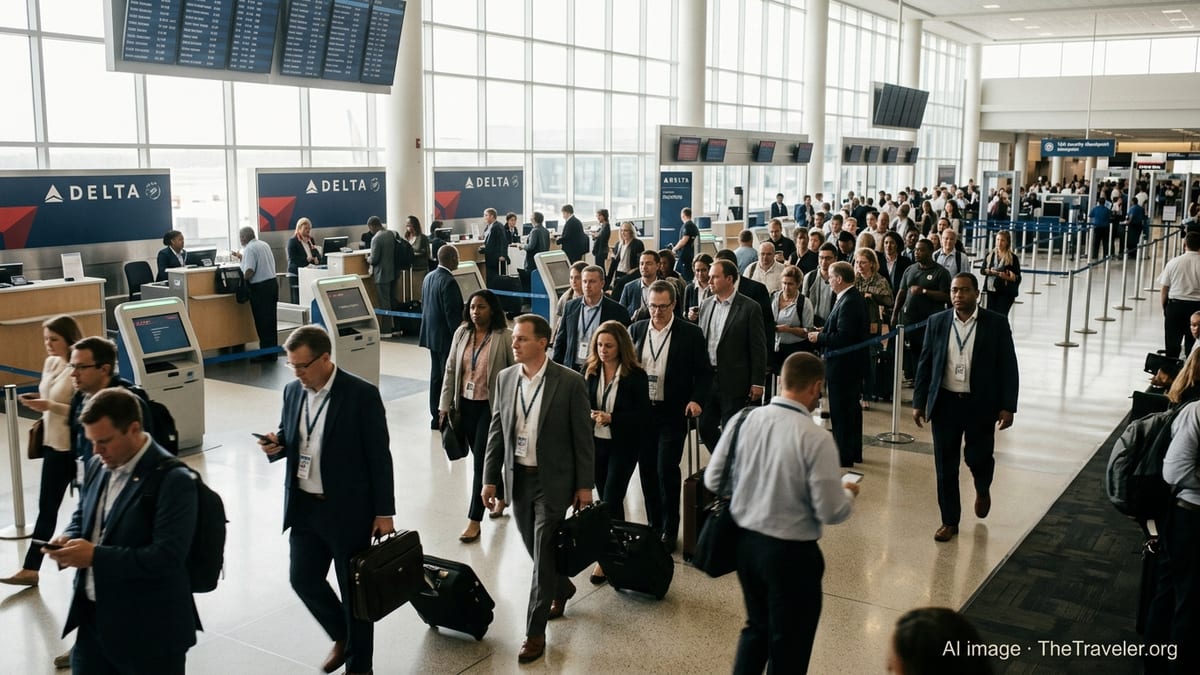
What Delta Took Away From Washington’s Frequent Flyers
According to published coverage, Delta has halted operation of its dedicated congressional desk, a stand-alone service that helped lawmakers and senior staff navigate the carrier’s network with unusual ease. The program reportedly offered assistance booking and rebooking flights at discounted fares, securing last-minute seats around key votes and arranging rapid-fire itinerary changes that most travelers could only envy.
Reports indicate that the suspended offerings went beyond phone support. Accounts circulating in national and local outlets, as well as on social media, describe curbside meet-and-greet service, personal escorts through the terminal, help bypassing typical check-in bottlenecks and access to quieter waiting spaces away from crowds. In some cases, these services were paired with priority seating or simplified access to premium cabins and lounges.
These extras were layered on top of the same loyalty benefits and credit card perks that are available to the general public. The distinction, analysts note, was that elected officials enjoyed a tailored channel into the airline’s operation, one designed around the rhythms of congressional life and the demands of governing on tight, often unpredictable timetables.
By pulling the plug on the congressional desk during a high-profile budget standoff that has partially shut down the Department of Homeland Security, Delta has abruptly recast a low-visibility accommodation into a flash point in the broader argument over political privilege and accountability.
Shutdown Politics, Corporate Pressure and Public Perception
Delta has framed the decision as a resource issue tied to the protracted funding impasse. Public statements cited in news reports say the airline is temporarily suspending specialty services for members of Congress due to operational strain created by the long-running shutdown, which has disrupted airport staffing and travel demand. The carrier has emphasized its priority of maintaining core service for the broader customer base.
The timing, however, has drawn attention far beyond aviation circles. The move surfaced just days after the Senate unanimously backed a proposal to curb airport privileges for lawmakers, including the ability to use security shortcuts that are not available to most passengers. In that context, Delta’s step has been widely interpreted as both a logistical adjustment and an unmistakable message about frustration with Washington’s stalemate.
Consumer reaction has been sharply divided. Online forums and comment sections show many travelers applauding the suspension, portraying it as a rare instance of a major corporation refusing to cushion lawmakers from the real-world effects of their own brinkmanship. Others question whether singling out a group of customers based on political developments blurs the lines between corporate operations and policy advocacy.
For a carrier that relies heavily on government travel contracts and regulatory goodwill, the strategic stakes are high. Industry observers note that Delta has historically worked to cultivate strong ties with political decision-makers while also positioning itself as responsive to the concerns of everyday travelers, a balance that becomes harder to maintain when privileged access is thrust into the spotlight.
Bribery, Influence or Just Good Customer Service?
The controversy has reignited long-running questions about whether special treatment for elected officials at airports is a form of soft lobbying. Ethics advocates and good-government groups have long argued that when an airline offers exclusive conveniences to those who oversee aviation policy and federal contracts, it risks creating the appearance of a private benefit tied to public office, even if no direct exchange of favors can be proven.
Legal experts cited in recent commentary note that most corporate hospitality, including upgrades, lounge access and travel waivers, falls into a gray zone of influence rather than explicit bribery. The perks are often framed as operational necessities or courtesy measures designed to ensure officials can travel quickly for votes, hearings and crisis responses. Still, critics argue that unequal treatment at the airport can subtly shape attitudes toward a company and skew policymakers’ sense of what the average traveler experiences.
Other analysts counter that some form of accommodation for public officials is both practical and in the public interest. They point out that lawmakers routinely move on tight schedules, often at short notice and under security constraints that ordinary travelers do not face. From this vantage point, priority handling and flexibility are framed less as rewards and more as tools that support the functioning of government, comparable to police escorts or reserved seating at official events.
The suspension of Delta’s congressional services has therefore become a test case for how far airlines should go in tailoring their offerings to political elites. Whether these perks are seen as influence or efficiency may hinge less on the fine print of ethics rules and more on public sentiment in an era of heightened scrutiny of both corporate behavior and political privilege.
What It Means for Travelers and the Airline Loyalty Landscape
The spotlight on Delta’s relationship with lawmakers arrives as the airline is already under close watch for broader changes to its loyalty ecosystem. In the past two years the carrier has rolled out a series of adjustments to its SkyMiles and Medallion programs, including new thresholds tied to Medallion Qualification Dollars, shifts in upgrade priorities and tweaks to exclusive Choice Benefits for top-tier elites.
Frequent flyers have complained that loyalty has become harder to maintain and less rewarding, with more emphasis on spending levels and credit card partnerships than on miles flown. Online discussion about the congressional desk has often been laced with frustration that political insiders appeared to enjoy bespoke support at the same time many high-spend customers were seeing their own benefits diluted or restructured.
By pausing its VIP-style services for lawmakers just as it retools elite benefits for the general public, Delta may be attempting to signal that no group is fully insulated from difficult trade-offs in a capacity-constrained, cost-sensitive industry. Yet this balancing act also risks alienating powerful decision-makers who help shape aviation rules, government contracts and infrastructure investments that matter for the airline’s long-term strategy.
For travelers, the episode underscores a broader shift in commercial aviation. Airlines are increasingly transparent about monetizing nearly every element of the journey, from early boarding to lounge access and seat selection. Against that backdrop, special political perks that once operated quietly in the background are now being weighed more openly against standards of fairness, transparency and trust.
A Test Case for Corporate Ethics in the Skies
As the shutdown grinds on and the suspension of services remains in place, Delta’s move is likely to feature in broader conversations about corporate ethics. Governance specialists point out that companies across sectors are being pushed to define clearer boundaries between routine customer care and preferential treatment that could be interpreted as courting influence.
In aviation, those boundaries are especially visible. Airports are among the most public stages for status and hierarchy, with separate lanes, clubs and cabins sorting travelers into different experiences. When one of the country’s most prominent airlines decides to strip a powerful group of some of its quietest advantages, it invites renewed scrutiny of who has been enjoying what in the shadows of the terminal.
Ultimately, whether Delta’s decision is remembered as an overdue correction, a shrewd public relations play or a risky foray into symbolic politics will depend on how long the shutdown lasts, how other airlines respond and whether policymakers move to formalize new limits on travel privileges. For now, the message to lawmakers stepping into the departure hall is simple: at least on this front, some of the gap between political power and the passenger experience has temporarily narrowed.