

More news on this day
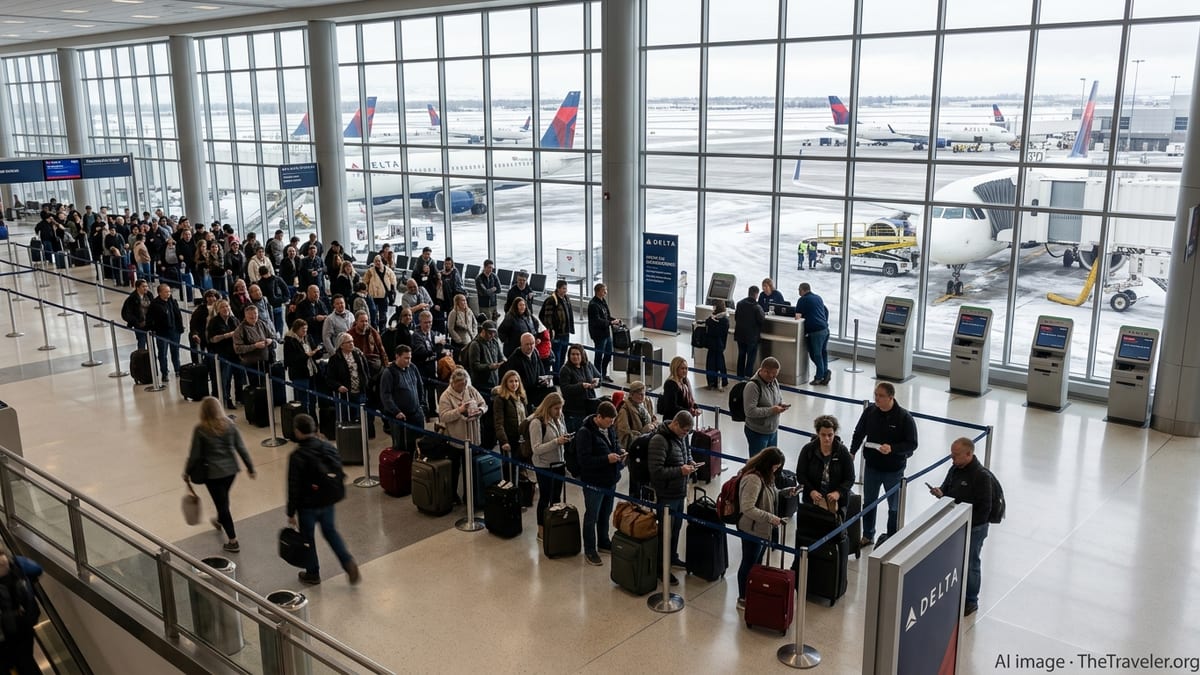
Delta Air Lines passengers moving through Salt Lake City International Airport on Wednesday, March 18, faced a fresh wave of cancellations and hours-long delays, as disruptions at the carrier’s western hub rippled across major domestic routes and complicated travel plans in multiple states.
Get the latest news straight to your inbox!
Targeted Cancellations at a Key Western Hub
Publicly available flight-tracking and passenger accounts indicate that Delta canceled at least five departures from Salt Lake City International Airport, alongside a greater number of delayed flights, on March 18. The affected services included links to major business and leisure destinations such as New York, Phoenix, Spokane, Albuquerque and Atlanta, underscoring the airport’s role as a connective hub for travel across the Mountain West and beyond.
Salt Lake City serves as one of Delta’s most important domestic hubs, with scheduled data showing dense patterns of daily departures to secondary and primary markets. When even a handful of those flights are canceled outright, the hub structure means passengers on connecting itineraries can quickly find themselves stranded or rebooked through longer, more circuitous routings.
Reports from recent days also show Salt Lake City absorbing knock-on effects from severe winter weather and earlier operational challenges elsewhere in the Delta network. Disruptions in Minneapolis and Atlanta, both major Delta hubs, have contributed to aircraft and crew imbalances, making schedules more fragile when conditions deteriorate or delays start to accumulate.
Travelers transiting Salt Lake City described lengthy lines at service desks, rolling departure-time changes and multiple rebookings. In some cases, passengers reported having their flights canceled several times in a single day before successfully departing or securing overnight accommodations.
Major Routes to New York, Phoenix, Spokane, Albuquerque and Atlanta Hit
The most visible impact of Wednesday’s setbacks was felt on routes that connect Salt Lake City to key cities across the United States. New York-bound travelers, especially those routed through John F. Kennedy International Airport, faced shifting departure times and, in some instances, outright cancellations. Given New York’s role as both a business hub and a gateway to international connections, any disruption there tends to cascade into missed meetings and broken long-haul itineraries.
Sunbelt and regional destinations also saw interruptions. Flights between Salt Lake City and Phoenix, a heavily traveled corridor in both winter and shoulder seasons, experienced delays as aircraft and crews arrived late from earlier legs. Services to Spokane and Albuquerque, which rely more heavily on a limited number of daily departures, proved especially vulnerable; the loss of even one flight can remove a large share of daily capacity and leave passengers with few same-day alternatives.
Atlanta, Delta’s largest hub, was also drawn into the network-wide ripple. Delayed departures from Salt Lake City complicated onward connections in Georgia, where passengers already reported extended waits and aircraft swaps earlier in the week. Travel through Atlanta is particularly sensitive to timing disruptions, because so many itineraries rely on narrow connection windows orchestrated around the hub’s banked departures.
While only a small fraction of Delta’s overall daily schedule was formally canceled out of Salt Lake City, the combination of cancellations and delays had an outsized effect for travelers originating in or connecting through the affected cities, particularly those without flexible itineraries or access to alternative carriers.
Weather, Winter Storms and a Strained Network Backdrop
The latest setback unfolded against a broader backdrop of turbulent late-winter weather across North America. Major storms in February and March brought heavy snow, high winds and blizzard conditions to large parts of the Midwest and Northeast, leading to thousands of cancellations industry-wide and ongoing recovery work for airlines. Public information shows that Delta has already contended with several large-scale weather events this year, including storms that heavily impacted its Minneapolis and Atlanta operations.
Those earlier events created a more fragile operating environment for mid-March travel. When severe weather or airspace constraints disrupt a hub for even a day, aircraft and crews can be left out of position for subsequent rotations. Rest requirements, maintenance checks and congestion at key airports then compound the challenge, leaving little margin when additional delays arise.
Salt Lake City’s geography introduces further complexity. As a high-altitude hub in a mountainous region, it is vulnerable to rapidly changing conditions, including shifting winds and low-visibility events that can slow arrivals and departures. Earlier this winter, flight-tracking data and local commentary highlighted periods when wind conditions and variable weather prompted holding patterns, diversions and elevated numbers of delays and cancellations at the airport.
Industry analysts often note that while airlines frame many disruptions as weather-related, the operational stress they expose can also reflect broader issues such as tight scheduling, limited spare aircraft and increased passenger demand. This week’s events at Salt Lake City appear to fit into that pattern, with an already stressed network reacting sharply to new disruptions.
Passenger Experience: Long Lines, Missed Connections and Limited Options
For travelers caught in Wednesday’s disruptions, the practical impact went beyond the raw number of cancellations. Accounts posted publicly described long queues at customer service counters, crowded gate areas and uncertainty about whether revised departure times would hold. Some passengers cited multiple sequential delays followed by late-day cancellations, complicating efforts to secure hotel rooms or rebook on alternative flights.
Salt Lake City’s role as a connection point amplifies the difficulty for those whose trips involve smaller markets such as Spokane and Albuquerque. When an afternoon departure is canceled or heavily delayed, onward options can be sparse, particularly for travelers seeking to reach regional airports on the same day. This increases the likelihood of overnight stays and forces some passengers to accept indirect routings with extra stops.
Published guidance for air travelers emphasizes the importance of closely monitoring flight status through airline apps and airport information boards during periods of disruption. Day-of-travel changes can be frequent, with an initially minor delay swelling into a missed connection if departure times continue to slide. Travelers who are able to adjust to earlier or later flights, or to reroute through alternative hubs, may have better odds of reaching their destinations the same day.
Consumer advocates also note that passenger rights vary depending on whether disruptions are attributed to weather, air traffic control limitations or airline-controlled factors such as crew or maintenance issues. Publicly available U.S. government resources explain that travelers are generally entitled to a refund when a flight is canceled and they choose not to travel, although compensation for delays and incidental expenses is less standardized and often depends on carrier policies.
Ongoing Scrutiny of Delta’s Operational Resilience
The Salt Lake City disruptions arrive at a time when Delta’s operational resilience is already drawing heightened attention. The airline has faced scrutiny for several large-scale irregular operations in recent years, including technology-related outages and weather-driven meltdowns that resulted in thousands of canceled flights over short periods.
Commentary from frequent flyers and industry observers has increasingly focused on how quickly the carrier can recover when major hubs are hit by storms or system issues. The experience of passengers at Salt Lake City this week, following earlier challenges in Minneapolis and Atlanta, will likely feed into ongoing debates about buffer capacity, staffing levels and schedule design at large U.S. airlines.
Travel data companies and aviation analysts will be closely watching Delta’s performance through the remainder of March, a shoulder season that often exposes operational weak points before the summer peak. Metrics such as on-time arrival rates, same-day cancellation counts and average delay durations provide one measure of how effectively carriers absorb and recover from weather and infrastructure shocks.
For now, the latest disruptions serve as a reminder that even a modest number of canceled flights at a key hub can have significant consequences for travelers across the country. As winter gives way to spring, passengers planning complex itineraries through Salt Lake City and other major connection points may continue to build in extra time, backup plans and flexibility in case the next round of delays materializes without warning.