

More news on this day
Delta Air Lines flight DL1311, operating between Atlanta and West Palm Beach, diverted to Fort Lauderdale for an urgent emergency landing, with early reports indicating the aircraft landed safely and passengers were able to disembark without major injuries.
Get the latest news straight to your inbox!
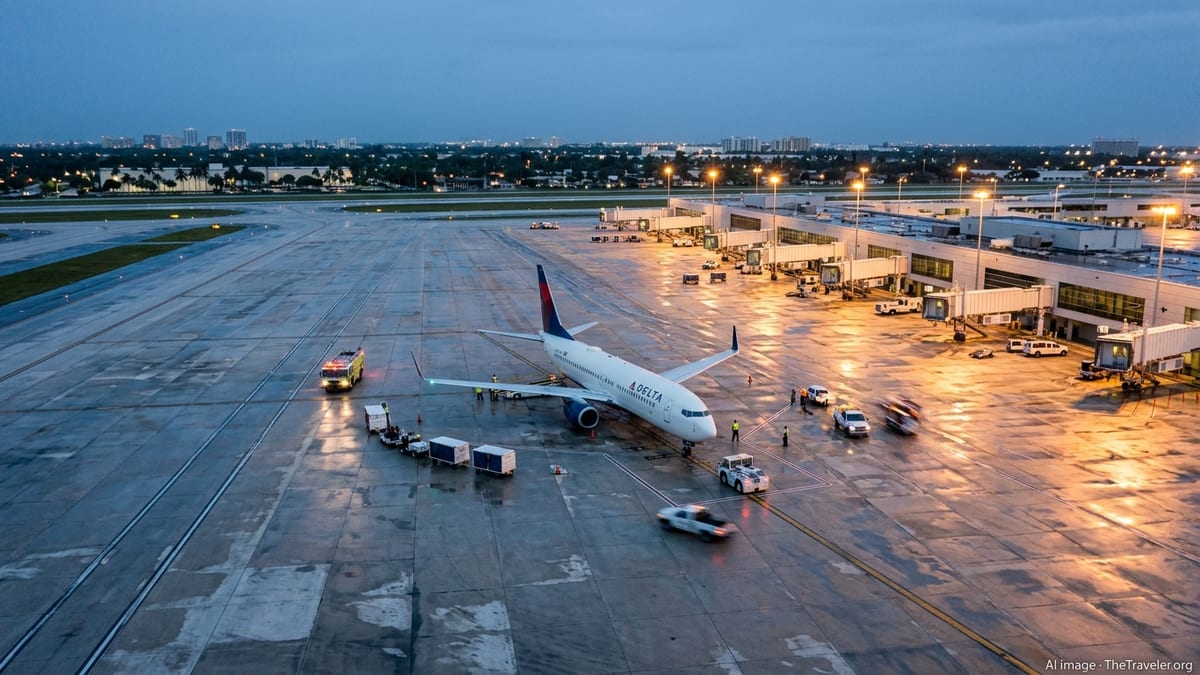
Unexpected Diversion Along a Routine Short-Haul Route
The flight, identified as DL1311 and operated by Delta Air Lines, departed Hartsfield-Jackson Atlanta International Airport on its scheduled route to Palm Beach International Airport in South Florida. The sector is a busy corridor for business and leisure travelers, linking one of the country’s largest hubs with the Palm Beach region.
Shortly after departure from Atlanta, the flight altered its course away from the planned approach into West Palm Beach. Publicly available flight-tracking data shows the aircraft turning toward the southeast coast of Florida and lining up for an approach into Fort Lauderdale-Hollywood International Airport instead of continuing to Palm Beach.
The diversion transformed what is typically a straightforward journey of under two hours into a tense episode for those on board and their contacts on the ground, as aviation enthusiasts and passengers’ families monitored the aircraft’s updated track online.
Reports indicate that emergency response vehicles were positioned at Fort Lauderdale ahead of the aircraft’s arrival, a standard precaution during declared in-flight emergencies even when the situation is contained on board.
Emergency Landing in Fort Lauderdale
According to publicly available information, the crew of DL1311 requested priority handling into Fort Lauderdale, where the airport’s longer runways and extensive airline facilities provide additional support in the event of an emergency. The aircraft proceeded to land and then paused on the taxiway while ground crews completed safety checks.
Accounts shared on social media and flight-tracking commentary describe the landing as controlled, with the aircraft able to vacate the runway under its own power. Passengers reportedly remained seated while emergency services visually inspected the exterior before the aircraft continued to a parking position.
Initial information does not indicate any serious injuries among those on board. As is typical in such events, some travelers described online a period of uncertainty while awaiting clearance to disembark and obtain information about their onward travel plans.
While specific technical details behind the emergency declaration have not yet been widely published, the decision to divert to Fort Lauderdale rather than continue to West Palm Beach aligns with standard industry practice of choosing an airport offering the best combination of runway length, maintenance access, and emergency support.
Impact on Passengers and South Florida Air Travel
The diversion left passengers bound for West Palm Beach temporarily stranded in Fort Lauderdale, roughly 45 miles to the south. For many travelers, this meant additional time arranging ground transport, rebooking connections, or working with Delta staff to complete the final leg of their journey.
Airline operations data suggest that DL1311 is normally part of a tight rotation between Atlanta and South Florida, and an unplanned diversion can ripple through later flights using the same aircraft and crew. Travelers booked on subsequent services in and out of Palm Beach and potentially Atlanta may have experienced schedule adjustments as the carrier repositioned aircraft and personnel.
For Fort Lauderdale-Hollywood International Airport, an emergency arrival typically triggers a temporary concentration of fire-rescue and support vehicles near the runway. That can cause minor delays to other departures and arrivals as operations teams balance safety procedures with maintaining normal traffic flow.
Despite the disruption, publicly available accounts indicate that airport and airline teams at Fort Lauderdale worked to move passengers off the aircraft, provide updates, and arrange options for completing their trips by air or ground, which is standard after an incident that requires an emergency landing but does not result in significant damage or injury.
Delta’s Safety Procedures Under the Spotlight
Delta Air Lines, one of the largest carriers serving Atlanta and South Florida, operates numerous daily flights linking Atlanta with airports in Miami, Fort Lauderdale, and West Palm Beach. Events like the DL1311 diversion draw renewed attention to cockpit decision-making, maintenance standards, and in-flight safety procedures.
Publicly available information on Delta’s safety practices indicates that crews receive recurrent training for a wide range of emergency scenarios, including technical malfunctions, medical events, and adverse weather. The decision to divert and request emergency support is typically made when the safest option is to land as soon as practical at a suitable airport rather than continue to the planned destination.
Aviation safety specialists often note that successful emergency landings, such as the one reported for DL1311, demonstrate the layered systems in place to protect passengers. These include aircraft design, crew training, air traffic control coordination, and airport emergency services ready to respond when a flight declares an emergency.
While the precise cause of the diversion may take time to emerge through official documentation or regulatory filings, the outcome at Fort Lauderdale, as described in available reports, appears to align with industry goals of prioritizing safety even at the cost of short-term disruption to travel plans.
Next Steps for the Airline and Travelers
Following an emergency landing of this nature, airlines commonly conduct detailed inspections of the aircraft involved before it is cleared to return to regular service. Maintenance teams typically review flight data, perform component checks, and, if necessary, replace parts or keep the aircraft out of service pending further analysis.
Passengers from DL1311 can generally expect the airline to offer rebooking on later flights or ground transportation alternatives between Fort Lauderdale and West Palm Beach, depending on operational conditions and available capacity. Some travelers may also seek compensation or service recovery gestures in line with the carrier’s customer service policies.
For future passengers on the Atlanta to West Palm Beach route, publicly available schedule information indicates that DL1311 is part of a broader network of daily flights linking the two cities, providing multiple alternatives should one specific service be disrupted. Diversions and emergency landings, while rare relative to the volume of flights operated, remain a visible reminder that air travel safety depends on swift decisions and coordinated responses when issues arise.
As more details surface about the DL1311 incident, aviation observers are likely to review how the diversion unfolded, how quickly passengers were accommodated, and how the airline incorporates any lessons learned into its operational and training programs across the busy Atlanta to South Florida corridor.