

More news on this day
Delta Air Lines has extended the suspension of its New York and Atlanta services to Tel Aviv, underscoring the continued impact of the regional conflict on transatlantic travel plans and capacity between the United States and Israel.
Get the latest news straight to your inbox!
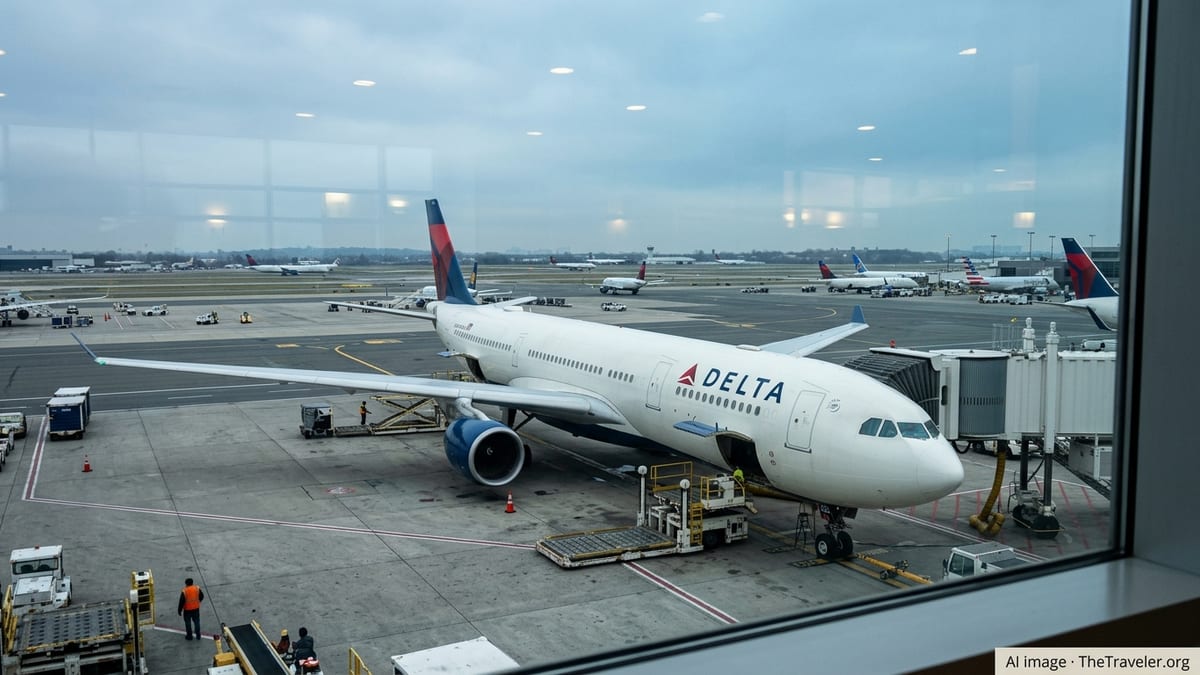
Latest Adjustments to Delta’s Tel Aviv Schedule
According to the airline’s most recent public update from March 12, 2026, Delta has prolonged the pause of its New York John F. Kennedy to Tel Aviv route through at least March 31, with the return Tel Aviv to New York segment halted through April 1. The decision follows renewed security assessments tied to the ongoing conflict affecting Israeli airspace and surrounding regions, which have triggered route reviews across multiple global carriers.
In the same update, Delta delayed the relaunch of its Atlanta to Tel Aviv service until August 2026, revising earlier plans to restart the route in the spring. Industry reports indicate that the Atlanta connection, which previously provided extensive onward links across the southeastern United States, remains a key part of Delta’s long-term Israel strategy but is being held back until conditions are assessed as more stable.
The extended suspension means that, for now, Delta’s only pathway to Tel Aviv remains in planning rather than active operation from these two major U.S. hubs. Schedules for later in 2026 still show Tel Aviv service returning from both New York and Atlanta, but the latest revisions illustrate how quickly airlines are adjusting timetables as the regional situation evolves.
Security Environment Keeps Pressure on Airline Operations
Publicly available air-safety advisories and travel bulletins for the Middle East continue to highlight elevated risk levels around Israeli airspace, with several notices referencing debris incidents, missile activity, and shifting no-fly zones in recent months. These conditions have led to repeated reviews of overflight permissions and approach procedures to Ben Gurion Airport near Tel Aviv.
Analysts note that long-haul flights from North America into conflict-affected regions are particularly sensitive to changes in threat assessments and insurance conditions. Airlines such as Delta must weigh operational practicality, crew and passenger safety, and regulatory guidance when determining whether to maintain or suspend nonstop routes into Israel, even during periods when the airport itself remains open to some carriers.
The ongoing conflict has also reshaped routing across the wider Middle East, with many transcontinental services opting for longer detours to avoid certain airspace corridors. Although Tel Aviv flights represent only a portion of Delta’s vast network, the repeated schedule revisions are widely seen as emblematic of the broader uncertainty faced by global airlines operating to and through the region.
Implications for Travelers Between the U.S. and Israel
The latest extension of Delta’s suspension complicates travel planning for passengers who have historically relied on nonstop flights from New York and Atlanta to reach Tel Aviv. Travelers now face a patchwork of alternatives, including connections on European, Israeli, and other international carriers that continue to operate into Ben Gurion Airport on adjusted schedules.
Consumer travel advisories recommend that passengers with upcoming trips to Israel monitor booking platforms frequently, as flight times, routings, and even operating airlines can change with limited notice. Many carriers, including Delta, have introduced flexible rebooking options and waivers during previous disruption periods, although the specific terms may vary by ticket type and date of travel.
Corporate travel managers and tour operators are similarly recalibrating itineraries, often shifting groups and high-priority travelers to routes that offer additional redundancy via major European hubs. This strategy is intended to preserve some level of connectivity even if nonstop U.S. services remain paused or are further adjusted in response to security developments.
Delta’s Broader Strategy for the Israel Market
Before the current round of disruptions, Delta had been steadily rebuilding its Israel network, positioning Tel Aviv as a key transatlantic destination. The carrier had already resumed and expanded John F. Kennedy to Tel Aviv flights in 2025 and announced a ramp-up in capacity around peak winter periods, with an additional daily frequency planned for late 2025 and early 2026. Other announcements detailed the planned return of Atlanta and new or restored service from additional U.S. cities later in 2026.
Industry coverage indicates that these plans remain on Delta’s long-term roadmap, even as short-term security considerations force schedule pullbacks. The airline’s hub structure, particularly at Atlanta and New York, offers attractive one-stop connectivity for travelers from across the United States heading to Israel, making Tel Aviv a strategically important market despite the current pause.
Aviation analysts suggest that once conditions allow, competition on U.S.–Israel routes could intensify, with Delta, United, American, and Israeli carriers all vying for market share. For now, however, Delta’s latest extension of its suspension from New York and Atlanta signals a cautious approach that prioritizes operational stability over rapid restoration of capacity.
Outlook for Resumption and Market Recovery
Forecasts for a full recovery of U.S.–Israel air traffic remain fluid, largely dependent on security developments and regulatory guidance rather than purely commercial demand. Reports from travel and aviation consultancies note that underlying demand for travel to Israel, both for business and for visiting friends and relatives, remains resilient, suggesting that carriers could see strong bookings once sustained operations resume.
In the near term, Delta’s decision to extend the pause through at least the end of March for New York and to postpone the Atlanta restart until August captures the cautious tone that continues to shape airline strategies for the region. Any further deterioration or improvement in the conflict could prompt additional timetable changes, as has occurred multiple times since the initial wave of suspensions in late 2023.
For travelers, the practical takeaway is that flexibility remains essential. Itineraries involving Tel Aviv may require backup plans, closer monitoring of schedule updates, and a willingness to route via secondary hubs. For Delta, the extended suspension of its New York and Atlanta flights underscores how geopolitical risk continues to influence the pace and pattern of the global aviation recovery, even more than two years after the initial shock to Israel’s air links.