

More news on this day
Delta Air Lines is facing pointed criticism after passengers on a recent flight alleged that departure was delayed to accommodate the late-arriving family of the carrier’s chief executive, an incident that has reignited debate about whether airline leaders receive preferential treatment when operations go awry.
Get the latest news straight to your inbox!
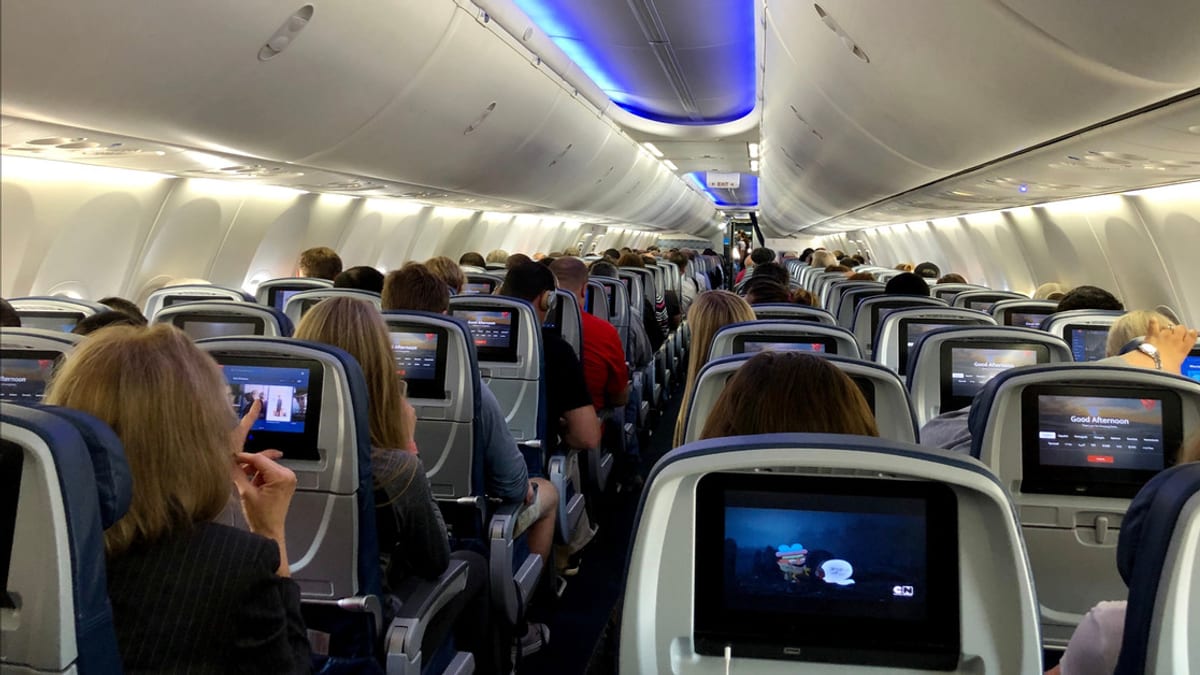
Image by TheTravel
Passenger Claims of Delay Ignite Online Uproar
Accounts circulating on social media and in published coverage describe a Delta flight where boarding was reportedly complete and the aircraft prepared for departure when the crew informed passengers that they would be waiting for a few additional travelers. Multiple posts assert that those travelers were relatives of Delta chief executive Ed Bastian, and that the aircraft door remained open until they arrived at the gate.
One passenger narrative, widely shared online, portrays a cabin growing restless as the minutes passed and the missing passengers failed to appear. Reports indicate that by the time the family boarded, some travelers were openly questioning why a nearly ready-to-depart flight would be held, given industry emphasis on on-time performance and tight connection windows.
Several accounts also contend that members of the flight crew appeared visibly uncomfortable as the situation unfolded. Commenters described what they saw as strained body language and brief, carefully worded announcements, interpreting them as signs that staff understood the optics of delaying a flight while a senior executive’s family raced to the gate.
Delta has not publicly confirmed the identities of the late-arriving passengers or addressed whether any special consideration was given in this specific case. The lack of a detailed response so far has left much of the public discussion driven by traveler testimony and online reaction.
Questions Over Preferential Treatment and Airline Culture
The claims have fueled a broader conversation about how airline executives travel and whether they benefit from unwritten rules that differ from those applied to regular customers. Corporate travel policies for senior leaders typically allow positive-space booking and flexible re-accommodation, but operational decisions that hold up an entire flight for any late passenger are generally viewed as highly sensitive.
Industry observers note that carriers regularly face difficult judgment calls when deciding whether to wait for late connections or standbys, especially when weather or congestion has disrupted schedules across the network. In those cases, gate agents and operations staff are weighing the interests of a few delayed passengers against the risk of misconnecting dozens more downline if the aircraft misses its departure slot.
What distinguishes the Delta episode in the public mind is the allegation that the individuals involved were connected to the airline’s top leadership. Critics argue that even the perception of special treatment for an executive’s family undermines years of messaging about fairness, reliability, and putting all customers on equal footing, particularly after high-profile disruption events.
Supporters of the airline point out that without full operational records, it is impossible to know whether the flight already faced a minor delay, whether air traffic flow constraints limited its departure time, or whether ground staff had discretion to hold the door without materially affecting the broader schedule. Still, the optics of the reported scenario have proven hard to overcome in online discussion.
Frontline Crews Caught Between Policy and Perception
The episode has also drawn renewed attention to the position of pilots and flight attendants, who are often the only representatives passengers see when irregular operations occur. Reports from the contested flight describe a crew that some travelers believed was embarrassed by the unfolding delay, yet still obligated to follow instructions from operations and adhere to internal procedures.
Recent years have seen Delta and other major carriers publicly emphasize support for frontline staff, especially amid large scale disruptions tied to technology outages and tight crew-availability rules. Publicly available information shows that flight attendants and pilots often carry the burden of explaining complex operational choices that they did not make and cannot fully detail in real time.
In the latest controversy, online commenters sympathetic to the crew argue that any decision to hold a flight for specific passengers would have been made above the cabin level, likely involving gate agents and operations control. For travelers, however, the human face of that decision is typically the flight attendant delivering the announcement or the captain explaining why the aircraft is still at the gate.
The suggestion that the crew felt awkward underscores how quickly reputational issues can land on frontline employees. Even when staff follow procedure to the letter, a perception that rules bend for those with influence can erode customer goodwill and put additional strain on workers already managing tight turn times and full flights.
Social Media Amplifies Anger Over Airline Delays
The uproar surrounding the alleged CEO family delay reflects a broader shift in how passengers document and share travel frustrations. In this case, accounts and commentary spread rapidly across social platforms, where users paired the story with their own experiences of missed connections or strict gate cutoffs.
Travelers have become increasingly vocal about what they view as inconsistent enforcement of boarding deadlines, particularly when they have been denied boarding after arriving at the gate only minutes past cutoff. When confronted with reports that a flight may have been held for high-profile travelers, many see a double standard that resonates far beyond a single departure.
Consumer advocates note that heightened sensitivity to fairness comes amid a period of frequent disruptions across the industry, from weather related delays to high profile technology failures that have stranded thousands of passengers. In that environment, individual stories of perceived privilege can quickly become symbolic flashpoints for broader frustrations.
While each irregular operation has its own complexities, the speed at which such incidents spread online means airlines are under growing pressure to respond clearly and consistently. Absent timely explanations, narrative gaps are often filled by speculation and anecdote, as appears to be happening in the Delta controversy.
Renewed Scrutiny of Airline Leadership and Accountability
The allegations arrive at a time when airline leadership is already under intense scrutiny over reliability, customer treatment, and crisis management. Delta, like other major carriers, has faced public criticism following severe disruption events and has invested heavily in messaging about operational resilience and customer care.
Against that backdrop, a story suggesting that an executive’s family may have benefited from an accommodation unavailable to ordinary travelers cuts directly against efforts to project a culture of shared sacrifice and equal treatment. For critics, it raises questions about whether the standards airlines ask of their customers are being followed internally at the highest levels.
Analysts observe that incidents involving leadership conduct, even when limited in operational scope, can have outsized reputational impact. Perceptions formed in the cabin of a single flight can influence how customers interpret future disruptions, compensation policies, and customer service responses across the network.
As discussion continues, attention is likely to focus on whether carriers choose to clarify policies on holding flights, outline how executive travel is handled, or adjust internal guidelines to avoid similar controversies. For travelers, the episode adds another data point to a growing public ledger of how airlines balance operational discipline with individual exceptions in an era of packed planes and fragile schedules.