

More news on this day
Passengers on a Delta Air Lines flight from São Paulo to Atlanta experienced moments of panic after flames were seen coming from one of the aircraft’s engines shortly after takeoff on March 29, prompting an emergency return to Guarulhos International Airport and renewed focus on how modern jets handle dramatic yet contained engine failures.
Get the latest news straight to your inbox!
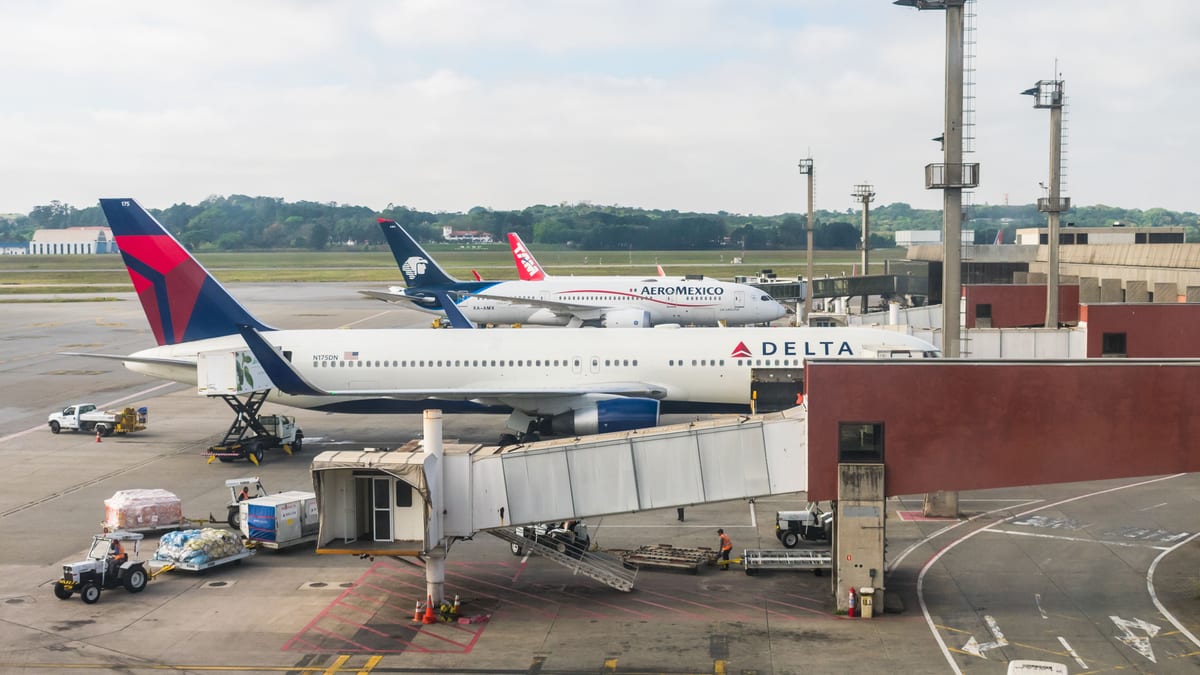
Image by TheTravel
Flames Visible From Cabin Windows as Jet Climbs Out of São Paulo
Publicly shared video and passenger accounts indicate that Delta Flight 104, an Airbus A330 operating from São Paulo’s Guarulhos International Airport to Atlanta, had just lifted off on Sunday night when an apparent engine malfunction produced bright flashes and sustained flames on the left side of the aircraft. The images, recorded from cabin windows and posted widely on social media, show jets of fire streaming from the engine nacelle as the aircraft continued its initial climb.
Reports from those on board describe a loud boom or series of bangs, followed by visible flames that left some travelers in tears and bracing for a more serious emergency. Cabin lights remained on and the interior appeared orderly in the videos, but the contrast between the routine scenes inside and the dramatic fire outside contributed to an intense sense of unease for many passengers.
Despite the alarming visuals, aviation specialists commenting publicly on the footage describe the event as consistent with a severe engine malfunction such as a compressor stall or contained failure, rather than a loss of the aircraft itself. Modern twin-engine widebody aircraft are designed to continue flight safely on a single engine, and cockpit crews train extensively for similar scenarios during takeoff, one of the most critical phases of flight.
According to information shared by aviation tracking enthusiasts and online flight databases, the aircraft leveled off at a relatively low altitude and entered a shallow turn back toward Guarulhos shortly after the incident began, suggesting that the crew quickly elected to abort the long-haul crossing and return to the departure airport.
Controlled Return and Safe Landing Following Engine Shutdown
Open flight-tracking data for March 29 show the A330 circling back to São Paulo and landing within a short period of its original departure time, with no injuries reported among the 286 people said to be on board. Publicly available information from regional media indicates that emergency services were placed on alert around the airport as a precaution while the flight made its approach.
Published coverage notes that the crew reported a mechanical problem with the left engine and chose to return to Guarulhos rather than continue across the Atlantic. Aviation observers point out that such a choice is in line with international safety procedures, which encourage crews to land as soon as practical after a significant engine issue, especially when close to a suitable major airport.
Data visible on widely used flight-tracking platforms show a relatively short airborne period, with the aircraft climbing only briefly before descending back toward the airport. This profile is typical of a precautionary return following a serious but contained technical failure, providing time for pilots to run checklists, secure the affected engine and coordinate with air traffic controllers.
Once on the ground, the aircraft was met by airport fire and rescue vehicles as is standard in such situations. There have been no public reports of fire damage extending beyond the affected engine, reinforcing early indications that the issue was confined to the powerplant and brought under control.
Delta Issues Statement and Arranges onward Travel
According to publicly available statements cited in aviation and travel coverage, Delta Air Lines acknowledged that Flight 104 returned to the airport shortly after departure due to what the airline described as a mechanical problem with the aircraft’s left engine. The airline indicated through these reports that the flight landed safely and that maintenance teams would inspect the aircraft to determine the cause of the malfunction.
Passengers posting on social platforms reported that they were eventually rebooked or accommodated on alternative services to the United States, though specific timing and arrangements varied. Some described long waits in the terminal while crews assessed the aircraft, checked for potential secondary damage and organized new travel options for hundreds of displaced travelers.
Public coverage suggests that Delta followed its standard disruption playbook, offering rebooking assistance, hotel stays where required and meal support to those forced to remain overnight in São Paulo. For travelers headed to onward domestic connections in the United States, the interruption meant missed flights and complex rerouting at the start of a busy spring travel period.
The airline has not publicly detailed the exact nature of the engine failure or the timeline for returning the affected Airbus A330 to service. Technical investigations of this kind typically involve both airline maintenance staff and national aviation regulators, who review onboard data, maintenance records and physical evidence from the engine to identify the root cause.
Why Flames Can Appear Dramatic but Remain Contained
Aviation experts and pilots commenting in public forums emphasize that while images of flames from a jet engine are frightening, they do not automatically indicate an imminent loss of the aircraft. Turbofan engines are built with heavy containment structures designed to keep failed components inside the engine casing, preventing debris from piercing fuel tanks or the pressurized cabin.
In many documented cases, including previous incidents involving commercial jets of various airlines, contained engine failures have produced showers of sparks or visible fire with passengers filming from their seats, yet the aircraft landed safely with no injuries. Training scenarios for airline crews routinely cover engine fires or severe malfunctions during takeoff, requiring pilots to react quickly, secure the affected engine and decide whether to continue or return.
Publicly available safety data show that commercial aviation has maintained an exceptionally low rate of serious accidents in recent years, despite occasional high-profile videos of midair incidents spreading rapidly online. Specialists note that the design philosophy behind modern jets assumes that engines can fail and focuses on ensuring that such events remain survivable and manageable for the crew.
For travelers unfamiliar with the technical background, the sight of flames so close to the wing and fuel tanks can be deeply unsettling, particularly in the moments before any explanation from the flight deck. Airlines and regulators have increasingly recognized the psychological impact of these incidents, encouraging clear, timely communication to help passengers understand what is happening and what steps are being taken to keep them safe.
Passenger Panic Highlights Communication and Confidence Challenges
Accounts emerging from Flight 104 describe a cabin atmosphere that shifted quickly from routine departure to visible distress as passengers noticed the flames. Some travelers reportedly shouted or cried, while others tried to comfort seatmates or capture video of the engine, reflecting the range of reactions people may have when confronted with a rare but dramatic event.
Commentary in aviation safety circles notes that clear announcements from the cockpit and cabin crew can play a critical role in managing fear. When passengers are told, in straightforward terms, that one engine has been shut down, that the aircraft is designed to fly safely on the remaining engine and that a return to the airport is underway, levels of panic often diminish even if images outside the window remain disconcerting.
In this case, publicly shared posts suggest that crew members moved through the cabin conducting visual checks and ensuring seat belts were secured as the aircraft circled back toward São Paulo. Such actions align with standard operating procedures for abnormal situations during takeoff and initial climb, helping ensure that passengers and loose items are prepared for a possible firm or expedited landing.
The Flight 104 incident adds to a series of recent engine-related disruptions affecting major carriers worldwide, events that are statistically rare but tend to resonate strongly with the traveling public. As video clips of the fiery engine continue to circulate, airlines and regulators face ongoing questions about how best to communicate risk, maintain confidence and ensure that passengers understand both the seriousness of such malfunctions and the multiple layers of protection built into modern air travel.