

More news on this day
A Delta Air Lines service operating as flight DL1311 between Atlanta and West Palm Beach diverted to Fort Lauderdale for an urgent emergency landing, disrupting travel plans across South Florida as aviation trackers and passenger accounts highlighted another day of operational strain in one of the nation’s busiest air corridors.
Get the latest news straight to your inbox!
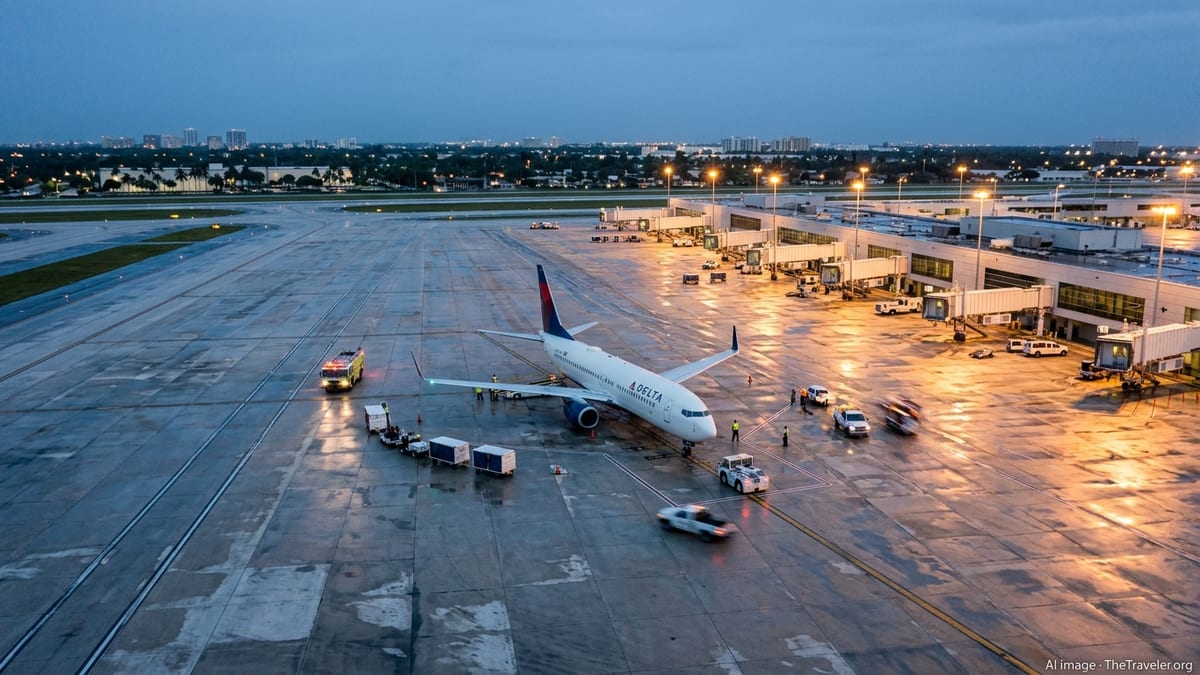
Midroute Diversion Shifts Flight to Fort Lauderdale
Publicly available flight-tracking data shows that Delta flight DL1311 departed Hartsfield-Jackson Atlanta International Airport bound for West Palm Beach before altering course and diverting to Fort Lauderdale-Hollywood International Airport, where it made an unscheduled landing described as an emergency arrival. The aircraft, which typically serves the short-haul route between Atlanta and Palm Beach International, descended earlier than planned and routed east toward the Fort Lauderdale coastline instead of continuing south to its scheduled destination.
Initial information from aviation monitoring services indicates the diversion occurred while the aircraft was already en route over Florida, with the flight path showing a clear deviation away from its direct track toward West Palm Beach. The aircraft then lined up with Fort Lauderdale’s main north-south runway configuration, a common choice for diversions in the region due to the airport’s extensive facilities and proximity to multiple hospitals and airline support bases.
Delta has not publicly detailed the precise cause of the emergency landing, and available reports do not specify whether the diversion was linked to a technical issue, a medical event, or another operational concern. However, the decision to divert to Fort Lauderdale rather than continue to West Palm Beach reflects standard airline practice of routing to the airport judged to offer the quickest and most practical support for the situation on board.
There were no early indications from public sources of serious injury or structural damage associated with the landing. The emergency nature of the arrival instead centered on the urgency of getting the aircraft on the ground quickly and safely, a scenario that occurs periodically across U.S. domestic networks when crews act out of what aviation guidance frames as an abundance of caution.
Passenger Impact Across South Florida Airports
The diversion of DL1311 added to an already complex travel landscape in South Florida, where West Palm Beach, Fort Lauderdale, and Miami together function as an interconnected aviation region. Passengers expecting to arrive at Palm Beach International instead found themselves at Fort Lauderdale, roughly 50 miles to the south, requiring ground transportation or rebooking solutions to reach their final destinations.
Travelers on similar routes in recent weeks have described disrupted connections and longer-than-expected travel days when flights are rerouted or schedules compressed during irregular operations. While each incident has its own cause, the cumulative effect for passengers is often similar: extended waits, unexpected airport changes, and a scramble for rental cars, rideshares, or alternative flights to complete their trips.
According to publicly posted schedule data, DL1311 typically operates as a regular domestic service within Delta’s Atlanta hub-and-spoke network, connecting South Florida travelers to a broad range of onward destinations through Hartsfield-Jackson. When a flight of this type diverts, the ripple effects can extend beyond the passengers on board as missed connections reverberate through the day’s remaining departures and arrivals.
Some recent traveler accounts from Atlanta and Florida airports highlight how diversions and weather-related disruptions can quickly strain airport infrastructure, leaving aircraft waiting for gates and baggage operations running behind schedule. Against that backdrop, an emergency landing such as DL1311’s diversion to Fort Lauderdale can add another layer of complexity to already tight turnaround times and crowded ramp operations.
Why Fort Lauderdale Often Serves as a Diversion Airport
Fort Lauderdale-Hollywood International Airport is frequently used as an alternate landing site for flights operating along Florida’s Atlantic coast, including services bound for West Palm Beach and Miami. The airport’s multiple runways, robust airline presence, and extensive ground facilities make it a logical option when crews need to land quickly or when operational support may be stronger than at smaller neighboring fields.
Aviation reference materials list Fort Lauderdale among the region’s key approach and navigation hubs, with a range of instrument procedures geared toward safely handling high volumes of traffic in varying weather. These capabilities, combined with its role as a major commercial gateway, enable the airport to accommodate emergency or precautionary arrivals while continuing to handle routine scheduled flights.
In diversion scenarios, operational considerations often include the availability of maintenance services, medical response, and gate space, along with the ease of transferring passengers onward by air or ground. Fort Lauderdale’s position between Miami and West Palm Beach, and its direct access to major roadways, help airlines relocate passengers relatively quickly once an aircraft is secure at the gate.
For an Atlanta-origin flight such as DL1311, a diversion to Fort Lauderdale can also offer more robust options for reassignment onto later services, whether back through Atlanta or onward to South Florida airports, as carriers balance aircraft positioning with passenger needs.
Context of Operational Strain in the Atlanta Hub
The incident unfolded against a backdrop of recent operational challenges affecting flights into and out of Atlanta. In mid-March, travelers transiting the hub shared accounts of long waits on the tarmac, delayed deplaning, and connecting flights missed after weather disturbances and aircraft repositioning complicated already busy schedules.
Some passenger reports describe being held on aircraft for extended periods awaiting open gates, as well as crews approaching duty limits during storm-related congestion. These strain points underscore how quickly conditions at a major hub can shift from routine to stressed, particularly when thunderstorms or other hazards move across the Southeast and ripple through tightly timed schedules.
While the diversion of DL1311 originated from an urgent in-flight situation rather than from congestion on the ground, it occurred within that larger operational environment. Each unplanned landing or schedule change forces new decisions for airlines managing crew hours, aircraft maintenance requirements, and the downstream impact on thousands of connecting travelers.
Travel analysts frequently note that such events, though disruptive in the moment, are part of a broader safety culture in which erring on the side of caution is prioritized over on-time performance. In practice, that means flights like DL1311 may divert or land sooner than originally planned when any potential concern arises, even if later assessments determine that the aircraft remained mechanically sound or that a medical episode was ultimately manageable.
What Comes Next for Affected Travelers
Following a diversion of this nature, passengers are typically reaccommodated on later flights to their intended destinations or provided with ground transport options when airports lie within a relatively short driving distance. In the case of DL1311, travelers headed for West Palm Beach from Fort Lauderdale could complete their journeys by highway in under two hours, depending on traffic, or wait for available seats on subsequent services northbound or southbound along the coast.
Publicly available guidance from consumer advocates suggests that travelers impacted by emergency diversions should keep boarding passes, receipts, and any documentation related to additional expenses, even when the underlying cause involves safety considerations beyond a carrier’s control. While compensation policies vary, clear records help passengers navigate customer service channels if they pursue reimbursement for meals, lodging, or transportation.
For airlines, each diversion also serves as a test of communication and coordination, from how promptly passengers receive updates in the cabin to the speed with which rebooking and ground arrangements are made once the aircraft arrives. With South Florida’s airports closely linked and heavily trafficked, smooth handling can significantly reduce the long-term frustration that might otherwise accompany a sudden change of plans.
As more information about DL1311’s emergency landing becomes part of the flight’s public record, the episode will stand as another reminder of the balance airlines must strike between operational efficiency and the overriding priority of safety, particularly along one of the busiest short-haul corridors in the United States.