

More news on this day
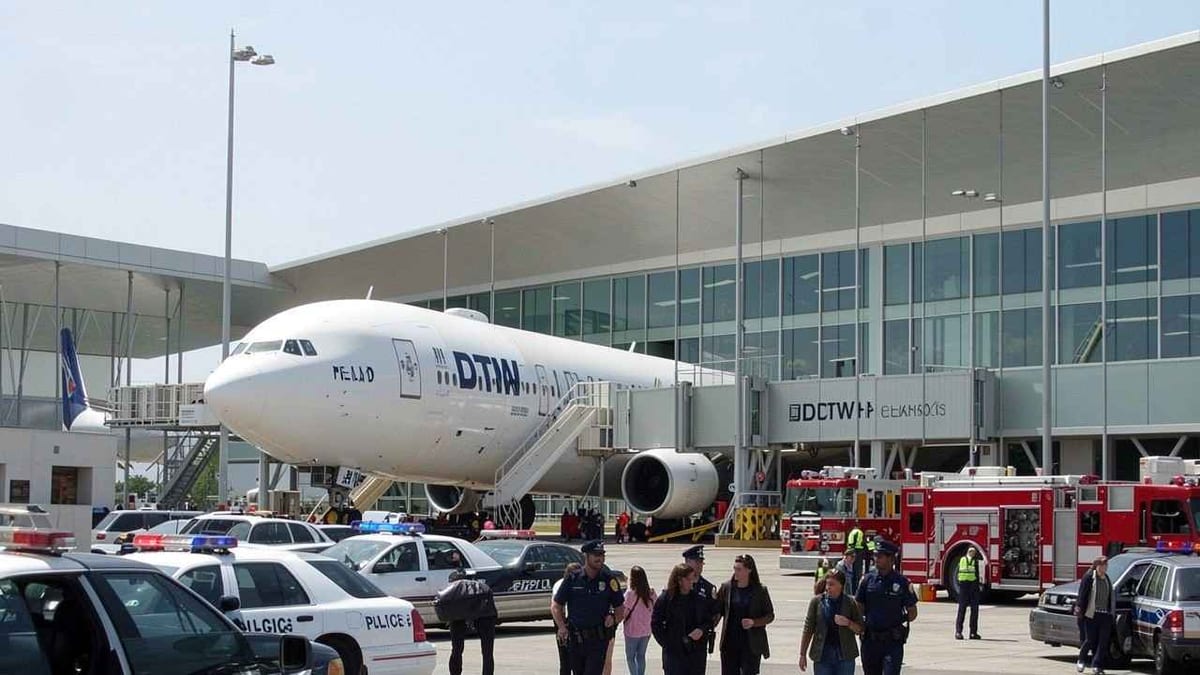
Delta Air Lines Flight DL2351, operating from Dallas Fort Worth to Boston on March 29, 2026, made a precautionary emergency landing back in Dallas after the crew detected an unspecified in-flight irregularity shortly after departure.
Get the latest news straight to your inbox!
Abrupt Turnback Shortly After Departure
Publicly available flight information and industry reports indicate that Delta Flight DL2351, an Airbus A319 scheduled on the Dallas Fort Worth to Boston route, departed in the morning and had just begun its initial climb when the crew identified an issue that prompted an immediate turnaround.
Tracking data and aviation coverage show that the aircraft did not proceed far from the Dallas Fort Worth area before altering course and returning to the airport, consistent with standard airline practice when a potential technical or operational concern is identified early in the flight.
Reports describe the event as a precautionary emergency landing rather than a response to a confirmed critical failure, aligning with the conservative decision-making frameworks that large carriers apply when faced with anomalies during the departure phase.
According to publicly available scheduling documents, DL2351 is a regularly scheduled service between Dallas Fort Worth and Boston, listed to operate daily in March 2026 with Airbus narrowbody equipment, which is commonly used on medium-haul domestic routes.
Safe Return to Dallas Fort Worth
Coverage from travel industry outlets states that the flight landed safely back at Dallas Fort Worth International Airport, and there were no immediate indications of injuries among passengers or crew.
While the specific nature of the irregularity has not been detailed in publicly accessible reports, the decision to remain close to a hub airport with extensive ground support is consistent with established airline and aviation safety procedures.
Observers note that emergency landings of this type are typically classified as precautionary when the flight crew elects to discontinue a journey out of an abundance of caution, even in the absence of visible damage or acute system failures.
The safe outcome for Flight DL2351 reflects a broader industry pattern in which diversions and returns to the departure airport are treated as protective measures, prioritizing quick access to maintenance, emergency services, and customer support facilities.
Ongoing Assessment and Limited Public Details
As of March 31, 2026, publicly available information offers only limited detail about the underlying cause of the incident, with reports referencing an unspecified irregularity detected shortly after takeoff.
It is common for airlines and investigators to require time to review aircraft systems data, maintenance records, and crew reports before providing any technical explanation, and many such events ultimately involve minor component issues or sensor warnings rather than major mechanical failures.
Industry analysts point out that in the absence of confirmed findings, early public descriptions of incidents like DL2351 are usually kept general, avoiding speculation about specific systems or components involved.
Available operational schedules and fleet data show that the A319 type used on this route is widely deployed across Delta’s domestic network, making any confirmed technical patterns of interest to regulators, safety experts, and other operators, although no such pattern has been publicly identified in relation to this event.
Passenger Disruption and Rebooking Efforts
The unscheduled return to Dallas Fort Worth left passengers originally bound for Boston facing delays and itinerary changes, a common consequence when an aircraft must be taken out of normal rotation for checks or maintenance.
Published information on Delta’s customer policies indicates that when flights are disrupted for operational or safety reasons, travelers are typically offered rebooking on later services or alternative routings, subject to availability on the busy Dallas to Boston and connecting networks.
Given that DL2351 is scheduled as a daily link between Dallas Fort Worth and Boston, passengers may have been accommodated on subsequent Delta departures via connecting hubs such as Atlanta or other partner services, although specific rebooking patterns for this flight have not been documented in publicly accessible reports.
Travel industry commentary often highlights the cascading effect that such incidents can have on airline operations, as one diverted aircraft can trigger schedule adjustments, equipment swaps, and crew reassignment across multiple routes.
Context Within a Broader Focus on Safety
The incident involving Flight DL2351 comes amid ongoing public attention to airline safety and operational resilience, with travelers increasingly aware of diversions, turnbacks, and emergency landings reported across global networks.
Aviation safety data and expert commentary generally emphasize that precautionary returns like the one undertaken by DL2351 represent the system functioning as intended, with conservative thresholds for continuing flight when irregular indications appear in the cockpit.
Recent bulletins and scheduling documents from Delta illustrate a broader environment of operational adjustments, schedule refinements, and regional flexibility measures intended to maintain reliability while adhering to strict safety standards.
For travelers using major hubs such as Dallas Fort Worth and Boston Logan, the DL2351 event serves as a reminder that while such disruptions can be inconvenient, the overriding priority across commercial aviation remains ensuring that flights only proceed when aircraft, crew, and conditions meet all required safety parameters.