

More news on this day
A routine Delta Air Lines departure from New York’s John F. Kennedy International Airport to Las Vegas has turned into an industry talking point after a heated radio exchange between the cockpit and ground control was captured on publicly available air traffic audio, raising fresh questions about communication culture and professionalism between pilots and air traffic controllers at one of the United States’ busiest airports.
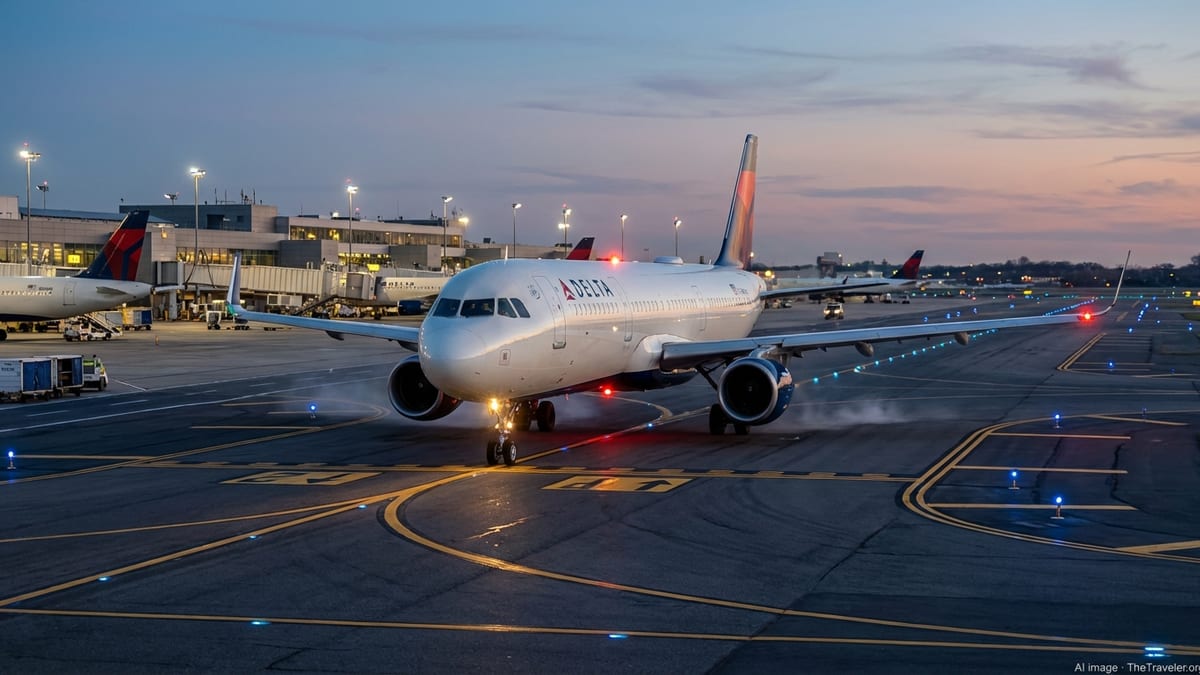
What Happened on Delta Flight DL806 at JFK
The incident involved Delta Air Lines Flight DL806, an Airbus A321neo scheduled to operate from New York JFK to Las Vegas on February 19, 2026. According to recorded ground frequency audio shared by aviation monitoring channels, the disagreement began during taxi as the aircraft was preparing to depart from Runway 4L.
Ground control instructed the crew of DL806 to taxi behind the second JetBlue aircraft, then turn right on taxiway Bravo and hold short of taxiway Juliet en route to the departure runway. The Delta crew correctly read back the instructions, indicating that they had received and understood the clearance.
Moments later, however, the aircraft instead turned onto taxiway Alpha rather than Bravo. While both taxiways run parallel in the same general direction in that portion of the airfield and there was no immediate conflict with other traffic, the deviation from the assigned route quickly drew a sharp response from the ground controller and set the tone for a tense exchange that would unfold over the next several minutes.
The controller, audibly frustrated, ordered the aircraft to stop and highlighted that the crew had read back the correct route to Bravo yet still turned onto Alpha. The pilot acknowledged the mistake but objected to the tone of the rebuke, and the back-and-forth soon spilled beyond strictly operational communication.
The Heated Exchange Captured on ATC Audio
As the aircraft came to a halt on taxiway Alpha, the controller told the crew of DL806 that the wrong turn was, in his words, “crazy,” adding emphasis that the correct taxi path had just been read back. The pilot responded that he had made a mistake and offered to make a U-turn to get back to the assigned route, then added that he did not want the controller to “freak out” over the error.
The controller rejected the suggestion of a U-turn, telling the pilot that he was not going to “play the victim” and stressing that there had been no loss of separation or immediate safety issue such as an imminent collision. The controller then reassigned the aircraft a revised taxi route, instructing DL806 to continue on Alpha and hold short of another intersection further ahead.
While the aircraft continued taxiing, the atmosphere on the frequency remained tense. Later, as DL806 waited in line for departure, the Delta pilot remarked over the radio whether the crew would be left to sit until they missed their departure slot because the controller was angry. That comment drew an immediate and stern warning from the controller, who said that any further remarks not directly related to air traffic would result in the crew being given a phone number to call the tower supervisor after the flight.
The exchange eventually subsided, and DL806 departed a short time later without further incident. Passengers on board, who typically do not hear detailed ground communications, were unlikely to have been aware of the full verbal sparring between cockpit and tower as the aircraft taxied for takeoff.
Why a Taxiway Mix-Up Touched Off a Larger Debate
On its face, the triggering event was relatively minor by complex airport standards: a mis-turn between parallel taxiways with no immediate traffic conflict. Such navigation errors during ground movements, while taken seriously, are not unheard of at large, layout-intensive hubs such as JFK, where pilots must juggle fast-paced instructions, heavy traffic and frequent runway and taxiway reconfigurations.
However, the sharp tone and personal nature of parts of the exchange quickly elevated the incident from a routine correction into a flashpoint over the broader culture of communication at major U.S. airports. Listeners who later heard the recording split in their reactions, with some arguing that the pilot should have been more careful and less defensive, and others criticizing the controller’s choice of words and demeanor over the frequency.
The incident also resonated because it involved a JFK controller whose style has drawn attention in previous viral clips, often featuring pointed or impatient responses to pilots. Critics say that overly combative or sarcastic language can erode trust and increase stress in a setting where clarity and calm under pressure are essential, particularly for crews unfamiliar with JFK’s layout or operating in challenging conditions such as poor visibility or heavy traffic.
Supporters of the controller, by contrast, point out that busy ground and tower positions at major hubs involve intense concentration and constant time pressure, with controllers responsible for maintaining safe separation among dozens of aircraft moving simultaneously. From that perspective, deviations from issued instructions, however minor, must be called out quickly and firmly to prevent more serious errors from cascading.
Professionalism on the Frequency and Pilot–Controller Dynamics
The DL806 exchange is rekindling a longstanding debate about what constitutes appropriate tone and professionalism in radio communications between pilots and controllers. Industry training emphasizes brevity, clarity and adherence to standardized phraseology in order to minimize ambiguity, particularly when hundreds of lives and multimillion-dollar aircraft are at stake.
Many former controllers and airline captains note that a certain level of clipped or brusque communication is common at busy airports, where both sides are accustomed to high-speed exchanges and rely on experience to read context. Still, they caution that sarcasm, commentary on competence and emotionally charged language can be counterproductive, increasing stress for crews and heightening the risk of further misunderstandings.
From the pilot’s side, becoming openly defensive or argumentative on the frequency is likewise discouraged. Training typically stresses that any concern about controller behavior should be addressed later through formal reporting channels, not in real time on a shared frequency where other aircraft are listening and operational messages must compete for airtime.
In the DL806 case, both the controller’s “that’s crazy” remark and the pilot’s subsequent comments about the controller being upset and “freaking out” are being cited as examples of an interaction that veered away from the neutral, task-focused style regulators and airlines promote. Safety experts stress that while the core objective of maintaining safe separation was met, the communication breakdown offers an opportunity for both sides to reflect on how tone can escalate or de-escalate a situation.
How ATC Audio Became Public and What Passengers Heard
Like many high-profile cockpit and tower exchanges, the DL806 incident became public through recordings made available by hobbyist platforms that monitor and rebroadcast air traffic control frequencies. Enthusiasts regularly capture and archive transmissions at major airports, and notable exchanges are often paired with radar replays to create visual reconstructions that can be shared widely online.
In this case, clips of the DL806 ground frequency audio circulated quickly among aviation blogs and social media, where commentary ranged from technical breakdowns of the taxi instructions to broader critiques of workplace culture in aviation. The availability of high-quality recordings, combined with the human drama of a heated argument, contributed to the story’s reach beyond niche aviation circles.
For passengers, however, the experience on board was likely far more mundane. During taxi, cabin announcements and normal cockpit procedures generally insulate travelers from the granular back-and-forth with ground control. Unless the dispute leads to a lengthy delay or an obvious maneuver such as an abrupt stop or turn, most travelers remain unaware of any tension between cockpit and tower.
Nonetheless, the spread of ATC audio clips has made it more common for frequent flyers and nervous passengers to seek out recordings after an unusual delay or maneuver, trying to piece together what happened. That trend raises new questions for airlines and controllers about how public scrutiny of routine radio traffic might influence behavior on both sides of the microphone.
Safety Context: Taxi Deviations and JFK’s Complex Layout
While the DL806 incident did not involve a near-collision or runway incursion, it unfolded against a backdrop of heightened attention to ground safety at U.S. airports. Complex layouts, intersecting runways and frequent construction projects can all contribute to navigation challenges, particularly at legacy hubs such as JFK.
Aviation safety data show that taxiway and runway deviations are taken seriously by regulators even when there is no immediate loss of separation. Each event is typically logged, reviewed and, when warranted, investigated to determine whether additional training, clearer signage or procedural changes are needed to reduce future risk.
At JFK, the challenge is compounded by a dense schedule of international and domestic flights, a mix of widebody and narrowbody aircraft, and frequent runway configuration changes driven by wind and traffic. Controllers must issue rapid-fire instructions to keep ground movements flowing, while pilots must interpret those instructions accurately amid cockpit workload, unfamiliar taxi routings and, at times, language barriers.
In that context, safety advocates argue that a culture of open communication and mutual respect is as important as technical skill. They say that when a pilot acknowledges a mistake, the priority should be calmly re-establishing a clear mental picture of the aircraft’s position and issuing unambiguous new instructions, rather than dwelling on blame over the frequency.
Possible Next Steps for Delta and Regulators
Delta Air Lines has not publicly detailed any internal actions related to DL806, but major carriers typically review any event that draws significant attention, particularly when recordings of their crews circulate widely. Internal safety and training departments may examine how the crew handled the taxi deviation, the wording of their exchanges and whether existing briefings adequately prepare pilots for high-intensity communication environments at airports like JFK.
Regulators and air navigation service providers, including the Federal Aviation Administration in the United States, similarly monitor reported incidents and widely shared recordings as part of broader oversight of air traffic services. While a single heated exchange that ends without a loss of separation does not automatically trigger disciplinary measures, it can feed into trend analyses about workload, staffing and communication culture at particular facilities.
Industry observers note that the DL806 recording joins a small but growing library of viral clips from JFK involving contentious exchanges between controllers and pilots from different airlines and countries. That pattern may increase pressure on management to reinforce expectations around professional language, just as airlines continue to emphasize non-punitive reporting, standardized phraseology and assertive but calm communication from crews.
For travelers, the most immediate impact is likely to be indirect. There is no indication that the safety of DL806’s passengers and crew was compromised, and there were no reported injuries or operational disruptions beyond a brief taxi delay. But as more of the flying public pays attention to ATC audio and online reconstructions, airlines and controllers alike may feel a stronger incentive to ensure that what is heard on the airwaves not only keeps aircraft safely separated but also reflects the professionalism the industry promotes.