

More news on this day
Delta Air Lines is grappling with massive flight disruptions along the U.S. East Coast as a fast‑intensifying nor’easter slams major hubs from New York to Boston, colliding with an already fragile operational backdrop shaped by recent technology failures and a bruising winter weather season.
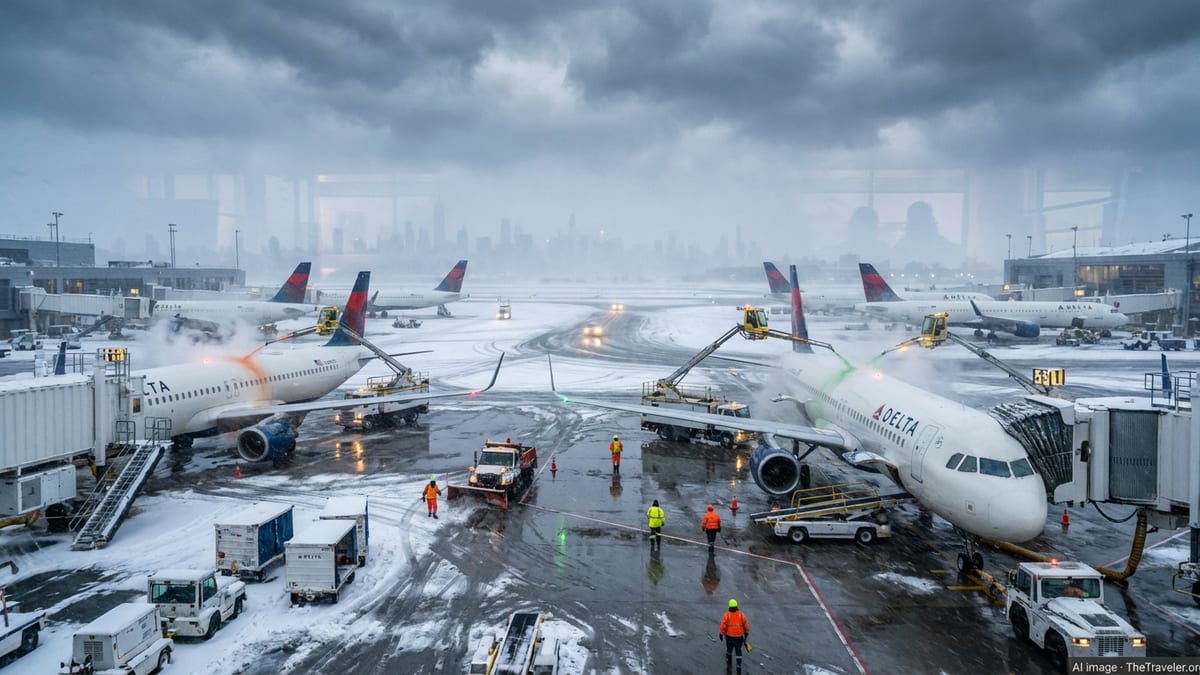
Storm Hernando Slams a Network Already on Edge
The latest nor’easter, named Winter Storm Hernando by some forecasters, arrived over the weekend with blizzard conditions expected from Maryland through coastal New England, prompting emergency declarations, travel bans and widespread airport shutdowns. Forecasters warned of whiteout visibility, wind gusts topping 60 miles per hour and snowfall totals of 15 to 20 inches in key metro areas including New York City and Boston, conditions that make safe takeoffs and landings nearly impossible for sustained stretches of time.
Airlines across the industry moved quickly to ground flights ahead of the worst of the storm, but Delta’s footprint at New York’s LaGuardia and John F. Kennedy airports, as well as Boston Logan, left it especially exposed. With those hubs effectively paralyzed for at least two days, aircraft and crews that normally flow through the Northeast are now out of position, setting off a chain reaction of cancellations and delays that will spill well beyond the storm zone.
The nor’easter hit just weeks after a separate, sprawling winter storm in late January triggered what federal officials called one of the worst days for weather‑related U.S. flight cancellations since the early months of the pandemic. For Delta, which has been navigating repeated weather shocks and investor pressure to maintain reliability, Hernando arrives at a particularly sensitive moment.
In public statements and operational updates, Delta has framed this latest disruption as a safety‑first decision in the face of extreme weather. Yet behind the scenes, the scale of the cancellations is also exposing how intertwined winter weather, crew scheduling systems, and airport infrastructure have become, especially at crowded coastal hubs.
Delta Halts Operations at Key East Coast Hubs
On Sunday, February 22, Delta confirmed it expects to suspend operations at New York’s LaGuardia and JFK airports and at Boston Logan International Airport into Tuesday, February 24. The move effectively shutters three of the airline’s most important gateways for at least two full days, with knock‑on effects likely to linger through midweek as aircraft are repositioned and flight crews are brought back into regulatory compliance on duty hours.
By Sunday afternoon, flight tracking data showed more than 8,000 flights canceled across all U.S. carriers for Sunday and Monday, with Delta responsible for a significant share of the scrapped departures at New York and Boston airports. Local officials warned that runway visibility and crosswinds could deteriorate further as the nor’easter deepened offshore and snow bands pivoted directly over the Interstate 95 corridor.
Delta’s network planners have been reshuffling schedules in real time, combining lightly booked flights, rerouting aircraft away from the hardest‑hit airports and adding capacity to southern hubs such as Atlanta to accommodate stranded passengers where possible. But with ground transportation also constrained by road travel bans and hazardous conditions, many customers are unable to reposition themselves to alternate airports, amplifying the sense of system‑wide gridlock.
The suspension at LaGuardia and JFK is particularly consequential because these airports serve as anchors for Delta’s shuttle routes and business‑heavy transcontinental services. Corporate travelers who depend on tight connections and predictable schedules are among those facing the most acute disruption, with some told that the first available rebooking options fall several days out.
Passengers Face Cascading Cancellations and Limited Options
For travelers, the convergence of a powerful coastal storm with a complex airline network has translated into long lines, confusing rebooking options and uncertainty over when they will reach their destinations. At terminals from Atlanta to Detroit and Minneapolis, Delta’s counters were packed with passengers seeking alternatives after their flights to or through the Northeast were canceled, even if their departure cities were under clear skies.
Airline data shows that once flight disruptions pass a certain threshold in a hub‑and‑spoke system, cancellations begin to cascade even in unaffected locations. Aircraft that were scheduled to fly from New York to Florida, for example, never depart, which in turn strands passengers booked on later segments from Florida to the Midwest or West Coast. With Delta preemptively halting large portions of its LaGuardia, JFK and Boston schedules, that domino effect is now playing out on a national scale.
Many customers who had already endured weather interruptions from January’s Storm Fern, or who still remember last year’s high‑profile technology outage that crippled Delta’s operations for days, described a growing sense of frustration. Some questioned why the airline seemed slower to recover than certain rivals after major shocks, while others expressed concern that call centers and digital tools were overwhelmed, leaving them to navigate complex travel waivers on their own.
Consumer advocates say the combination of limited spare capacity in airline schedules and increasingly volatile winter weather is leaving passengers with fewer viable alternatives when storms like Hernando hit. With hotel rooms near major airports booking up quickly and rental car inventories stretched thin, many stranded travelers are left to wait out the storm in terminals or return home to try again later in the week.
Technical Vulnerabilities Compound Weather Chaos
While Hernando is fundamentally a meteorological event, Delta’s current turmoil cannot be separated from the airline’s recent history with technology failures. In the aftermath of a 2024 security software incident that led to days‑long operational paralysis and an estimated multihundred‑million‑dollar financial hit, Delta executives acknowledged that key scheduling and crew‑tracking systems remained highly complex and, in some cases, cumbersome to restart after a shock.
Industry analysts note that even when a weather event, rather than a software glitch, is the initial trigger, the same vulnerable systems determine how quickly an airline can recover. Crew‑management platforms need to be able to rapidly reassign pilots and flight attendants to new routes while respecting intricate safety rules, and passenger‑service applications must process mass schedule changes without crashing. In recent quarters, Delta has pledged heavy investment in these areas, yet the scale of the current disruptions shows that resilience remains a work in progress.
Delta’s dependence on tightly integrated hubs magnifies the impact of those vulnerabilities. When a storm knocks out one coastal gateway, traffic can sometimes be rerouted through other hubs. When a major nor’easter simultaneously chokes multiple Northeast airports, however, the pressure on technology systems and operations staff spikes, revealing any lingering weaknesses from past outages.
Aviation consultants say Delta is not alone in facing this challenge. Across the industry, carriers are wrestling with how to modernize aging back‑end systems while running full flight schedules in real time, a task akin to rebuilding a jet engine while it is still in the air. As climate change drives more frequent extreme weather and as air travel demand remains robust, the cost of getting that balance wrong grows higher with each disruptive event.
Travel Waivers, Flexible Rebooking and What Flyers Can Expect
In an effort to soften the blow for affected customers, Delta has issued an expansive travel waiver covering dozens of airports along the Eastern Seaboard. The waiver allows passengers whose itineraries touch the storm zone to move their trips to dates outside the worst weather window without paying standard change fees, and in many cases without paying any fare difference if they travel by a specified date.
However, the flexibility on paper does not always translate into easy solutions in practice. With so many flights scrubbed at once, the number of open seats on remaining services is limited, particularly at peak times. Travelers who postponed their trips to later in the week now risk encountering crowded flights and tighter standby lists, especially on popular business routes into New York and Boston as offices reopen and events resume.
Delta has urged customers to use its app and website to handle rebookings and has deployed additional staff to call centers to manage high volumes. The airline is also advising travelers to check flight status repeatedly before leaving for the airport, since rolling operational assessments may lead to last‑minute cancellations or aircraft swaps as the storm evolves.
For passengers already at the airport when their flights are canceled, standard Delta policies on meal and hotel vouchers vary depending on whether the disruption is considered within the airline’s control. Because Hernando is classified as a weather event, compensation is more limited than in the case of a mechanical or crew‑related delay, leaving many stranded customers to pay out of pocket for accommodations during the storm.
Economic and Operational Toll on Delta’s Winter Quarter
The timing of Hernando’s hit is particularly problematic for Delta’s financial performance in the first quarter of 2026. The airline was already working through the lingering impact of January’s Storm Fern, which forced thousands of cancellations and prompted analysts to trim profit expectations due to lost revenue and higher operating costs.
Each canceled flight represents not only refunded tickets and rebooking expenses, but also ripple effects on ancillary revenue streams such as baggage fees, onboard sales and premium‑cabin upgrades. At the same time, operational disruptions tend to inflate costs, from overtime for airport and maintenance staff to additional fuel burn when aircraft must be rerouted or repositioned around closed airspace and congested corridors.
Delta has told investors that its diversified revenue base, which includes a growing portfolio of premium cabins and loyalty‑program income, gives it resilience against episodic weather shocks. Still, back‑to‑back major storms in January and February, layered on top of ongoing capital spending on technology upgrades and fleet renewal, are testing that thesis. Analysts say the airline will likely have to update its guidance if cancellations remain elevated or if recovery drags beyond the initial storm window.
Beyond the immediate quarter, the disruptions are also sharpening questions about how much redundancy Delta is willing to build into its system. Maintaining extra aircraft, spare crews and looser schedules can improve reliability during crises, but those buffers carry significant cost in an industry where margins remain thin and competition fierce.
Impact on Airports and the Broader East Coast Travel Network
The strain on Delta’s operations is mirrored by the broader stress facing the East Coast’s transportation ecosystem. At New York’s three major airports and in Boston, plow crews are racing to keep runways and taxiways clear amid heavy snow rates and strong winds that can quickly undo progress. Ground equipment must be winterized and deicing fluid carefully managed to avoid shortages as waves of aircraft prepare for eventual departures once conditions improve.
Inside terminals, local concessionaires, airport hotels and ground‑transport operators are all feeling the shock. An influx of stranded passengers creates bursts of demand for food and lodging, but it can also overwhelm staff and supply chains, especially when employees themselves struggle to reach work through snowbound streets and disrupted public transit systems.
Intercity rail and bus networks, often the next‑best alternative when flights are grounded, are also constrained by the storm, with many services canceled or curtailed in the same coastal corridor. That leaves relatively few options for travelers whose trips cannot be easily postponed, such as those heading to medical appointments, family emergencies or critical business meetings.
For East Coast tourism boards and local governments, the immediate focus is on safety and cleanup. Yet the sight of shuttered terminals, snow‑covered runways and departure boards filled with cancellations is an unwelcome setback for destinations that have been courting visitors through winter festivals, cultural events and off‑season travel promotions designed to smooth out seasonal demand.
Questions About Resilience as Extreme Weather Becomes Routine
As the nor’easter grinds across the Northeast and Delta works to restore its schedules, a broader debate is resurfacing about how well U.S. airlines and airports are prepared for an era of more frequent and more intense storms. Meteorologists and climate researchers have warned that rapid swings between unseasonably warm and bitterly cold conditions, coupled with additional moisture in the atmosphere, can fuel heavier snowfall and more volatile winter systems along the Atlantic seaboard.
For airlines, that shift translates into a need for more sophisticated forecasting tools, greater coordination with air traffic control and more flexible staffing models that can withstand repeated disruptions without burning out crews. For airports, it means investing in snow‑removal equipment, deicing infrastructure and hardened power and communications systems that can operate reliably in high‑impact storms.
Delta has positioned itself as a premium carrier with a strong operational pedigree, frequently topping on‑time performance rankings in calmer periods. But the airline’s high‑profile stumbles during past technology outages and the scale of its current weather‑driven disruptions are now part of a larger conversation about what operational excellence should look like in a changing climate.
As travelers across the East Coast watch the storm track and refresh their flight status updates, the question looming over Delta and its competitors is whether today’s massive disruption will be remembered as an unfortunate outlier or as another sign that the industry’s playbook for winter operations must be rewritten for a new atmospheric reality.