

More news on this day
Delta Air Lines has temporarily suspended a suite of special travel services for members of the U.S. Congress as the ongoing Department of Homeland Security shutdown stretches into its sixth week, a move that symbolically places lawmakers back in the same airport queues facing millions of ordinary travelers while Transportation Security Administration operations remain under pressure.
Get the latest news straight to your inbox!
Perks Paused as Political Standoff Hits the Skies
According to published coverage, Delta has halted its dedicated congressional service desk and related VIP-style handling for lawmakers and some staff, citing the strain on resources created by the prolonged lapse in DHS funding that began on February 14, 2026. The shutdown, which specifically targets DHS, has left TSA officers and other critical airport security personnel working without pay, contributing to mounting operational stress across major U.S. airports.
Reports indicate that the suspended benefits previously allowed members of Congress to access a specialized reservations and support line, priority problem-solving during irregular operations, and assistance that smoothed rebooking and disruptions. While these services did not formally replace TSA requirements, they often helped lawmakers navigate airport hurdles more quickly than the general public.
Publicly available information shows that Delta framed the suspension as temporary and tied directly to the shutdown’s impact, specifying that specialty services for members of Congress will be paused until TSA is fully funded and normal conditions resume. The decision arrives as airlines, airports and travelers adapt to the cumulative effects of federal funding disputes that have now produced two shutdowns in 2026 alone.
DHS Shutdown Ripples Across TSA Operations
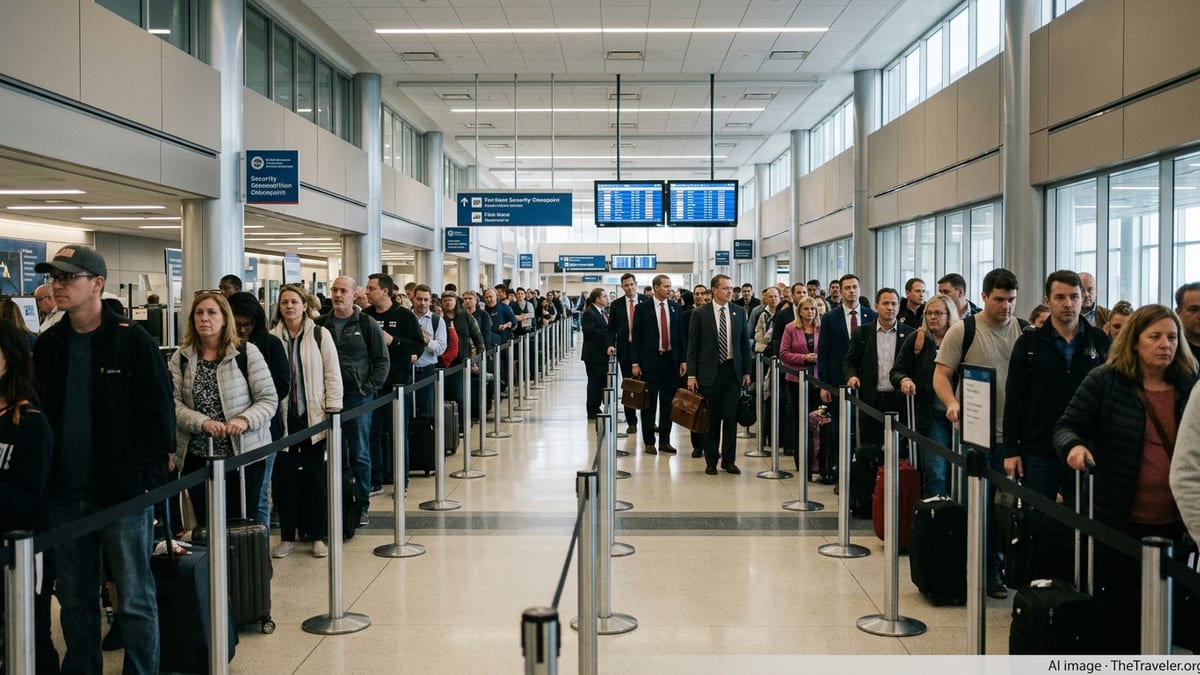
The DHS-specific shutdown has left TSA among the most visible federal entities operating under strained conditions. TSA officers have been required to report to duty without pay, a scenario that has historically led to higher absenteeism, staffing challenges and extended wait times during previous shutdowns. Recent accounts from major hubs describe multi-hour security queues, partial checkpoint closures and the deployment of personnel from other DHS components to help manage crowds.
Although core screening remains operational, the broader ecosystem that supports airport security has been disrupted. Training, overtime budgets and some nonessential support functions have been curtailed or delayed, contributing to a fragile system at a time of sustained travel demand. Industry advisories from travel and tourism groups warn that if the shutdown continues, staffing and morale issues at TSA could further erode resilience during peak periods.
Travel organizations and airport authorities have urged passengers to arrive well ahead of departures, especially at the busiest hubs. They also emphasize the importance of using airline apps and flight alerts to track last-minute gate changes and delays, acknowledging that the unpredictability generated by the shutdown is complicating the usual choreography of airport operations.
Congress Faces the Same Lines as Other Travelers
One of the most symbolically potent aspects of the current crisis is that members of Congress are increasingly exposed to the same bottlenecks faced by their constituents. Publicly available reports note that, alongside Delta’s move, legislative efforts are underway to restrict or eliminate special screening privileges that had previously enabled some lawmakers to move more quickly through TSA checkpoints, even as the broader traveling public contends with longer lines.
The shift comes as political pressure intensifies. Commentaries in national and regional outlets describe a growing perception that the airport experience has been sharply divided between elite travelers and everyone else, particularly when government officials maintain preferential access while federal employees staffing security lines go unpaid. Delta’s decision, and similar steps by other industry stakeholders, appear to be responding to that sentiment by aligning lawmakers more closely with the consequences of their budget impasse.
For regular travelers, the move may hold more symbolic than practical impact. The number of people directly affected by the suspended congressional perks is small relative to overall passenger volumes. However, the sight of lawmakers in the same TSA lines and departure lounges could add a new layer of political urgency to negotiations in Washington, as delays and disruptions become harder for decision-makers to avoid personally.
What Delta’s Move Means for Travelers Right Now
For most passengers, Delta’s suspension of congressional perks does not change day-to-day travel logistics, but it contributes to a broader pattern of airlines recalibrating operations and messaging during the shutdown. Travelers are still advised to expect longer security screening times at some airports, especially during early morning and evening peaks, when traffic is heaviest and staffing shortages are most visible.
Industry guidance suggests arriving earlier than usual, building in extra connection time, and favoring nonstop itineraries where possible. Travelers enrolled in expedited security programs such as TSA PreCheck and Global Entry are generally still able to use those benefits, though past shutdowns have shown that application processing and enrollment center hours may fluctuate when federal staffing is constrained.
Delta and other carriers are continuing to encourage use of mobile tools, including airline apps and text alerts, to monitor flight status in real time. If further TSA disruptions emerge, rebookings, rolling delays and gate changes are likely to be communicated digitally before they are announced in the terminal, making mobile connectivity an important buffer against uncertainty.
Escalating Pressure on Lawmakers to Resolve the Stalemate
The partial shutdown of DHS has already generated visible strain across the aviation system, from backlogged security lines to concerns about long-term workforce morale at TSA. With Delta’s high-profile suspension of congressional travel perks, the political spotlight is shifting more sharply toward the personal inconvenience now facing lawmakers as well.
Commentary from travel and political analysts highlights that tying elite privileges to the restoration of TSA funding may be a calculated attempt to increase the cost of inaction on Capitol Hill. As the shutdown continues, any additional steps that narrow the gap between the travel experiences of elected officials and those of ordinary passengers are likely to feed into the broader debate about accountability for federal funding lapses.
For travelers planning spring and early summer trips, the situation remains fluid. Should the shutdown persist, further operational adjustments by airlines and airports are possible, particularly if TSA staffing or morale deteriorates further. For now, the most immediate impact of Delta’s move is symbolic, underscoring how deeply the DHS funding standoff has penetrated everyday aspects of American travel, from check-in counters to the composition of the queues at airport security.