

More news on this day
Delta Air Lines has temporarily suspended special travel services for members of Congress during the ongoing federal government shutdown, removing a suite of bespoke airport perks at a moment when ordinary travelers are facing some of the longest security lines in years.
Get the latest news straight to your inbox!
Delta Pulls Back Congressional Desk and VIP Assistance
According to published coverage of the shutdown’s impact on air travel, Delta has halted its stand-alone congressional desk service and related specialty support reserved for lawmakers and some staff. The move pauses a program that typically coordinated travel for Capitol Hill offices, offered dedicated phone support and helped smooth last-minute itinerary changes for members of Congress flying on the carrier.
Publicly available reporting indicates that Delta framed the change as a temporary suspension tied to stretched resources during the shutdown. The airline has been managing heavy passenger volumes at major hubs while transportation security staffing is strained and some airport checkpoints are operating with reduced capacity.
The suspended perks are distinct from formal federal security programs and instead reflect a set of customer services that Delta had extended to a high-profile group of frequent travelers. By pausing them, the carrier has effectively placed members of Congress back into the same service channels used by corporate travelers and the general public, at least for the duration of the funding impasse.
Shutdown Turmoil and Mounting Airport Delays
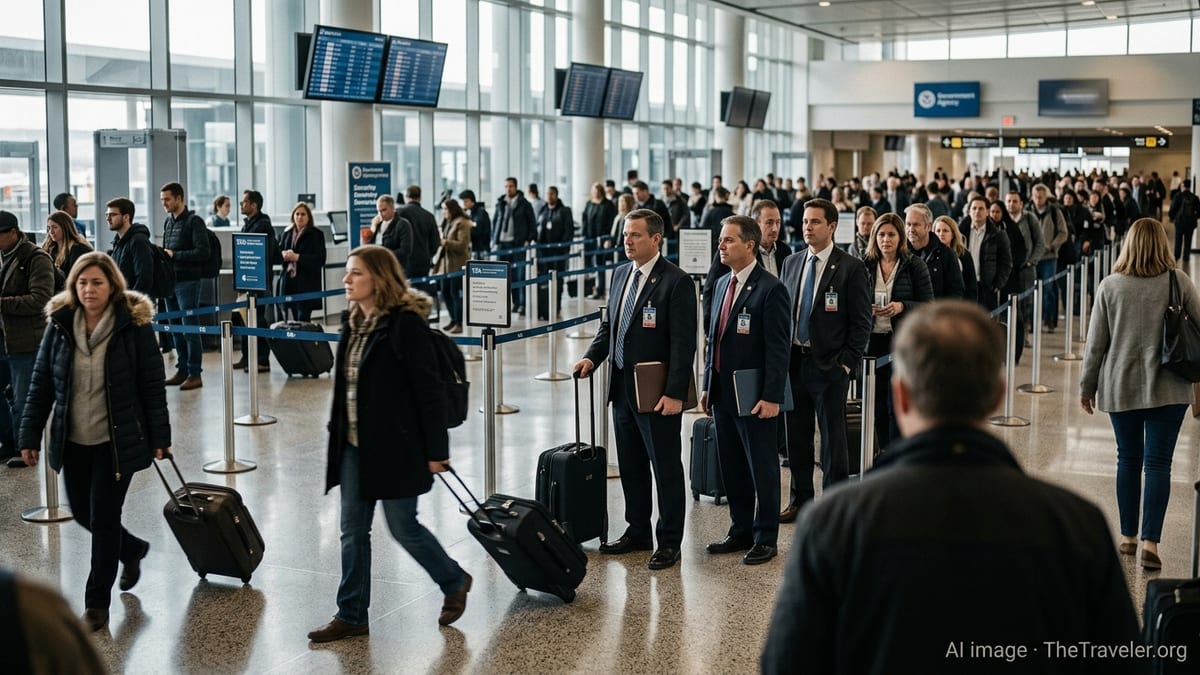
The decision comes as the shutdown continues to disrupt travel across the United States. Publicly available information on airport operations shows that several large airports have seen multi-hour waits at security as Transportation Security Administration staffing and related support struggle to keep pace with demand.
At some hubs, reports indicate that only a fraction of checkpoints have been fully staffed during peak periods, contributing to bottlenecks that ripple through departure schedules. Airlines, including Delta, are operating these flights in an environment where federal aviation and security agencies are contending with delayed paychecks and complex contingency plans.
While aviation safety oversight and critical air traffic control functions continue, published coverage describes a system under visible strain. Travelers have shared accounts of missed flights, crowded concourses and last-minute gate changes, underscoring how a federal budget standoff can quickly translate into ground-level disruptions for millions of passengers.
Longstanding Perks Face New Political and Public Scrutiny
The suspension of Delta’s congressional perks arrives amid broader scrutiny of special treatment for elected officials at airports. Recent coverage of congressional travel has detailed how some lawmakers have historically benefited from priority services, expedited assistance and, in some cases, faster access through certain parts of the airport experience.
Separate from airline-run programs, legislators have debated the appropriate role of preferential screening access and other benefits in the context of a shutdown that has left many federal workers unpaid or working under heightened pressure. Public discussion has increasingly questioned whether elected officials should retain enhanced privileges while the broader system struggles.
Commentary in major news outlets has highlighted the optics of VIP travel when rank-and-file federal employees and everyday passengers are waiting in extended lines. The decision by a large carrier such as Delta to pause its own set of perks has quickly become part of that larger conversation about fairness, symbolism and accountability in a period of political gridlock.
What the Change Means for Lawmakers and Travelers
In practical terms, the suspension means members of Congress flying Delta will no longer have access to a dedicated congressional service channel for booking, rebooking and day-of-travel coordination during the shutdown. Instead, they will rely on the same reservations and airport support options available to other customers, supplemented only by whatever status they hold through frequent-flyer programs.
Travel industry analysts note that many lawmakers are already high-frequency business travelers and may still enjoy benefits tied to elite status, such as priority boarding or preferred seating. The paused Delta program, however, had symbolized a more tailored relationship between the airline and Capitol Hill, and its removal carries weight beyond the immediate operational impact.
For the wider traveling public, the change does not shorten lines or add capacity at checkpoints, but it has resonated as a visible response to the shutdown’s inequities. Travelers contending with long waits and uncertainty are seeing one of the nation’s biggest airlines align itself with mounting frustration over perceived two-tier treatment at airports.
A Signal to Washington Amid an Uncertain Timeline
By tying the suspension to the shutdown period, Delta has sent a pointed signal that some of its special arrangements with Washington will not continue as usual while key parts of the federal aviation system operate under intense strain. Publicly available statements and reporting suggest the perks could be reinstated once full funding is restored, but there is no clear timeline for a resolution in Congress.
The move also highlights how airlines are navigating the political dynamics of a prolonged funding lapse. Carriers depend heavily on federal infrastructure, from security screening to air traffic control, yet must also maintain public trust among passengers who directly experience the consequences of government stalemates in airport queues.
As the shutdown continues, travel watchers are tracking whether other airlines follow Delta’s lead or reassess their own relationships with government travelers. For now, the suspension of congressional perks has become another visible marker of how a budget impasse on Capitol Hill can reshape the travel experience for both those who write federal laws and those who live with their effects at the airport.