

More news on this day
Delta Air Lines has issued broad travel waivers for customers flying to and through western Mexico after the killing of Jalisco New Generation Cartel leader Nemesio “El Mencho” Oseguera Cervantes in a Mexican military raid sparked violent unrest, airport disruptions and shelter-in-place advisories across the region.
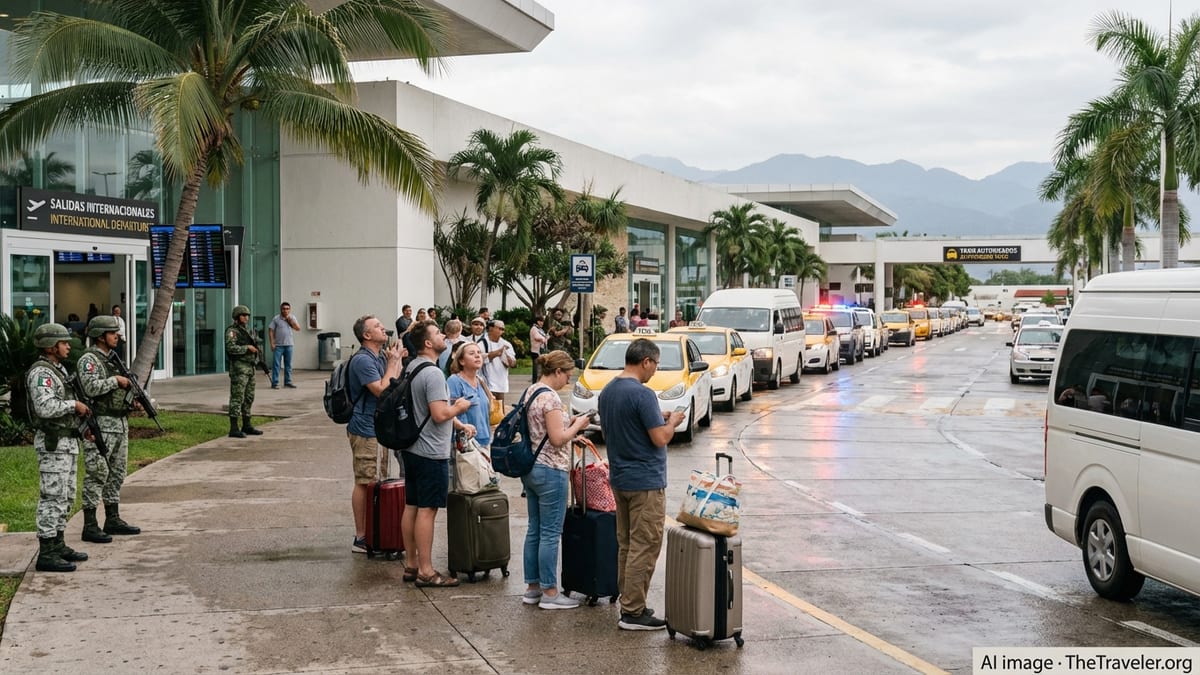
Waivers Rolled Out as Violence Disrupts Key Mexican Gateways
Delta moved on Sunday to introduce flexible rebooking options for passengers holding tickets to several airports in western Mexico, including the popular resort city of Puerto Vallarta, as scenes of burning vehicles, roadblocks and gunfire rippled across Jalisco and neighboring states. The Mexican army’s February 22 operation in the mountain town of Tapalpa, about two hours from Guadalajara, left El Mencho mortally wounded and set off a wave of retaliation that quickly spilled onto highways and into aviation hubs.
The waivers, which apply to travel over the coming days, allow eligible customers to change itineraries to later dates without standard change fees and, on some fare types, without paying any difference in price if they rebook within the stated window. In its advisory, Delta cited the “evolving security environment” and limited airport access in affected areas, acknowledging that even flights still scheduled to operate may be difficult for travelers to reach.
While the full list of covered routes may shift as the situation develops, the focus is squarely on west-coast leisure markets that funnel hundreds of thousands of North American vacationers to Pacific beaches each winter. Delta joins several other major carriers that either paused or sharply curtailed operations into Puerto Vallarta on Sunday as local authorities urged tourists to remain inside their hotels and resorts.
Military Operation Against El Mencho Triggers Unrest
The trigger for the airline waivers was a high-risk military operation that Mexican officials describe as one of the most significant blows to organized crime in the country in more than a decade. On February 22, federal forces backed by air support targeted Nemesio Rubén Oseguera Cervantes, better known as El Mencho, in the highlands of Jalisco. The longtime head of the Jalisco New Generation Cartel had eluded capture for years and was widely considered Mexico’s most powerful drug trafficker.
According to government accounts, troops came under heavy fire as they moved in on the cartel stronghold. Multiple suspected gunmen were killed at the scene, and El Mencho, initially reported wounded, died en route to Mexico City after being airlifted from the operation zone. The raid, coordinated with United States intelligence support, capped a long-running effort to dismantle the cartel’s leadership, but its immediate aftermath has been anything but orderly.
Within hours, videos shared on social media showed buses, trucks and private vehicles ablaze on major roads, particularly in and around Guadalajara and the corridor toward the coast. Armed groups set up impromptu blockades, using burning vehicles to seal off access points and intimidate motorists. For the aviation sector, the unrest translated into dangerous conditions on the main highway into Puerto Vallarta’s Licenciado Gustavo Díaz Ordaz International Airport, even before violence reached the perimeter of the terminals themselves.
Airports Face Cancellations, Delays and Access Problems
As clashes spread, operations at airports in western Mexico became increasingly difficult. While runways and airspace remained technically open for much of Sunday, airlines faced a patchwork of challenges ranging from crew duty-time constraints to questions over whether passengers could safely reach terminals through areas of unrest. Reports from the Guadalajara region described people running for cover amid gunfire near the international airport, heightening concern among carriers and aviation authorities.
Air Canada was among the first to publicly acknowledge temporary suspension of flights into Puerto Vallarta due to what it described as the “ongoing security situation.” United Airlines also canceled services to the resort city, according to reporting by international wire agencies, and other U.S. carriers trimmed schedules or diverted aircraft away from the region. Delta’s decision to issue waivers rather than simply wait-and-see reflects the level of uncertainty over how long the disruptions around Jalisco’s transport infrastructure might last.
At Puerto Vallarta’s airport, one of Mexico’s key coastal gateways, a combination of flight cancellations and passenger anxiety quickly translated into crowded check-in halls and lines at ticket counters as travelers scrambled to adjust plans. Some inbound tourists landed to find that routes to their resorts were clogged by security checkpoints or closed due to nearby arson attacks on vehicles. Outbound visitors, meanwhile, faced a different dilemma: with hotels urging guests to stay on property, many were unsure whether it was wise to attempt the drive back to the terminal for a scheduled departure.
U.S. Travel Advisories and Shelter-in-Place Guidance
The United States Embassy in Mexico City issued a security alert shortly after news of El Mencho’s death, advising U.S. citizens in several states, including Jalisco, to shelter in place and avoid travel. The notice highlighted ongoing clashes, roadblocks and arson in multiple regions, and specifically referenced tourist centers such as Puerto Vallarta and the Lake Chapala area, along with major cities like Guadalajara and Reynosa. For travelers, the message was clear: unnecessary movement should be postponed until authorities regain control of the streets.
Canadian officials issued similar cautions, and consular services began fielding calls from tourists worried about both personal safety and the fate of upcoming vacations. For airlines, these government advisories carry significant weight in operational planning. Once embassies and foreign ministries formally warn citizens against travel to a region or recommend avoiding nonessential movements, carriers often respond with policy changes that provide more flexibility for passengers to rebook or reroute their journeys.
In this case, Delta’s waiver effectively aligns its customer options with the advice coming from diplomatic missions. By allowing travelers to push back departures or reroute through alternative Mexican destinations where conditions are calmer, the airline makes it easier for passengers to obey shelter-in-place guidance without incurring stiff financial penalties. The waivers also help ease congestion at affected airports by discouraging anxious travelers from rushing to terminals where security services are already under strain.
Impact on Tourism in Puerto Vallarta and Western Mexico
The timing of the unrest is particularly sensitive for Puerto Vallarta and the surrounding Riviera Nayarit coastline, which are in the thick of peak winter travel season for North American visitors. February traditionally sees high hotel occupancy as travelers from the United States and Canada flee colder climates for the Pacific sun. This year, many woke up to find local authorities asking them not to leave resort grounds while law enforcement worked to contain flare-ups of cartel violence away from tourist zones.
Hotels and resort operators along the Bay of Banderas scrambled to reassure guests that properties were secure and that the most severe incidents were occurring on highways and in inland municipalities rather than on the beachfront. Still, images of plumes of smoke on the horizon and reports of gunfire in parts of Jalisco cast a long shadow over the region’s carefully cultivated image as a relaxed, family-friendly destination. Travel agents reported a spike in calls from clients asking whether to cancel or postpone upcoming trips scheduled over the next several days.
In the short term, Delta’s waiver and similar moves by other carriers may mitigate some economic damage by encouraging travelers to rebook instead of demanding full refunds or abandoning trips altogether. But tourism officials in Jalisco and neighboring states will face a longer-term task of convincing visitors that the violence is a temporary flare-up in specific corridors rather than a constant threat across the entire region. With Guadalajara slated to host matches during the 2026 World Cup, the international spotlight on local security has never been more intense.
How Delta’s Waiver Policy Works for Affected Passengers
For travelers holding Delta tickets into or out of western Mexico over the coming days, the airline’s waiver offers several practical options. Customers whose flights fall within the designated date range and involve eligible destinations can typically select new travel dates within a set window without paying a change fee. For certain fare types, if the new itinerary keeps the same origin and destination and departs before the rebooking deadline, the fare difference may be waived as well, effectively turning a peak-season ticket into a flexible voucher.
Those unable or unwilling to travel at all in the near future may have the option to convert the value of their tickets into an eCredit for future use, subject to Delta’s standard rules. Passengers are encouraged to manage changes via the airline’s app or website rather than at airport counters, where staffing and security constraints in Mexico could limit the ability to provide in-person assistance. For travelers who booked through online travel agencies or third-party platforms, rebooking may need to be coordinated with the original point of purchase, which can add complexity during fast-moving events.
Travelers already on the ground in Mexico should also pay attention to guidance from hotels and local authorities before heading to the airport to catch a rebooked flight. Even with a confirmed reservation, getting safely from resort zones to terminals remains a key consideration, especially in areas where roadblocks and sporadic violence have been reported. Delta’s customer communications emphasize that safety decisions ultimately rest with passengers, who are urged to monitor official advisories and local news broadcasts in real time.
Security Concerns and the Future of Air Travel to Jalisco
The death of El Mencho raises difficult questions for both Mexican authorities and the airlines that connect its tourist regions to the rest of the world. While killing a cartel leader is often portrayed as a decisive victory, recent history suggests that such operations can trigger transitional turbulence as rival factions jockey for control and splinter groups lash out. For the aviation and tourism sectors, that volatility translates into a higher likelihood of sudden travel disruptions, even in destinations that are otherwise stable and well-policed.
Industry analysts note that carriers like Delta have grown increasingly adept at responding to security incidents with targeted, time-limited waivers that balance passenger safety, regulatory obligations and financial realities. Rather than suspending service indefinitely, airlines now rely on granular intelligence and close coordination with local authorities to make day-by-day decisions about which flights can safely operate. In Jalisco, that may mean a patchwork of cancellations, delays and resumptions as security sweeps progress and road access is restored.
Looking ahead, airlines are expected to keep a close watch on developments not only in Puerto Vallarta and Guadalajara, but also in secondary airports that serve smaller coastal towns and inland business centers. If violence remains concentrated in specific corridors tied to cartel logistics, carriers may continue flying while maintaining flexible waiver policies in case the situation suddenly worsens. Conversely, any sign that unrest is spreading into core tourist districts or directly targeting transportation infrastructure could prompt more aggressive schedule reductions.
What Travelers Should Know Before Flying to Western Mexico
For would-be visitors weighing whether to proceed with trips to Jalisco and neighboring states, the current situation underscores the importance of staying informed and building flexibility into plans. Even as airlines like Delta provide waivers, travelers should read the fine print on rebooking windows, fare rules and refund eligibility, and consider purchasing travel insurance that explicitly covers civil unrest or government-issued travel warnings. Keeping itineraries as simple as possible, with nonstop flights and prearranged transfers from reputable providers, can also reduce exposure to volatile areas.
Travelers who decide to continue with their journeys in the coming days should be prepared for visible security measures at airports and along key roads, including checkpoints, military patrols and occasional detours around affected zones. It is advisable to register with consular services where available, maintain regular contact with family or friends back home, and follow local news in both Spanish and English to track evolving conditions. Above all, officials stress that visitors should follow instructions from local authorities and resort management, even if that means delaying excursions or adjusting vacation plans.
For now, Delta’s travel waivers offer a measure of control to passengers caught in an unfolding security crisis. As Mexican forces work to consolidate gains from the operation that killed El Mencho and restore confidence in the safety of Jalisco’s roads and airports, the balance between the lure of Pacific beaches and concerns about cartel violence will remain at the center of travel decisions for many North American tourists.