

More news on this day
Delta Air Lines has issued an urgent warning to travelers as escalating conflict and rolling airspace closures across the Middle East trigger widespread schedule changes, route diversions, and a pause on flights to Tel Aviv, affecting US and international passengers through at least late March.
Get the latest news straight to your inbox!
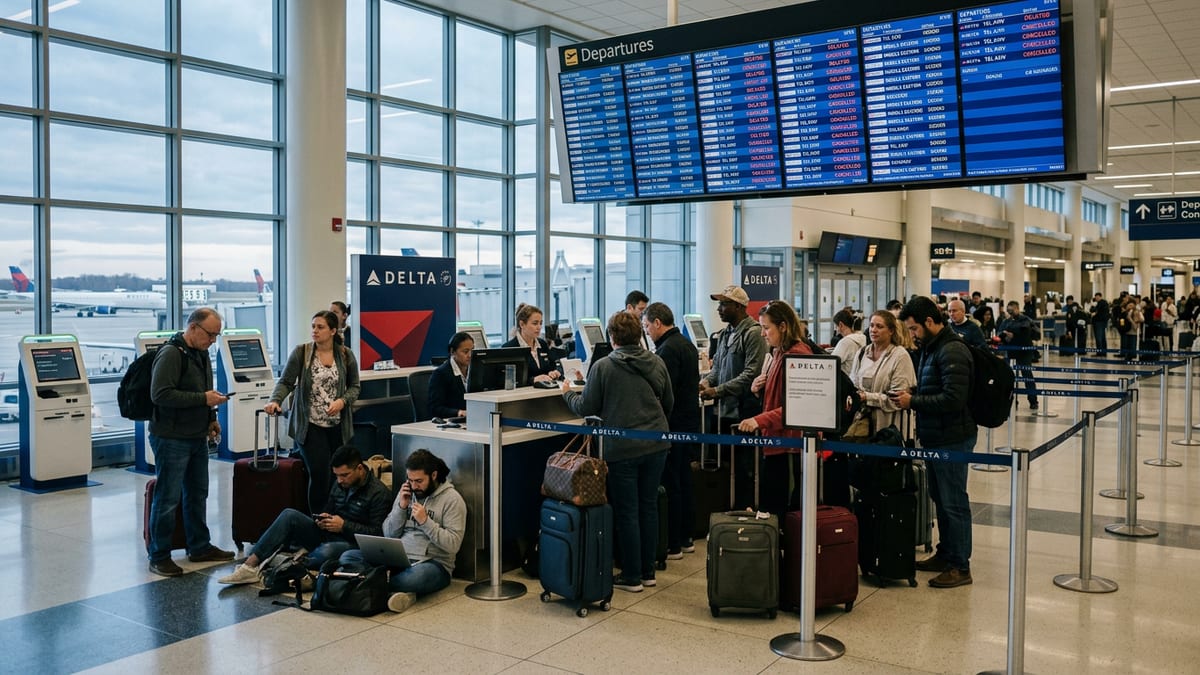
Delta Extends Suspension of Tel Aviv Flights
Delta has temporarily suspended its nonstop service between New York John F. Kennedy International Airport and Tel Aviv, with the airline’s latest schedule update indicating cancellations through at least March 22, 2026. The move follows renewed instability and airspace restrictions in the region that have rippled across major global carriers.
According to Delta’s public advisories, customers holding tickets issued on or before March 1 for travel to or from Tel Aviv between February 28 and March 31 are being offered additional flexibility. This includes options to rebook for later dates or adjust itineraries without standard change fees when they are directly affected by cancellations or significant schedule changes.
Travel forums and passenger reports indicate that some travelers scheduled to fly on Delta to or from Israel have been rebooked weeks out or encouraged to consider alternate routings on partner carriers via European hubs. For many, that has turned relatively simple nonstop journeys into more complex multi-leg itineraries, with added uncertainty over last-minute schedule shifts.
The suspension underscores how fragile the Tel Aviv market remains, even after earlier signs of recovery and announcements that more US flights would return in time for the spring 2026 travel season. Delta’s decision aligns with continued caution across the industry as airlines weigh operational safety, crew routing, and demand in a volatile environment.
Middle East Airspace Closures Ripple Across Global Routes
The latest disruption comes amid a broader pattern of airspace closures and restrictions affecting large portions of the Middle East and parts of North Africa. Recent conflict developments and strikes involving Iran and Israel have prompted temporary shutdowns or tight controls over key flight corridors, forcing carriers to cancel services or reroute long-haul operations.
Travel industry coverage describes one of the busiest aviation corridors between Europe and Asia as heavily constrained, with some hubs beginning limited operations while others maintain strict limitations. This has created knock-on effects for flights that do not touch conflict zones directly but typically overfly affected countries, increasing flight times and complicating schedule planning for airlines such as Delta.
Publicly available risk assessments note that airspace over countries including Iran, Iraq, Israel, Jordan, Kuwait, Qatar, Bahrain, Syria, and the United Arab Emirates has been subject to rolling notices, frequently updated as security conditions evolve. As a result, carriers have had to make day-by-day decisions on whether to operate, divert, or cancel affected flights.
For passengers, this means that itineraries connecting the United States and Europe to destinations in the Gulf, Levant, and parts of South Asia may be subject to last-minute changes in routing or departure times, even when the origin and destination airports remain open. Longer flight paths to avoid restricted airspace can also increase the risk of missed connections for those on tight schedules.
What Delta Passengers Need to Know Right Now
Delta is encouraging customers traveling anywhere near the affected region to monitor their bookings closely through the airline’s app or website, where schedule changes and rebooking options are typically posted first. Travelers with Tel Aviv in their itinerary remain the most directly affected, but those connecting through European gateways or codeshare flights with partner airlines may also experience disruptions.
Under Delta’s current exception policies, many customers whose travel plans fall within the published waiver dates can adjust their trips without paying the usual change fees. In some cases, fare differences may still apply if passengers elect to change destinations, switch to significantly later dates, or move into higher-demand travel periods. Passengers whose flights are canceled outright are generally being offered the choice of rebooking, receiving a travel credit, or pursuing a refund in line with Delta’s standard contract of carriage.
Consumer advocates and travel analysts emphasize the importance of verifying contact details within airline profiles so that schedule alerts reach travelers quickly by email, text, or app notification. In the current environment, same-day changes are not uncommon, and passengers who respond early to rebooking options tend to secure better alternate routings and connection times.
Experts also recommend that travelers build in additional buffer time for complex itineraries that traverse European and Middle Eastern hubs, particularly when onward connections rely on separate tickets. Even passengers flying solely between the United States and Europe may encounter residual delays if their aircraft or crew rotations are affected by Middle East detours.
Safety, Security Advisories and Airport Access
The airline’s urgent messaging comes alongside a series of updated travel and security advisories from government agencies for parts of the Middle East. Recent bulletins covering countries such as the United Arab Emirates, Qatar, and others in the Gulf region highlight heightened security postures, localized incidents, and evolving risks that can influence airline decisions about specific flights.
Published alerts describe increased screening, restricted access to airport terminals, and recommendations that travelers proceed to airports only with confirmed tickets and clear instructions from their carrier. At several major hubs, authorities have limited entry to ticketed passengers and essential personnel, leaving friends and family unable to accompany travelers inside terminals.
For Delta customers, this environment means that even when a flight is operating, the ground experience may feel markedly different. Longer check-in and security queues, additional document checks, and short-notice gate changes are all possible. Passengers are being urged by travel advisors to arrive earlier than usual for departures touching the region or connecting through airports under heightened security measures.
The combination of tightened security, fluctuating airspace permissions, and airline schedule adjustments underscores how rapidly conditions can change. Observers note that what appears stable on a given morning can shift by evening, and they advise travelers to treat any itinerary involving the broader Middle East as provisional until departure.
Planning Ahead Amid Fuel Costs and Network Uncertainty
Beyond immediate safety and routing concerns, the turmoil has also raised questions about fuel prices and broader airline economics. Recent business reporting highlights that Delta, like other major carriers, is grappling with jet fuel cost spikes linked to the conflict and uncertainty over future supply, even as demand for transatlantic and leisure travel remains solid.
While Delta has indicated through public comments that it is closely monitoring the situation and not speculating on near term ticket price movements, industry analysts suggest that sustained detours around closed airspace and elevated fuel costs could eventually filter into fares. For now, price impacts appear uneven, with some routes holding steady while others see sharp increases due to capacity cuts and strong demand.
Travel planners advise that US passengers with essential trips to or through the region consider booking flexible or refundable fares where possible, and factor in the potential for extended layovers or overnight stops if connections are disrupted. For leisure travelers, some consultants recommend delaying nonessential journeys to the most affected destinations until airspace restrictions ease and airline schedules stabilize.
As of mid March 2026, the trajectory of the crisis remains uncertain, and airlines including Delta are signaling that further adjustments are possible. For passengers, the most practical steps are to stay informed through official airline channels, review the fine print on waivers and refunds, and be prepared to adapt plans quickly in response to shifting conditions.