

More news on this day
Delta Air Lines has joined American, United, Southwest, JetBlue, and Alaska in a growing chorus of industry pressure on Washington to resolve the Transportation Security Administration funding crisis, as the prolonged government shutdown fuels mounting delays, crowding, and operational disruption across major U.S. airports.
Get the latest news straight to your inbox!
Airlines Present United Front as Shutdown Turmoil Deepens
Major U.S. carriers are presenting an unusually unified front as the TSA shutdown pushes already strained airport operations toward what some industry observers describe as a breaking point. Delta’s decision to publicly align its stance with American, United, Southwest, JetBlue, and Alaska reflects the scale of disruption now visible to passengers across the country.
Publicly available information shows airlines are framing their appeals in terms of basic system reliability, arguing that an extended period of unpaid work and staffing uncertainty among federal security screeners has become incompatible with stable flight schedules. Trade association statements and airline updates emphasize that even carriers with robust internal contingency plans cannot fully shield travelers from the knock-on effects of reduced or inconsistent TSA staffing at checkpoints.
Reports indicate that airport concourses from Atlanta and New York to Denver, Dallas, and Los Angeles have seen intermittent spikes in wait times, with some terminals periodically closing individual security lanes or redirecting passengers between checkpoints. While not every airport has experienced the same severity of impact on every day of the shutdown, the growing unpredictability has translated into rolling waves of missed connections, last‑minute gate changes, and longer recovery times after weather or technical disruptions.
Industry analysts note that the unified messaging from airlines is aimed as much at reassuring customers that carriers are advocating for more stable conditions as it is at policymakers. The emerging narrative portrays the shutdown as a systemic risk to the broader U.S. air travel network rather than a series of isolated inconveniences.
Checkpoint Staffing Strains Trigger Long Lines and Missed Flights
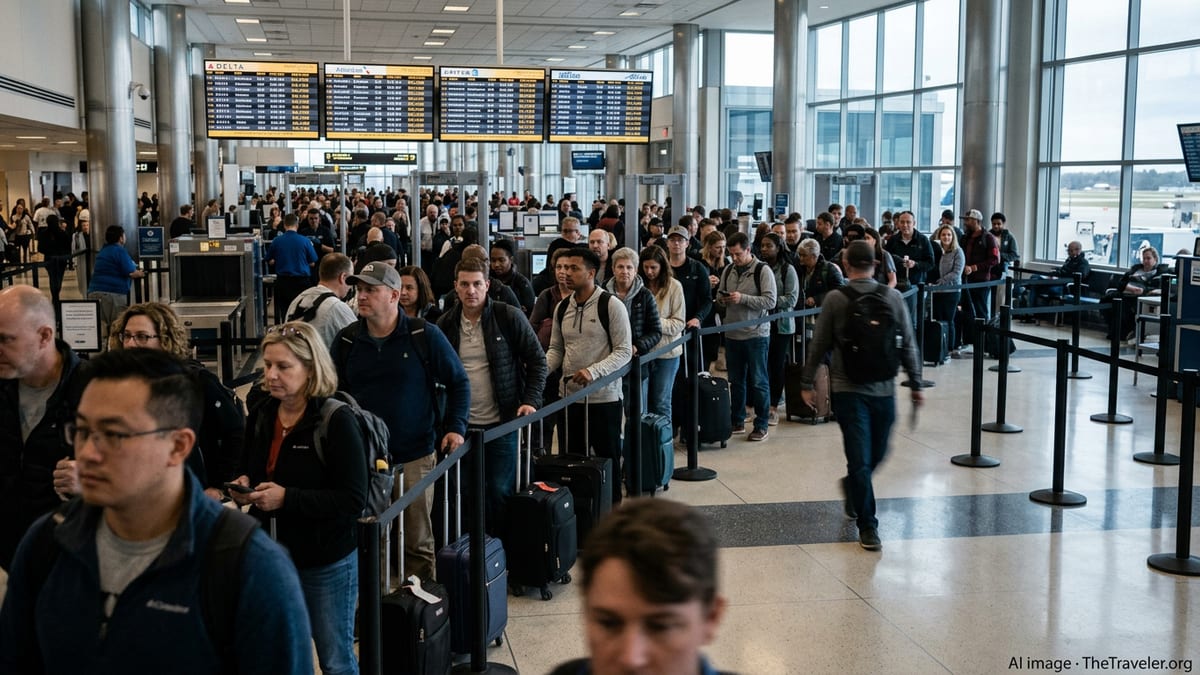
Across multiple hubs, travelers have reported early-morning queues snaking through terminal lobbies, security bottlenecks spilling into ticketing halls, and last‑minute sprints to gates as boarding times collide with unexpectedly slow screening. Social media posts and on‑the‑ground accounts describe scenes where passengers arrive within the normally recommended time window, only to spend more than two hours in security lines and ultimately miss departures.
According to published coverage and traveler accounts, some airports have responded with impromptu crowd‑management measures. These include ad hoc lane reconfigurations, temporary priority corridors to move passengers with imminent departures toward the front, and local campaigns to support unpaid TSA personnel with food and basic supplies. Even with such efforts, any uptick in absences among screeners has an immediate and highly visible impact on throughput during peak travel periods.
Airlines are also facing operational knock‑on effects when flight crews are delayed by the same bottlenecks affecting the traveling public. Industry guidance suggests that crews are generally instructed to arrive well ahead of report times, but when checkpoint staffing is thin or lines swell abruptly, even early arrivals can be caught in gridlock. This dynamic can convert a localized security slowdown into a broader schedule disruption as aircraft sit at gates waiting for full crews to clear screening.
In several recent instances, reports indicate that delays originating at congested checkpoints in one hub have rippled through the day’s flight program, with downstream departures departing late, connections tightening, and evening bank operations starting behind schedule. The result is a travel environment in which even routine weather systems or minor technical issues can tip a fragile schedule into widespread disruption.
Delta’s Position Shaped by Recent Disruption Experience
Delta’s prominent alignment with the push to end the TSA shutdown comes against the backdrop of its own recent experience managing large‑scale operational disruption. In 2024, the airline endured one of the most severe schedule breakdowns in the industry after a global IT outage, canceling thousands of flights over several days and confronting intense scrutiny over its recovery timeline.
Analysts observing Delta’s current messaging note that the carrier appears especially attuned to the reputational risk of prolonged irregular operations. Public statements and customer‑facing updates related to the TSA shutdown emphasize rebooking flexibility, proactive communication through digital channels, and reminders to arrive at airports earlier than usual, particularly at major hubs and known pinch‑point airports.
Travel data and aviation commentary suggest that Delta’s hub at Atlanta, already one of the world’s busiest airports, is uniquely exposed to compounding stress from TSA staffing shortages. High passenger volumes, limited slack in peak‑hour schedules, and seasonal surges can quickly amplify even modest slowdowns at security. Against that backdrop, Delta’s participation in the collective call for federal action reflects both concern for its own operations and recognition that customer frustration often focuses on the airline, even when the root cause lies with federal staffing or policy.
By aligning its stance with that of other major carriers, Delta is positioning itself within a broader industry narrative that seeks to distinguish between airline‑controlled factors, such as crew scheduling and aircraft maintenance, and external constraints like security staffing and air traffic control availability.
Nationwide Ripple Effects for Travelers and Tourism
The TSA shutdown is affecting more than just departure boards and security queues. Travel and tourism observers point out that prolonged uncertainty around airport processing times is beginning to influence traveler behavior, with some passengers opting to book earlier flights than necessary, reroute through smaller airports, or avoid tight connections altogether.
Hotel operators near major hubs report a mix of last‑minute overnight stays from stranded passengers and earlier‑than‑usual arrivals from travelers hedging against potential morning chaos at security. Ground transportation providers around key airports are also contending with surges in demand at unusual hours as travelers adjust their routines to accommodate longer security waits.
Some destination marketing groups and local tourism boards have begun issuing practical guidance encouraging visitors to plan additional time for airport formalities when arriving or departing. Publicly available advisories frequently recommend that travelers monitor airline apps for real‑time updates, build in buffer time when connecting through larger hubs, and consider enrolling in trusted traveler programs where available to mitigate the impact of congested general screening lanes.
Business travel planners, meanwhile, are re‑evaluating same‑day trip patterns and tight meeting schedules that rely on predictable airport throughput. The potential for sudden checkpoint slowdowns or temporary lane closures has prompted a more conservative approach to itineraries, with wider margins between arrival and key events.
Policy Stalemate Raises Questions About System Resilience
As the shutdown drags on, airline executives, aviation labor groups, and travel industry advocates are raising broader questions about the resilience of the U.S. air transport system when critical federal aviation functions depend on stop‑gap funding and unpaid work. Commentators note that TSA screeners and air traffic controllers occupy roles that are difficult to backfill or automate in the short term, leaving little room to absorb prolonged political standoffs without visible impact on operations.
According to policy analysis and industry commentary, the current situation underscores how tightly coupled airline reliability is to federal staffing levels and morale in security and air traffic roles. Even in periods of otherwise strong airline performance, sustained strain on these workforces can erode on‑time metrics, reduce schedule flexibility, and heighten stress for both employees and passengers.
Some aviation watchers suggest that the latest shutdown may accelerate discussions about structural reforms, such as alternative funding mechanisms for key aviation safety and security roles or revised contingency planning standards that anticipate longer lapses in appropriations. Others argue that the scale of the current disruption itself may become a catalyst for more durable political compromises aimed at insulating core aviation functions from future budget impasses.
For now, however, the immediate reality for travelers is one of heightened unpredictability. With Delta and its peers stepping up public pressure to end the TSA shutdown, passengers are being urged through airline communications and public advisories to plan conservatively, stay closely informed, and prepare for an environment where even well‑planned itineraries may encounter unexpected hurdles at the security checkpoint.