

More news on this day
Delta Air Lines has joined American, United, Southwest, JetBlue and Alaska in an urgent industry-wide call to end the Transportation Security Administration funding shutdown, as mounting checkpoint disruptions and staffing strains contribute to widespread delays and a cascading air travel meltdown across major U.S. airports.
Get the latest news straight to your inbox!
Airlines Close Ranks as Security Disruptions Ripple Nationwide
Publicly available information shows that the chief executives of the largest U.S. carriers are presenting a unified front as the TSA funding lapse drags on, disrupting airport security operations and straining already fragile aviation staffing levels. Delta’s alignment with American, United, Southwest, JetBlue and Alaska reinforces an increasingly blunt message from the industry that the shutdown is undermining the basic functioning of the national air travel system.
Reports indicate that the latest joint appeal, echoed in statements from major carriers and trade groups, urges Congress and the White House to immediately restore funding for the Department of Homeland Security and ensure pay for TSA officers and other federal aviation personnel. Airlines are warning that without swift action, the disruptions now visible at checkpoints and in flight schedules could deepen into a prolonged operational crisis that upends peak travel periods.
According to published coverage from national outlets, the carriers argue that leaving TSA and related aviation security roles underfunded during a shutdown has transformed routine screening into a chokepoint for the entire network. With some officers reportedly calling in sick or seeking other paid work, airports that once relied on finely calibrated staffing models are grappling with unpredictable shortfalls just as passenger volumes remain high.
Industry observers note that Delta’s decision to intensify its public stance reflects how quickly a security staffing problem can cascade into broader system stress, especially at major hubs such as Atlanta, where even modest slowdowns at checkpoints can reverberate through connections nationwide.
Checkpoint Backlogs and Flight Cuts Fuel a Travel Meltdown
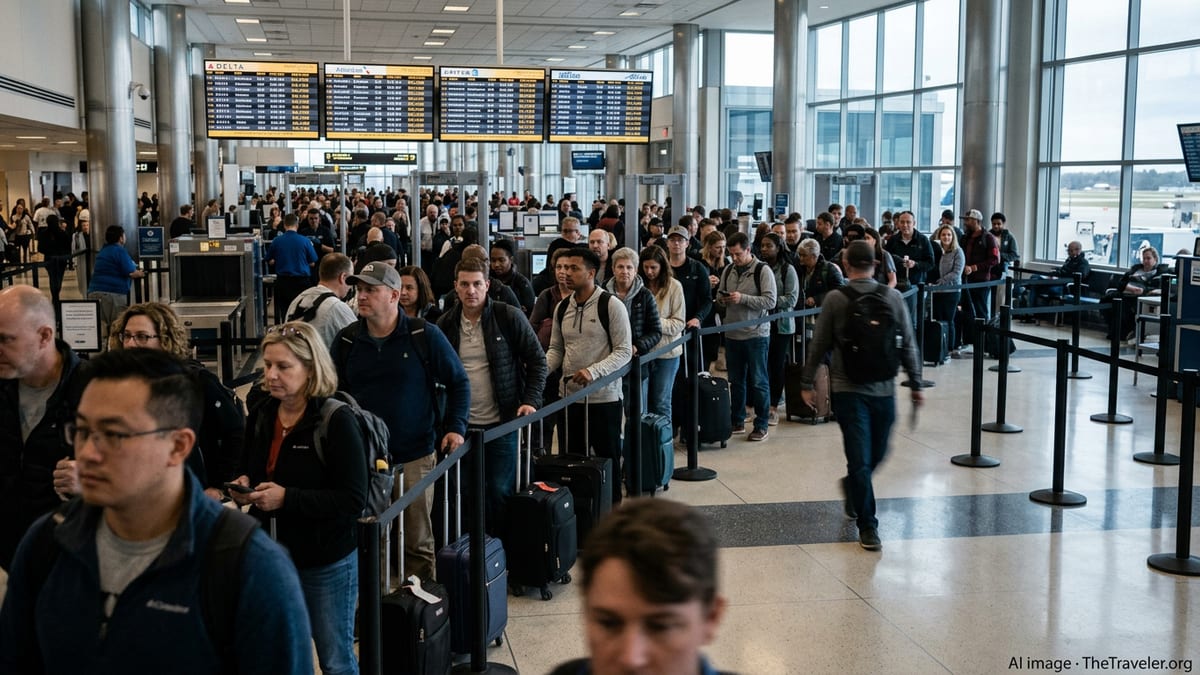
Across the United States, travelers are encountering a patchwork of delays that together amount to an unusually severe period of disruption. Local news coverage and social media posts from passengers describe security lines snaking toward terminal entrances at airports including Atlanta, New York, Chicago, Dallas and Los Angeles, with some travelers arriving hours before departure and still risking missed flights.
Airport and airline status boards show a mix of extended security waits, rolling departure delays and targeted cancellations, particularly at high-volume hubs where federal staffing shortfalls intersect with peak schedules. In some cases, airlines are proactively trimming flights and consolidating loads in response to federal directives and air traffic constraints linked to the shutdown, a strategy meant to prevent even more chaotic last-minute cancellations.
Recent reporting on federal aviation planning during the shutdown indicates that the Federal Aviation Administration has ordered reductions in flight volumes at dozens of major airports to ease pressure on air traffic control centers and towers operating with strained staffing. Carriers including American, United, Delta and Southwest have disclosed that they are canceling hundreds of flights per day as a result, compounding the delays triggered at security checkpoints.
For passengers, the net effect is a confusing and often frustrating travel environment in which even airports reporting relatively modest average delays can experience sudden spikes in wait times or rolling ground stops. Travel forums are filled with accounts of missed connections, unplanned overnight stays and long lines at customer service desks as schedules buckle under the combined weight of security and airspace constraints.
Economic Stakes Mount for Airlines, Workers and Destinations
The shutdown’s impact on TSA and aviation operations carries significant financial consequences for airlines, airport businesses, tourism economies and federal workers themselves. Prior government shutdowns have been estimated to cost U.S. carriers tens of millions of dollars in lost revenue, and analysts suggest the current disruption could be similarly costly if conditions persist.
Published analyses from aviation consultancies highlight that each wave of cancellations and extended delays translates into refunds, rebookings, crew repositioning expenses and higher customer care costs. At the same time, concessions, ride-hailing drivers, hotels and destination businesses lose out on spending from travelers who either abandon trips or drastically shorten their stays due to schedule uncertainty.
The human toll is especially acute for TSA officers and other federal aviation personnel who are required to work without pay during the funding lapse. News features from previous shutdowns documented officers taking on extra jobs, struggling with household expenses and, in some cases, leaving the workforce altogether, effects that can linger long after funding is restored and further complicate future staffing plans.
Delta and its peer airlines have publicly emphasized their appreciation for federal workers who continue to report for duty despite missed paychecks, while also stressing that a sustainable aviation system cannot depend on unpaid labor to keep core security and safety functions operating.
Delta’s Position Reflects Hard Lessons From Recent Disruptions
Delta’s strong support for ending the TSA funding lapse is informed, analysts say, by the carrier’s experience with recent large-scale operational disruptions. In 2024, Delta was hit particularly hard by a technology outage that rippled through airline systems, ultimately leading to thousands of cancellations and a protracted recovery compared with some competitors.
Public documents and post-incident reviews from that episode underscored how quickly disruptions can compound in a complex hub-and-spoke network, especially when critical functions such as crew scheduling, ground operations or gate management are constrained. Aviation experts draw parallels between that event and the current situation, noting that systemic stress at security checkpoints and in air traffic control can trigger similar chain reactions.
By aligning closely with other major carriers in calls to resolve the shutdown, Delta is signaling that it views a stable, fully funded federal aviation workforce as essential infrastructure, not a negotiable line item. The airline’s participation in joint letters and coordinated public messaging is seen by industry watchers as an effort to avoid a repeat of extended operational turmoil, while also reassuring travelers that carriers are pressing for an end to politically driven interruptions.
In internal communications described in media reports, airlines have encouraged customers to monitor their flight status frequently, allow extra time at airports and adjust connections where possible, reflecting a recognition that, despite mitigation efforts, the shutdown’s impact on TSA and FAA staffing remains beyond the carriers’ direct control.
Travelers Scramble for Workarounds as Peak Seasons Approach
As the shutdown drags on, travelers are increasingly seeking strategies to navigate the unpredictable landscape. Consumer travel coverage notes a surge in advice to arrive at airports earlier than usual, favor morning departures when possible and consider alternative airports that may be experiencing lighter loads or shorter security lines.
With federal flight reductions and security bottlenecks most acute at large hubs, some passengers are rebooking through secondary airports or shifting to nonstop routes to avoid tight connections. Travel insurance providers are also updating guidance on how shutdown-related delays and cancellations are treated under existing policies, an important consideration for travelers booking costly international or multi-stop itineraries.
Tourism boards and local hospitality groups in major gateway cities are monitoring the situation closely, aware that prolonged uncertainty can deter both business and leisure travelers. Convention planners and event organizers are likewise reassessing risk, particularly for large gatherings that rely on thousands of attendees flying in and out of the same few airports over short windows of time.
For now, publicly available information suggests that the nation’s largest airlines, including Delta, are continuing to operate the majority of their schedules while pushing for a political resolution. How quickly air travel normalizes will depend not only on an eventual funding agreement, but also on how rapidly TSA and other federal aviation workforces can stabilize after an unprecedented stretch of operating under shutdown conditions.