

More news on this day
Delta Air Lines has joined American, United, Southwest, JetBlue and Alaska in an escalating campaign to end the Transportation Security Administration shutdown, as mounting security bottlenecks and staffing gaps trigger widespread delays and cancellations across major U.S. airports.
Get the latest news straight to your inbox!
Airlines Present a United Front as Security Turmoil Grows
Major U.S. carriers are moving in rare alignment as a prolonged TSA shutdown fuels what airline and airport observers describe as a rolling nationwide slowdown in passenger screening. Publicly available information shows that Delta has now aligned itself with American Airlines, United Airlines, Southwest Airlines, JetBlue Airways and Alaska Airlines in pressing for an immediate resolution to the funding impasse behind the security disruption.
According to published coverage, the carriers are warning that reduced staffing and intermittent closures at TSA checkpoints are rapidly eroding the reliability of the domestic air system. While formal strike action by TSA officers is not permitted, traveler accounts and industry reporting indicate rising callouts, sick leave and reassignments that are forcing airports to consolidate lanes, shut down PreCheck access in some terminals and divert resources to the busiest checkpoints.
Airlines are responding by publishing waivers, encouraging passengers to arrive far earlier than usual and quietly thinning schedules at some of the most constrained hubs. For Delta and its peers, the message has increasingly focused on the broader system: with security lines stretching toward terminal entrances in several cities, any further degradation risks cascading into missed connections, crew delays and large-scale flight disruptions.
Industry analysts note that it is unusual to see this degree of public alignment across carriers that typically compete aggressively on schedule and service. The coordinated pressure reflects a shared concern that the current mix of federal shutdown dynamics and security staffing uncertainty could harden into a long-term constraint on U.S. aviation if not addressed quickly.
Unprecedented Lines and Localized TSA Closures Hit Major Hubs
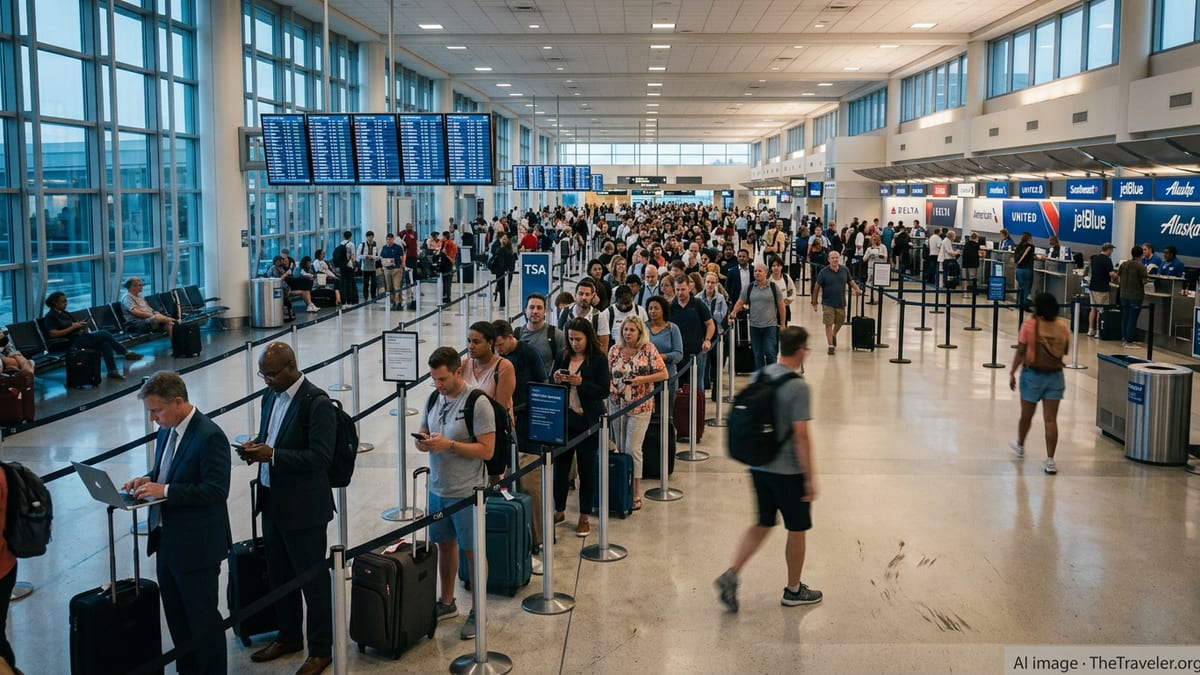
Reports from passengers, airline staff and airport monitors describe a patchwork of conditions that can shift dramatically from one airport, or even one terminal, to another. In some locations, such as early-morning banks at Atlanta, Miami and other large hubs, travelers describe security queues stretching back toward check-in halls, with wait times of 90 minutes or more even for those with premium status or expedited screening.
Reductions in open lanes and redeployment of personnel have led to intermittent shutdowns of TSA PreCheck at certain checkpoints, according to traveler reports and local coverage. In a number of airports, PreCheck and standard lanes have effectively merged during peak hours, erasing one of the main tools frequent travelers use to manage their time and connections.
Airports that serve as hubs for multiple carriers, including those in New York, Texas, California and the Pacific Northwest, appear to be particularly vulnerable. When TSA staffing at a single checkpoint drops below operational targets, lines can quickly spill into shared concourses, slowing boarding and pushing departure banks out of sequence. Once a wave of early flights is delayed, subsequent rotations for both aircraft and crews often fall behind schedule, amplifying the impact into the afternoon and evening.
Travel forums and social media feeds are filled with images and descriptions of what some passengers describe as the longest security lines they have ever seen, even during holiday peaks. Although conditions can improve rapidly once additional lanes open, the volatility is making it increasingly difficult for travelers to predict how much time they need to clear security at their departure airport.
Flight Reductions and Rolling Delays Ripple Across the Network
As delays accumulate at security checkpoints, the impact is rippling across the broader flight network. Published tracking data cited in recent coverage shows elevated levels of same-day delays and cancellations at many of the country’s top 40 airports, with late departures from morning hubs frequently resulting in missed connections at downline cities.
Several major airlines, including American, United, Delta, Southwest, JetBlue and Alaska, are reported to be cutting a portion of their daily schedules at heavily affected airports in coordination with federal air traffic measures. These reductions are intended to ease pressure on security checkpoints and air traffic control facilities that are also coping with staffing strain linked to the shutdown.
For travelers, the combined effect is visible in congested gate areas, rolling gate-change announcements and longer-than-usual waits for rebooking assistance. Airlines have been expanding same-day change options, relaxing fare rules in some cases and encouraging use of mobile apps for rebooking in order to keep queues at customer-service counters manageable.
Despite these efforts, travel advisories warn that late-day departures remain particularly vulnerable. When crews are unable to clear security in time to reach aircraft, flights can face additional delays even if the aircraft itself is ready to depart, further snarling the evening schedule and complicating aircraft positioning for the following morning.
Travelers Confront Longer Waits, Missed Connections and Rising Costs
For passengers, the TSA shutdown is translating into longer and more unpredictable travel days. Individuals who would normally arrive 90 minutes before a domestic departure are finding that recommendation to be insufficient at some airports, particularly during early-morning and late-afternoon peaks. As a result, missed flights and forced overnight stays have become more common, with travelers often competing for limited hotel rooms near major hubs.
Families and infrequent travelers, who may be less familiar with expedited screening programs, appear to be bearing a disproportionate share of the disruption. When airport roadways back up due to long security lines extending toward curbside areas, drop-off and check-in can also slow, compressing the time remaining for screening even further.
Business travelers and frequent fliers, including many enrolled in PreCheck and other trusted traveler programs, are encountering a different set of frustrations. At airports where PreCheck lanes have been curtailed or merged, they face waits similar to general-screening passengers despite investments in expedited status. Public comments from traveler advocacy groups and trade associations emphasize that this erosion of predictability undermines one of the key advantages of frequent travel programs.
Onboard aircraft, crews are contending with cabins filled with travelers who may already have spent hours navigating crowded terminals and long lines. Airlines are seeking to mitigate tensions with expanded rebooking flexibility and clearer communication, but reports from travel message boards and customer feedback channels indicate that the cumulative strain of delays, missed events and added expenses is driving rising frustration.
Industry and Lawmakers Weigh Paths to Restore Stability
As the shutdown stretches on, attention is turning to what would be required to restore stability to both TSA operations and the broader aviation system. Trade groups representing airlines, airports and travel companies are publicly calling for an immediate end to the funding lapse and for measures that would insulate frontline security and air traffic roles from future political impasses.
Policy commentators point to previous government shutdowns and weather-driven crises as evidence of how quickly the aviation system can recover once staffing and funding are normalized. However, they also warn that the current situation may have longer-lasting effects if experienced TSA officers choose to leave for more stable employment outside federal service, exacerbating already tight hiring conditions.
Some aviation specialists have suggested that airports and local authorities may look to expand the use of contractor screening models in the future, within the framework of federal oversight, to create additional buffers against nationwide disruptions. Others caution that introducing more fragmentation into security provision could complicate standards and training, arguing instead for treating TSA and air traffic functions as essential services with enhanced protections against shutdown-related furloughs.
For now, airlines like Delta, American, United, Southwest, JetBlue and Alaska continue to amplify their appeals for political resolution while urging passengers to build extra time into every stage of their journey. Until a funding agreement restores full TSA staffing and operational certainty, the U.S. air travel system appears likely to remain in a state of fragile equilibrium, with any localized surge in demand or weather event at risk of tipping airports back into chaos.