

More news on this day
Delta Air Lines has joined United, American, Southwest, Alaska, JetBlue, Hawaiian and other major carriers in sharply increasing fares on long-haul routes from the United States, as the Iran war and closure of the Strait of Hormuz drive jet fuel prices to their highest levels in years and force airlines to rapidly reprice transatlantic and transpacific travel.
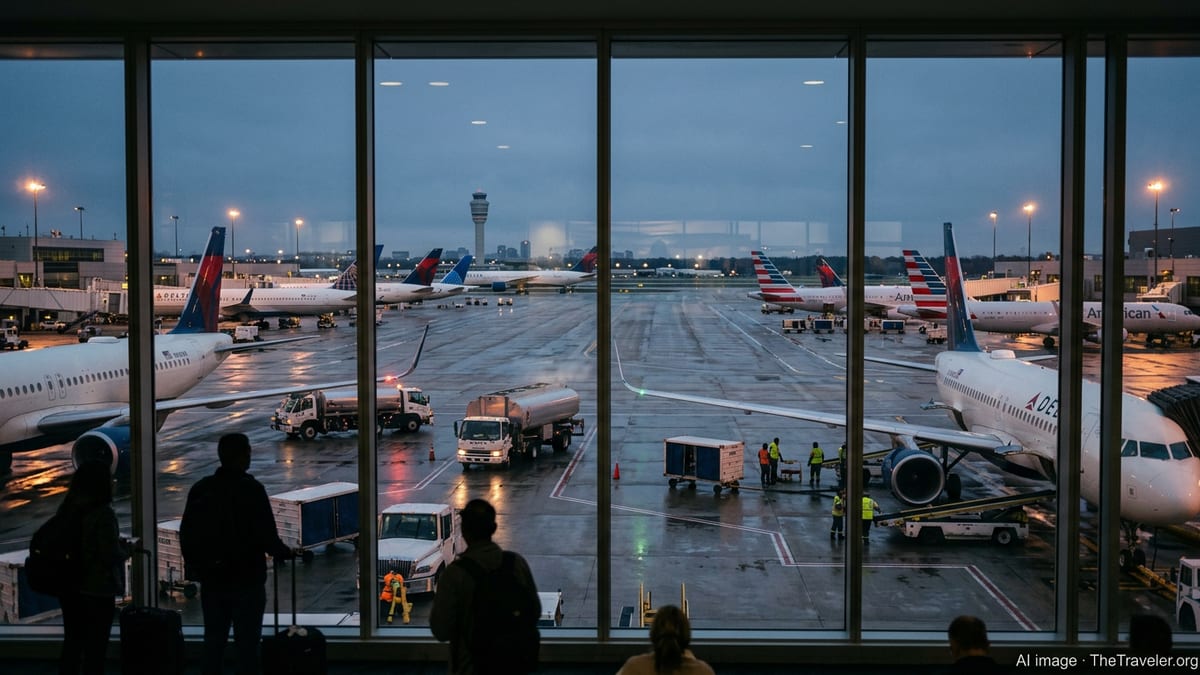
Jet Fuel Shock Ripples From Middle East to US Gateways
The widening conflict involving Iran and Western allies has upended oil production and shipping across the Middle East, choking off a key artery for global energy at the Strait of Hormuz and triggering a spike in crude and refined products. Benchmark Brent crude has repeatedly surged above 100 dollars a barrel in recent days, while jet fuel prices in major trading hubs have jumped at an even faster pace as refineries and shipping lanes come under strain.
For US airlines, fuel is typically the second-largest operating expense after labor, and even small movements in price translate into billions of dollars in annual costs. Delta has previously estimated that a one cent increase in fuel per gallon adds about 40 million dollars to its yearly bill. Similar sensitivities apply across the industry, with American and United each facing hundreds of millions of dollars in additional costs if current price levels persist into the summer travel season.
As prices for Gulf Coast jet fuel climb to four-year highs and international refiners warn of supply disruptions, US carriers have little choice but to pass at least part of the shock onto passengers. That is now happening in real time, with widespread fare increases appearing first on international routes that are most exposed to longer flight times, diversions around conflict zones and higher insurance premiums.
Industry analysts say the speed and scale of the fuel price surge mean these adjustments are not a temporary sale reversal but a structural repricing of long-haul travel for as long as the Iran war and shipping crisis in the Gulf continue.
Delta Aligns With United, American and Peers on Price Jumps
Delta’s latest round of fare hikes brings it in line with moves already telegraphed by rivals. United’s chief executive warned investors last week that ticket prices were likely to rise as fuel costs climb, while analysts have downgraded American Airlines on expectations that jet fuel volatility will squeeze already thin profit margins and force more aggressive pricing across its network.
According to fare data tracked by industry consultants, published economy-class prices from major US hubs such as New York, Atlanta, Chicago, Dallas and Los Angeles to leading destinations in Europe and Asia have climbed sharply over the past several days. On some peak summer departures to London, Paris and Rome, all-in round-trip fares are now hundreds of dollars higher than they were just before the latest escalation in Iran, as airlines rapidly adjust revenue-management systems to the new cost base.
Delta is understood to be targeting increases most heavily on transatlantic and transpacific routes, as well as flights to Africa and the Middle East that must now take longer, more southerly routings to avoid airspace near Iran and neighboring conflict zones. These detours not only increase fuel burn but also add complexity to crew scheduling and aircraft utilization, further raising costs that are being baked into fares.
Southwest, Alaska, JetBlue and Hawaiian, whose networks are more focused on domestic and regional flying, are also pushing through higher prices on select longer routes, especially to Hawaii, Latin America and key transcontinental corridors that consume large amounts of fuel. While their hikes may be less dramatic than those on deep long-haul services, they reinforce a broad trend: most US travelers booking medium- or long-distance trips for the coming months are likely to pay more than they did last year for similar itineraries.
Travelers See Steep Increases on Popular Global Routes
For leisure travelers planning summer or early fall vacations, the impact is already visible. Round-trip economy fares from the US East Coast to major European capitals that had briefly softened in January and early February are now moving sharply higher, in some cases approaching or surpassing price levels last seen immediately after the pandemic travel rebound. Premium economy and business-class cabins, which offer airlines higher margins, are seeing particularly aggressive increases as carriers seek to offset fuel costs with higher yields from corporate and affluent leisure customers.
On routes to Asia and the Pacific, including Tokyo, Seoul, Singapore and Sydney, the combination of longer flying times, constrained capacity and fuel surcharges is leading to some of the steepest percentage jumps. With many carriers still rebuilding networks in the region, any additional cost pressure risks tightening supply just as demand from US travelers and returning Asian visitors is strengthening.
Early signs of price stress are also emerging on flights to Africa and the Indian Ocean region. Popular safari gateways, Indian cities with large diaspora communities in the United States and Indian Ocean resort destinations are all served by itineraries that now often require additional fuel and complex routings to skirt closed airspace and high-risk zones linked to the Iran war.
Budget-conscious travelers are responding by shifting trip dates, choosing secondary airports, or rethinking long-haul vacations altogether in favor of closer-to-home destinations. However, with fuel costs elevated across the global airline industry, the opportunity to sidestep the increases by switching carriers or regions appears limited in the near term.
Airlines Turn to Surcharges, Capacity Tweaks and Hedging
Behind the visible fare hikes, airlines are deploying a range of financial and operational tools to manage the jet fuel shock. Many US and international carriers are reintroducing or increasing explicit fuel surcharges on long-haul tickets, separating the fuel component from the base fare so they can adjust more quickly as market prices move. In parallel, some airlines are trimming capacity on the most fuel-intensive routes or downgrading to smaller aircraft to reduce overall consumption.
Carriers with active fuel hedging programs are somewhat shielded in the very short term, having locked in lower prices for part of their expected usage. Yet hedges typically cover only a fraction of future demand and are time-limited, meaning that if the Strait of Hormuz crisis and Iran war drag on for months, even hedged airlines will ultimately have to contend with higher spot-market costs.
Operationally, airlines are also optimizing flight-planning to find the most fuel-efficient altitudes and routings that remain compliant with evolving safety restrictions around the Middle East. Some are accelerating the retirement of older, less efficient aircraft and prioritizing next-generation jets on longer missions. Over a longer horizon, these moves should help airlines manage fuel bills, but they offer little immediate relief to travelers facing higher prices in the next several booking cycles.
Industry groups warn that without some easing in fuel markets or a stabilization in Middle East shipping and airspace conditions, the current fare environment could become the new normal for international travel rather than a brief spike. That prospect is focusing attention on broader questions about the resilience of global aviation to geopolitical shocks and energy market volatility.
What US Travelers Can Expect in the Months Ahead
For now, consumer advocates advise US travelers to brace for volatility rather than a steady, predictable upward march in fares. Airlines will continue to adjust prices dynamically based on route, date and cabin, meaning sudden spikes and occasional short-lived dips are both possible as fuel prices and demand forecasts shift. However, on average, international tickets booked out of major US gateways are likely to remain significantly more expensive than they were before the Iran war and Strait of Hormuz crisis intensified.
Travel planners say those with fixed travel dates for summer and early autumn would be wise to start monitoring fares closely and consider booking sooner rather than later, especially for Europe, Asia and the Pacific, where capacity is tightest and fuel surcharges are highest. Flexible travelers may find better value by targeting shoulder-season departures, midweek flights and less frequented airports, though savings may be smaller than in past years.
For the broader tourism sector, from hotels and tour operators to destinations that depend heavily on long-haul visitors, the fare spike arrives just as global travel demand was consolidating its recovery from the pandemic. Higher ticket prices risk dampening growth in arrivals from the United States, particularly to far-flung destinations where airfare makes up a large share of total trip cost.
As the Iran war continues to roil energy markets and the aviation industry, the extent and duration of these airfare increases will depend heavily on what happens next in the Strait of Hormuz and surrounding region. Until there is clear evidence of a sustained easing in jet fuel prices, Delta and its US peers appear poised to keep long-haul fares elevated, reshaping the cost calculus of global travel from American airports.