

More news on this day
Delta Air Lines is facing fresh scrutiny after passengers on a recent flight out of Atlanta alleged their departure was held at the gate so an airport executive’s late-arriving family members could board, with some travelers reporting that crew appeared visibly uncomfortable as the delay unfolded.
Get the latest news straight to your inbox!
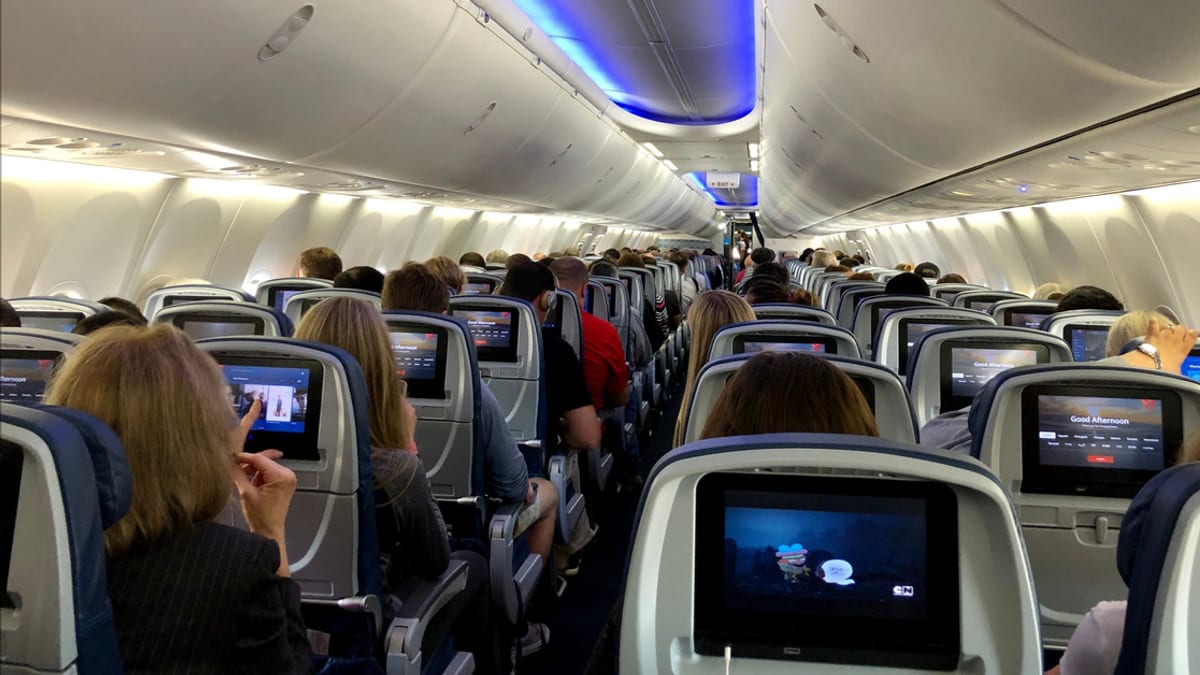
Image by TheTravel
Allegations Emerge From Atlanta Departure
Accounts circulating in U.S. media and on social platforms describe a Delta flight preparing to depart from Hartsfield-Jackson Atlanta International Airport when boarding was reportedly paused to accommodate relatives of a senior airport official who arrived after the scheduled cutoff time. Passengers say the aircraft was already loaded and ready for pushback when the jet bridge was reattached and additional travelers boarded.
According to published coverage, multiple passengers claimed the late arrivals were escorted down the jet bridge by staff, prompting frustration among those who had boarded on time. Some reports indicate that travelers seated near the front of the aircraft observed the interaction and began posting about it in real time, quickly amplifying the story beyond the cabin.
Publicly available information suggests the delay was relatively short in operational terms but significant enough that several passengers missed tight connections or reported anxiety about onward travel. The perception that the hold was not due to weather or technical issues, but instead to accommodate a well-connected family, has fueled ongoing debate about fairness in air travel.
Delta has not issued a detailed public timeline of events, but commentary from travel analysts notes that even minor schedule disruptions can quickly cascade, particularly at a major hub where aircraft often operate multiple legs in a single day.
Passenger Frustration Over Perceived Double Standard
Reaction from travelers has focused less on the length of the delay and more on what they describe as an apparent double standard in gate procedures. Many passengers are accustomed to strict cut-off times and frequent reminders that doors will close precisely on schedule, even if late-running travelers are only minutes away.
Reports indicate that several passengers contrasted their own experiences of being denied boarding for arriving moments past the deadline with what they perceived as special treatment for the airport official’s family. The phrase “the crew was embarrassed” has been repeated widely in online accounts, with travelers suggesting cabin staff appeared uneasy as questions began to circulate through the cabin.
Commentary in travel forums and consumer columns highlights that anger among passengers often intensifies when the cause of a delay appears discretionary rather than safety-related. In this case, some travelers have framed the incident as emblematic of a broader concern that rules in commercial aviation can be more flexible for those with institutional ties.
Consumer advocates note that, while carriers have broad authority over boarding decisions, perceived inconsistency can quickly erode trust, particularly at a time when travelers are already sensitive to disruptions and added costs.
What Airline Rules Say About Holding Flights
Publicly available policy guidance and industry commentary indicate that major U.S. airlines, including Delta, typically reserve the right to hold a flight at the gate for various operational reasons, such as connecting passengers from a delayed inbound service or resolving seat assignments. These decisions are often made by a combination of gate agents, operations control, and the flight crew, within the constraints of air traffic flow and crew duty limits.
Analysts note that there is no universal, hard-and-fast rule prohibiting a short gate hold for individual passengers, whether or not they have institutional connections. However, such holds are usually justified internally on operational grounds, such as avoiding later rebooking and hotel costs, or preventing a large group from being stranded.
In this instance, publicly reported details have not established whether the late-arriving family had any extenuating circumstances, such as a misconnected inbound flight. Absent that context, passenger reactions have largely framed the event as a policy exception driven by status rather than necessity, a perception that can be difficult for airlines to counter once it has taken hold online.
Industry observers point out that decisions made at the gate often involve trade-offs among different groups of passengers. Holding a flight for some can result in missed connections for others, and carriers face increasing pressure to explain those decisions clearly when they appear to benefit a small number of travelers.
Social Media Amplifies Onboard Tension
As with many recent air travel controversies, the Atlanta incident gained traction because passengers documented their experience in real time. Photos and descriptions of the delayed departure, along with references to an airport executive’s family, spread quickly across several platforms, where users debated whether the hold represented a routine operational decision or an abuse of privilege.
Reports from passengers suggest that the cabin atmosphere grew tense as time passed with limited explanation. Some travelers have said publicly that announcements cited a brief delay without specifying the reason, while those with sightlines to the front of the aircraft drew their own conclusions about what was happening at the door.
Travel commentators note that this type of incident can inflict reputational damage beyond the immediate flight, because it taps into widely shared frustrations about crowded planes, tight connections, and rising fares. Even when an airline is operating within its contractual rights, stories that appear to show preferential treatment for insiders often prompt strong emotional reactions.
The spread of the story has also renewed discussions among frequent travelers about whether airlines should adopt clearer guidelines for when a departure may be held for individual passengers, and how those decisions are communicated to the rest of the cabin.
Renewed Focus on Transparency and Trust
While operational delays are a routine part of modern air travel, the Atlanta episode underscores how sensitive passengers have become to questions of fairness and transparency. Reports from consumer advocates emphasize that travelers are generally more accepting of disruptions when the rationale is clearly linked to safety, weather, or well-documented operational constraints.
In contrast, incidents that appear to stem from preferential treatment or opaque decision-making can have an outsize impact on public perception, particularly for a carrier with the scale and visibility of Delta. Analysts suggest that airlines may increasingly need to consider not only the operational logic of holding a flight, but also how those choices will be perceived in a cabin where nearly every traveler has a smartphone.
Some industry observers argue that more detailed, candid announcements about the nature of delays, along with consistent enforcement of boarding deadlines, could help reduce the backlash that follows high-profile episodes like this one. Even short disruptions can become national talking points when passengers feel they are subject to one set of rules while insiders operate under another.
For now, the Atlanta flight has become a case study in how a relatively modest schedule change can ignite a broader conversation about power, privilege, and trust in the airline industry, raising fresh questions about how carriers balance operational discretion with the expectations of an increasingly skeptical traveling public.