

More news on this day
Delta Air Lines customers are increasingly reporting a worrisome pattern of flights being canceled at the last possible moment, fueling frustration and raising questions about what is happening behind the scenes at one of the United States’ largest carriers.
Get the latest news straight to your inbox!
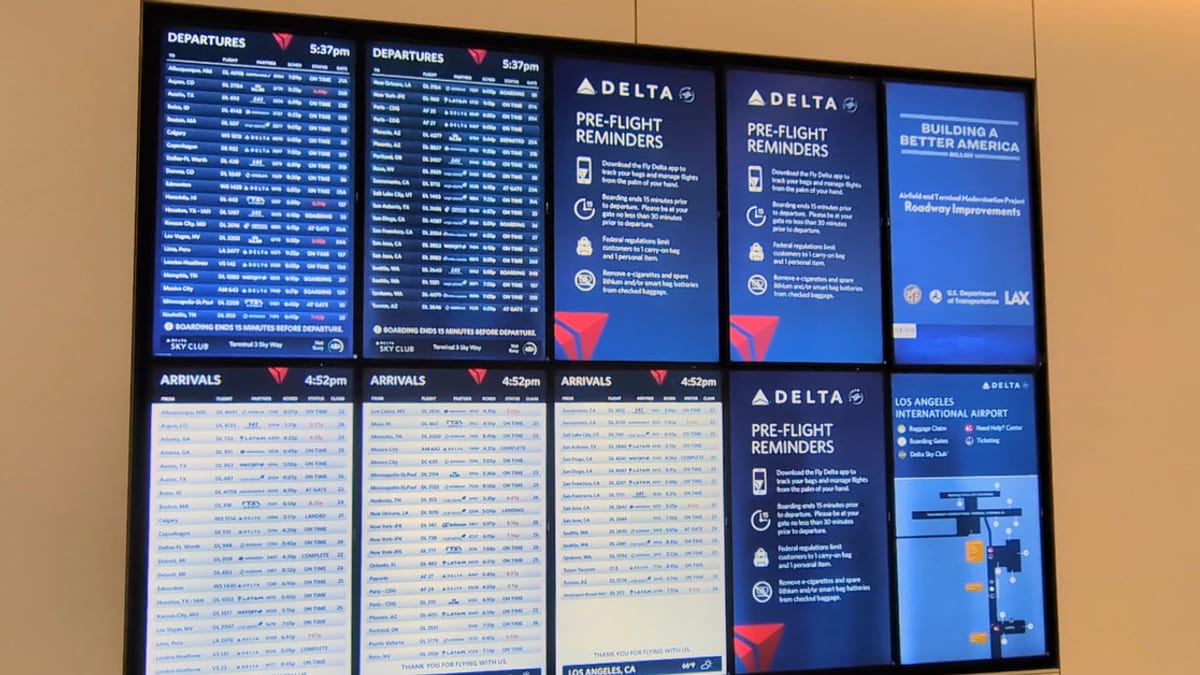
Spikes in Scrapped Flights Put Focus on Reliability
Publicly available flight-tracking and aviation analytics data show that Delta has faced several sharp bursts of cancellations over the past two years, with some clusters occurring on days when rival airlines kept more of their schedules intact. Recent reporting highlights weekends where Delta scrapped more than 100 flights in just two days, as well as single-day disruptions in which the airline accounted for a disproportionate share of cancellations among major U.S. carriers.
While industrywide cancellations often surge during major storms or air traffic control constraints, passengers are drawing attention to situations where Delta flights are pulled from the board close to departure, even when the broader system appears to be operating normally. Travel compensation platforms and consumer sites have noted that Delta’s disruption rate has periodically climbed well above the typical 1 to 2 percent of daily operations that is considered a normal planning buffer for large carriers.
These spikes have come on top of high-profile crises linked to third-party technology failures and global software problems, which triggered thousands of cancellations for Delta in 2024 and 2025. Although those episodes affected multiple airlines, Delta’s network and crew-management systems were hit especially hard, leaving lingering doubts among frequent flyers about the robustness of its operations.
The result is an erosion of Delta’s reputation for reliability, long seen as one of its key competitive advantages. Regular travelers say that what once felt like rare one-off events now resemble a recurring risk, especially during peak travel weekends and complex multi-leg itineraries.
Passengers Blame Last‑Minute Crew and Aircraft Swaps
One of the most commonly cited reasons appearing on airport departure boards and mobile apps for Delta’s late-breaking cancellations is crew availability. Travelers have reported flights being canceled within hours of boarding time with explanations referencing unavailable pilots or flight attendants, even when the aircraft itself appears to be at the gate.
Aviation analysts note that tight crew scheduling can magnify minor disruptions into full cancellations. When storms, air traffic control delays, or earlier maintenance issues push crews beyond federally mandated duty limits, airlines must either replace them or cancel the flight. Observers say Delta’s aggressive utilization of crews, combined with evolving fatigue rules, can leave less margin for error than in the past, making last-minute cancellations more likely when things go wrong earlier in the day.
Aircraft reassignments are another visible source of frustration. Passengers have shared instances in which an incoming flight operated normally but the aircraft was then redirected to another route seen as higher priority, leaving their original flight canceled or significantly delayed. Industry commentary suggests that in a constrained fleet environment, airlines are increasingly making real-time decisions about where to deploy limited aircraft, sometimes at the expense of routes with smaller premium cabins or lower projected yields.
These patterns create the perception among some Delta customers that they are being downgraded in favor of more lucrative flights, particularly on international and hub-to-hub routes. Even if such choices are rational from a network-planning perspective, the lack of transparency around how those calls are made contributes to traveler unease.
Weather and System Shocks Expose Operational Weak Spots
In recent months, several major winter storms across North America have forced tens of thousands of flight cancellations industrywide, with Delta heavily affected on key days when its hubs in Atlanta, Detroit, Minneapolis, New York, and Salt Lake City were simultaneously in the path of severe weather. On one January 2026 storm day alone, U.S. carriers collectively recorded more than 11,000 cancellations, and Delta’s hub-heavy network meant that a single bottleneck could cascade across dozens of connecting flights.
Reports from aviation media describe how a combination of snow and ice at multiple Delta hubs can quickly lead to ground stops, de-icing backlogs, and runway constraints. In these conditions, airlines often resort to proactive cancellations to keep remaining operations manageable. Passengers, however, tend to experience those decisions as last-minute shocks, especially when weather at their departure airport appears relatively benign while the real constraint lies at a downstream connection or crew base.
Beyond weather, Delta has also been entangled in wider technology and infrastructure crises. The CrowdStrike-related outage in 2024, for example, highlighted the vulnerability of crew-tracking and scheduling systems, with Delta ultimately canceling thousands of flights over several days. Subsequent legal filings and financial disclosures illustrated how a breakdown in one digital layer could prevent the airline from even locating available staff, reinforcing passenger perceptions that invisible back-end systems are increasingly a weak link.
Although Delta and other carriers have since pledged to invest in greater resilience, consumer advocates argue that the full benefits of those efforts are not yet evident to travelers who continue to encounter abrupt cancellations tied to “operational” or “technical” issues on routine travel days.
Structural Pressures: Staffing, Fatigue Rules, and Fleet Strategy
Behind the scenes, structural shifts in the U.S. aviation industry are reshaping how much slack airlines can maintain in their operations. Pilot and aircraft shortages, heightened demand since the pandemic, and new fatigue and rest regulations have all tightened the margin for error. Analysts covering the sector note that larger network carriers, including Delta, have faced a delicate balance between restoring capacity, controlling costs, and complying with more protective work rules for flight crews.
Expanded pilot fatigue regulations, phased in through 2025, require longer rest periods and stricter limits on how many hours crews can fly over certain time windows. These safeguards are widely viewed as essential for safety, but they also mean that delays earlier in a crew’s schedule are more likely to push them beyond legal limits by the end of the day. For passengers, this reality often surfaces as a sudden “crew timing out” notification, sometimes only shortly before boarding.
At the same time, Delta’s fleet strategy, which includes operating a mix of older and newer aircraft types, can interact with maintenance and software-update requirements in complicated ways. Recent global directives for inspections and updates on specific Airbus models, for instance, led airlines worldwide to pull aircraft from service at short notice. When such orders intersect with already tight schedules and high load factors, carriers have little choice but to cancel flights close to departure rather than rebook everyone onto already full alternatives.
Market analysts say these pressures are not unique to Delta, but passengers appear acutely aware of them when disruptions hit repeatedly on the same carrier. For travelers, the distinction between systemwide structural strains and airline-specific decisions is largely academic when a long-planned trip evaporates at the airport check-in desk.
Growing Scrutiny and Calls for Clearer Passenger Protections
The pattern of last-minute cancellations has drawn renewed scrutiny from consumer advocates and travel industry observers, who argue that current U.S. regulations leave passengers with limited guaranteed protections when flights are canceled for reasons classified as “operational.” Unlike in some other jurisdictions, U.S. law does not require airlines to compensate passengers in cash for cancellations that are within the carrier’s control, although many voluntarily provide vouchers or hotel accommodations under certain circumstances.
Recent federal guidance has clarified that airlines do not have to reimburse expenses tied to disruptions caused by external safety mandates, such as emergency aircraft inspections or mandatory capacity reductions linked to staffing shortages at air traffic control. At the same time, several large carriers, including Delta, have publicly outlined customer-service commitments that promise meal vouchers or rebooking assistance when cancellations are considered controllable.
Critics contend that the line between controllable and uncontrollable events can be opaque, particularly when a chain of decisions over scheduling, staffing, and fleet deployment leaves little room to absorb foreseeable shocks like seasonal storms. Passenger-rights groups argue that more transparent reporting on the root causes of cancellations, and clearer minimum standards for assistance, would help rebuild trust among travelers who feel stranded by last-minute changes.
For now, the emerging trend is pushing informed passengers to build more flexibility into their itineraries, monitor flight status more closely, and pay attention to hub connections and aircraft types. As Delta works to stabilize operations amid a turbulent operating environment, customers are watching to see whether the sudden scrapping of flights remains a recurring feature of flying with the carrier or recedes to the exception it once was.