

More news on this day
A routine Delta Air Lines departure from New York’s John F. Kennedy International Airport turned into a viral flashpoint for aviation culture this week, after a wrong taxiway turn by a Las Vegas-bound jet led to a heated on-air exchange between the flight crew and a New York ground controller, prompting questions about communication standards, cockpit workload and the line between necessary firmness and unprofessional tone in one of the world’s busiest air traffic environments.
Minor Taxiway Error Becomes Major Flashpoint
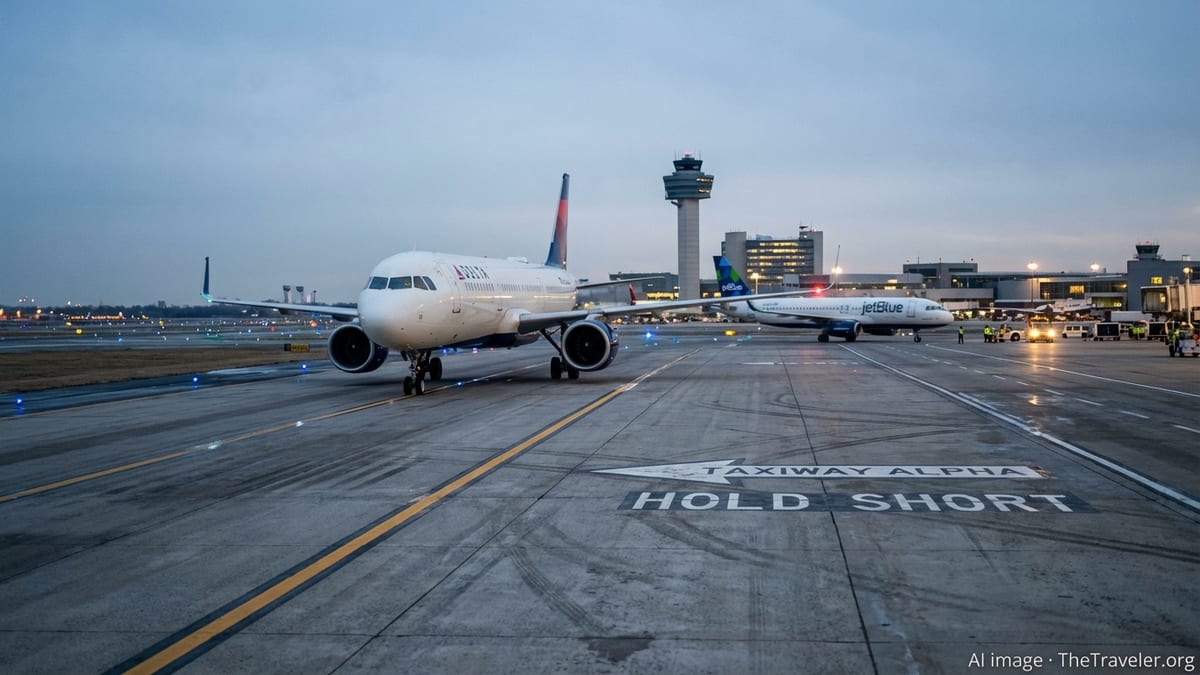
The incident unfolded on February 19, when Delta Air Lines flight DL806, an Airbus A321neo bound for Las Vegas, pushed back from the gate during a busy departure bank at JFK. Ground control instructed the crew to taxi behind a JetBlue aircraft and then turn right onto taxiway Bravo, holding short of Juliet en route to runway 4L. The crew read the clearance back correctly, a key safety step meant to ensure both pilots and controller share the same mental picture of the aircraft’s path.
Moments later, however, the jet turned onto parallel taxiway Alpha instead of Bravo. While the two strips of pavement run alongside each other and there was no conflicting traffic at the time, the deviation constituted a clear routing error. From an operational standpoint, pilots and controllers emphasize that such slips, though taken seriously, are not uncommon in the complex maze of taxiways at a hub like JFK, particularly when radio instructions are dense and traffic is heavy.
What set this case apart was not the wrong turn itself but what followed on the open frequency. Live ATC recordings shared online capture the ground controller abruptly changing tone, calling the move “crazy” and ordering the aircraft to stop, igniting an argument that has since been replayed and dissected across aviation forums, social media and industry blogs.
Investigators and safety analysts stress that no collision risk appears to have existed and that the aircraft departed normally for Las Vegas after a delay. Yet the argument has taken on symbolic weight, crystallizing concerns about how professionals handle human error under pressure and how those exchanges sound to the flying public when they reach the internet.
Heated Radio Exchange Captured and Shared Online
The radio recording, posted by aviation monitoring channels that routinely archive JFK frequencies, begins with standard, almost rapid-fire taxi instructions typical of the airport. The ground controller clears DL806 to runway 4L via a specified route and asks the crew to follow the second JetBlue aircraft. The Delta pilots acknowledge using standard phraseology, confirming the route and the hold-short point.
Shortly after the wrong turn, the tone shifts dramatically. The controller stops the aircraft and admonishes the crew, expressing disbelief that the pilot read back the clearance accurately yet still turned the wrong way. The pilot responds that a mistake was made and asks the controller not to “freak out,” a phrase that stands out starkly against the usually clipped, neutral language that dominates aviation frequencies.
The back-and-forth escalates from there, with the pilot defending the crew’s actions and the controller doubling down with pointed comments about procedure and responsibility. At one point, the pilot notes that delays on the taxiway could cause the flight to miss its assigned departure time, hinting at a perception that the controller might be using the routing to “punish” the crew for the error. The controller, in turn, warns the pilot to stop making remarks about anything other than operational needs, threatening to involve a supervisor.
To professionals familiar with the rhythm of ATC communication, the content of the instructions remains technically clear, but the emotional overlay is impossible to miss. For lay listeners, the recording can sound like an argument in a control room rather than a calm, coordinated safety process, a perception that has amplified public interest in the story.
Spotlight on a High-Profile JFK Controller
Compounding the attention is the identity of the controller involved. Within the aviation community, enthusiasts and pilots have long traded recordings of a small number of New York controllers known for particularly brisk, unforgiving delivery. In online commentary dissecting this incident, many quickly identified the voice as that of a controller already infamous for his sharp tone during previous exchanges with airline crews.
Observers note that this individual is also regarded as technically precise and operationally effective, often moving large volumes of traffic with minimal delay. Yet critics argue that his style exemplifies a culture in which verbal pressure and sarcasm are used as tools to push pilots to perform, potentially at the expense of psychological safety in the cockpit.
The latest recording reinforces that divide. Supporters of the controller say a wrong turn at a congested airport is no small matter and that firm correction is justified, especially when a pilot appears to minimize the seriousness of the error. Others counter that phrases such as calling a crew’s actions “crazy,” or sounding exasperated on frequency, cross a professional line and risk distracting pilots when they should be fully focused on taxiing a heavy jet.
While the Federal Aviation Administration has not publicly named any individuals, the controller’s recognizable voice and mannerisms have turned this into a case study in personality-driven air traffic culture, raising uncomfortable questions about consistency and oversight in how radios are used at major facilities.
Delta, FAA and Union Responses Under Scrutiny
Delta Air Lines has not issued a detailed, public breakdown of the incident, but people familiar with the carrier’s safety culture say the wrong-way turn and subsequent exchange will be reviewed internally. Large U.S. airlines typically debrief such events through their safety management systems, analyzing cockpit voice data, flight tracking and crew reports to understand how and why the deviation occurred and whether additional training or procedural tweaks are needed.
The FAA, responsible for both the controller workforce and air traffic facilities, is expected to examine the communication as part of its routine oversight. Regulators consistently state that phraseology is meant to be clear, concise and free of unnecessary commentary. When controllers or pilots allow frustration to color transmissions, supervisors may counsel them or require remedial training, even when no safety breach occurred.
Pilot and controller unions are also carefully watching the debate. Pilot groups often emphasize that public release of radio exchanges can omit context about workload, fatigue and operational pressures. Controller unions, meanwhile, consistently warn of staffing shortages and mounting traffic levels that keep workloads high at towers such as JFK, particularly during peak departures or when weather or runway work complicate operations.
In this case, both sides have an interest in reinforcing that safety was maintained throughout, even as they grapple with the optics of a very human argument playing out in a space that passengers and aviation enthusiasts can monitor in real time.
Communication Standards and Human Factors in Focus
Beyond the personalities involved, the dispute shines a light on the rigid communication standards that underpin modern aviation. Controllers and pilots across the world are trained to use standardized phraseology to reduce ambiguity. Words like “line up and wait,” “hold short,” and “taxi via” carry specific, globally recognized meanings. Substituting casual language, or layering in sarcasm and emotion, can blur those meanings, particularly for crews operating in a second language or under significant workload.
Human factors specialists point out that taxi operations at large, complex airports are among the most error-prone phases of flight. Pilots must monitor charts, signage, lights, traffic and radio all at once, often at night or in poor weather. When clearances are delivered quickly or include multiple instructions strung together, the risk of a missed turn or misinterpretation grows, especially for crews less familiar with the airfield layout.
At the same time, the system is designed to be resilient to honest mistakes. If a pilot takes a wrong taxiway, the expectation is that the controller will swiftly recognize the deviation, halt the aircraft if needed and issue clear, calm instructions to resolve the situation without introducing additional stress or confusion. Critics of the JFK exchange argue that the controller’s heated tone worked against that goal, while defenders say a stern response can help underscore the gravity of following directions precisely.
The incident also highlights the delicate balance between accountability and blame. Admitting error quickly, as the Delta pilot did, is considered good airmanship and crucial for safety. When that admission is met with what sounds like anger or humiliation, some warn that future crews might become more defensive or less willing to be candid about small slips that could carry safety lessons.
JFK’s Challenging Operating Environment
John F. Kennedy International is one of the busiest and most operationally complex airports in the United States, and its ground layout has long been a focal point of safety reviews. Intersecting runways, a dense web of taxiways and frequent runway configuration changes force controllers and pilots to maintain high situational awareness, particularly during peak departure pushes and winter weather operations.
In recent years, the airport has already been under the microscope for other high-profile ground events, including a near-collision involving another Delta aircraft and an American Airlines jet that crossed an active runway in 2023. That earlier case prompted an intense FAA investigation and renewed calls for technological aids such as improved ground radar, cockpit moving maps and clearer signage to reduce the risk of runway incursions and taxi deviations.
While the DL806 wrong turn did not bring aircraft into conflict, it occurred against this backdrop of heightened sensitivity. The difference this time is that the controversy centers more on tone and culture than on a narrowly averted accident. Still, for travelers hearing that a controller called a maneuver “crazy” on the radio, the emotional impact can feel similar, feeding anxiety about the unseen choreography that keeps jets moving safely on the ground.
JFK’s reputation for brusque radio exchanges has become almost a cultural shorthand, celebrated by some as part of New York’s no-nonsense identity. The latest debate suggests that what plays as color and personality to insiders may sound unsettling to passengers who increasingly listen in via publicly available streams.
Repercussions for Passengers and Public Perception
On the day of the incident, the main consequence for customers aboard DL806 appears to have been a relatively modest delay, with the aircraft ultimately departing and arriving in Las Vegas without further operational drama. Yet in the age of instant audio sharing, the reputational ripples can far outlast the taxi time lost on a winter afternoon.
Travelers who stumble across the recording may not differentiate between a wrong taxiway on an empty stretch of pavement and a serious runway incursion. For them, what resonates is the sound of stress in the voices of those guiding their flight. That perception can shape wider attitudes toward both airlines and the air traffic system, especially when layered on top of memories of past ground incidents at the same airport.
Public-facing responses therefore matter. Aviation analysts say passengers are reassured when airlines and regulators acknowledge concerns, explain the technical context in plain language and outline how they will reinforce professionalism. Even when the verdict is that there was no safety compromise, clear communication can help bridge the gap between what industry insiders know and what travelers imagine when they hear an argument over the radio.
For a carrier like Delta, which has invested heavily in branding around reliability and customer care, incidents that go viral for the wrong reasons become tests of narrative as much as operations. How the airline discusses internal reviews, training and support for its pilots in high-pressure environments will be watched closely by frequent flyers and investor analysts alike.
Broader Debate on Safety Culture and Training
Within professional circles, the JFK exchange is already feeding into a deeper conversation about safety culture. Airlines and air navigation providers worldwide have spent decades moving toward a “just culture” approach, aiming to encourage reporting and learning from errors rather than punishing individuals for honest mistakes. The tone of feedback, whether in person, over the phone or on the radio, is central to that effort.
Some pilots commenting on the recording argue that the controller’s reaction might discourage open reporting of errors if crews fear that missteps will lead to public embarrassment on widely monitored frequencies. Others counter that a line must be drawn between excusing procedural deviations and maintaining high standards, especially at airports where a single error in judgment can have outsized consequences.
Training departments on both sides of the microphone are likely to mine the recording for lessons. For controllers, it illustrates how quickly a routine correction can morph into a contentious exchange when frustration seeps into word choice and tone. For pilots, it is a reminder of the importance of staying calm, avoiding emotionally charged language and focusing on clarifying and complying with instructions, even when they feel they are being unfairly criticized.
As regulators and operators sift through the details, one outcome seems probable: renewed emphasis on how things are said, not just what is said, in the shared airspace of cockpit and control tower. At a time when passengers, bloggers and aviation enthusiasts can listen in from their phones, the once-insular language of ATC has become part of the broader public conversation about how safe and professional the skies above the United States truly are.