

More news on this day
Delta Air Lines is dramatically expanding its Hawaii network for the winter 2026–27 season, unveiling new nonstop flights from Minneapolis to Maui and Boston to Honolulu while also boosting capacity on several of its most popular routes to the islands.
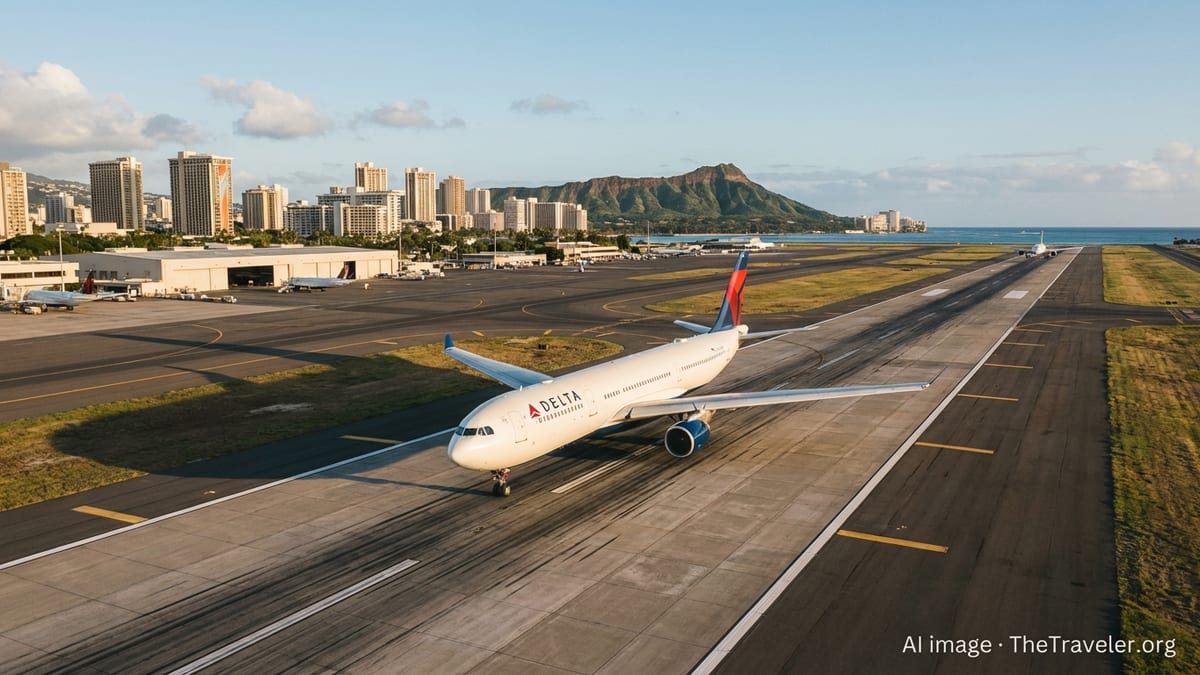
Delta’s Largest-Ever Seasonal Hawaii Schedule
Delta is positioning winter 2026–27 as a landmark season for travel to Hawaii, describing the newly announced lineup as its largest seasonal Hawaii schedule to date. Centered on two new long-haul nonstops from the U.S. mainland and a raft of frequency increases from key hubs, the carrier is betting heavily on sustained demand for warm-weather escapes as North American travelers look ahead to the colder months.
Beginning December 19, 2026, Delta will launch nonstop service between Minneapolis–St. Paul International Airport and Maui’s Kahului Airport, as well as reinstate nonstop flights from Boston Logan International Airport to Honolulu’s Daniel K. Inouye International Airport. Both routes will initially operate daily to capture peak holiday demand before transitioning to slightly lower, but still robust, winter schedules.
The expansion is part of a broader push that also includes more flying to Honolulu from Atlanta, Detroit and New York JFK, plus schedule enhancements on existing Hawaii services. Together, the changes significantly deepen Delta’s footprint in a leisure market where competition has intensified and capacity has swung sharply over the past several years.
New Nonstop: Minneapolis to Maui on Widebody Jets
For travelers across Minnesota and the broader Upper Midwest, the headline announcement is a new nonstop link between Minneapolis–St. Paul and Maui. Starting December 19, 2026, Delta will begin operating flights from Minneapolis to Kahului, the primary airport serving Maui’s popular resort corridors, using Airbus A330-300 widebody aircraft.
The route is scheduled to run daily during peak holiday and spring break periods and five times per week during the core winter season, giving travelers a blend of flexibility and consistency through the colder months. Until now, travelers in the region headed for Maui have largely relied on connecting itineraries through West Coast hubs or Honolulu, adding hours and complexity to the journey.
By deploying the A330-300, Delta is signaling strong confidence in demand on the new route. The aircraft offers a three-cabin configuration with Delta One lie-flat business class seats, Premium Select, Comfort Plus and Main Cabin options, allowing the airline to cater to both high-end leisure travelers and families booking economy packages to the islands.
Boston to Honolulu: One of America’s Longest Domestic Flights Returns
On the East Coast, the relaunch of nonstop service between Boston and Honolulu marks the return of one of the longest domestic flights in the United States. Also beginning December 19, 2026, Delta will restart Boston to Honolulu flights after a hiatus, once again offering New England travelers a single, nearly 12-hour hop to Oahu rather than a multi-stop journey.
The route, which covers more than 5,000 miles, will operate daily over the late-December holiday peak before shifting to four flights per week across the wider winter season. As with the Minneapolis–Maui service, Delta will use Airbus A330-300 aircraft, providing a full suite of long-haul amenities including lie-flat Delta One seats for those seeking a more comfortable overnight-style experience on the westbound leg.
Boston’s nonstop link to Honolulu has had an uneven history, with service previously introduced and then withdrawn during a more volatile period for long-haul leisure demand. Its reinstatement for winter 2026–27 underscores strengthening interest in Hawaii among East Coast travelers and a more favorable competitive landscape on the route.
Boosted Capacity From Key Mainland Hubs
The two new nonstops are only part of the story. Delta is also layering in additional capacity from several of its major mainland hubs to support what it expects will be one of the busiest Hawaii winters in its history. Travelers in Atlanta, Detroit and New York will see expanded frequencies to Honolulu, while Salt Lake City will benefit from an earlier seasonal start to Kona service.
From Atlanta, Delta plans to increase the number of weekly flights to Honolulu, enhancing connectivity for travelers from the Southeast and beyond who use the airline’s largest hub as a jumping-off point. Detroit, another critical connecting hub for the Upper Midwest and Great Lakes region, will similarly gain additional Honolulu flying, broadening options for connecting itineraries from secondary cities.
New York JFK, already a key transatlantic and domestic gateway for Delta, will also see added Honolulu frequencies beginning in 2026, further solidifying the carrier’s position as a leading option for Hawaii-bound travelers originating in the Northeast corridor. For mountain and West Coast travelers, an earlier launch to Kona from Salt Lake City will provide better alignment with peak winter vacation planning.
Premium Cabins and Long-Haul Comfort Front and Center
A consistent theme across Delta’s Hawaii expansion is an emphasis on long-haul comfort and premium products. By assigning Airbus A330-300 widebody aircraft to the new Minneapolis–Maui and Boston–Honolulu routes, the airline is leaning into the growing demand for more spacious cabins and elevated onboard experiences on flights that can stretch close to half a day.
Delta One, the airline’s lie-flat business class cabin, will feature prominently on these services, targeting travelers who are willing to pay more for rest and privacy on overnight or ultra-long domestic legs. Premium Select, a premium economy offering, and Comfort Plus, with extra legroom, give travelers mid-tier options that sit between standard economy and business class.
For leisure travelers, especially families, the widebody aircraft also translate into broader seating choices, larger overhead bins and a more generous overall cabin environment. Enhanced in-flight entertainment systems, multiple meal services and expanded beverage offerings aim to make the lengthy journeys more manageable, particularly for passengers who are not accustomed to flights of this duration within the domestic network.
What the Expansion Means for Travelers and Tourism
The winter 2026–27 schedule will have meaningful implications for both travelers and Hawaii’s tourism economy. For customers in Minneapolis, Boston and their surrounding catchment areas, the new nonstops simplify trip planning and often reduce total travel time by several hours. That could make Hawaii a more realistic option for shorter winter getaways, not just extended vacations.
Tourism officials in Hawaii have spent recent seasons managing the delicate balance between economic reliance on visitor spending and concerns around overtourism. Additional air capacity inevitably raises questions about visitor volumes, particularly in destinations such as Maui that continue to recover from past disruptions. At the same time, more direct flights can help distribute traffic across different islands and encourage longer stays that support local businesses.
For the Upper Midwest and New England, the expanded service creates new marketing opportunities for tour operators, cruise lines and resort partners who can now package Hawaii trips more seamlessly with nonstop access. Travel advisors are likely to highlight the convenience of skipping West Coast connections, especially during winter months when weather-related disruptions can complicate multi-stop itineraries.
Competitive Landscape in the Hawaii Market
Delta’s announcement lands against a backdrop of shifting competition on Hawaii routes. In Boston, the withdrawal of Hawaiian Airlines from the Boston–Honolulu market left a gap that Delta is now moving to fill. The carrier’s return to the route positions it as the primary operator of nonstop Hawaii service from New England’s largest airport.
On the Minneapolis–Maui corridor, Delta’s entry as the only nonstop operator gives it a significant first-mover advantage. While competitors continue to serve Maui from their respective hubs, the absence of direct service from Minneapolis has been a longstanding frustration for winter travelers who often had to connect through West Coast cities at peak times.
More broadly, the build-out of Delta’s Hawaii network may prompt competitive responses in the form of added capacity, fare promotions or schedule adjustments from other major U.S. carriers that view the islands as a core leisure battleground. With fuel prices, demand trends and broader economic conditions still in flux, airlines will be watching closely to see how the new capacity is absorbed.
Booking Outlook and Key Dates for Winter 2026–27
With the new Hawaii flights set to begin on December 19, 2026, Delta is encouraging travelers to start planning early, particularly for the peak holiday and spring break windows that historically sell out months in advance. Seats in Delta One and Premium Select cabins are expected to be in especially high demand on the long Boston–Honolulu and Minneapolis–Maui segments.
Travelers eyeing winter escapes will want to pay close attention to the varying frequencies built into the schedule. Daily service will be concentrated around late December and other holiday peaks, while the remainder of the season will see five weekly flights on Minneapolis–Maui and four weekly flights on Boston–Honolulu. Those planning travel outside the core holiday period may need to be more flexible with departure and return dates to secure nonstop itineraries.
As airlines increasingly use dynamic pricing models that respond quickly to demand, early bookings may also offer some pricing advantages before the most popular dates see sharp fare increases. For travelers in connecting markets served via Atlanta, Detroit, New York or Salt Lake City, the additional Hawaii frequencies will open more itinerary combinations and potentially reduce layover times on both outbound and return journeys.