

More news on this day
Delta Air Lines is warning customers to brace for flight delays and cancellations as the protracted U.S. government shutdown triggers federal staffing shortages, tighter flight caps and growing bottlenecks at some of the nation’s busiest airports.
Get the latest news straight to your inbox!
Shutdown Fallout Reaches the Runways
As the current U.S. government shutdown drags on, its ripple effects are increasingly visible in the air travel system. With key federal agencies operating on limited funding, the Federal Aviation Administration and Transportation Security Administration are facing staffing shortfalls that are forcing tighter controls on how many flights can depart and arrive at major hubs.
Delta, one of the largest U.S. carriers by passenger traffic, has already had to trim its schedule in response to federal directives that reduce the number of takeoffs and landings at high-traffic airports. The airline has completed several rounds of planned cancellations clustered over peak travel days, while warning that further adjustments are possible if controller availability deteriorates or new federal limits are imposed.
Although Delta expects to operate the majority of its schedule, the carrier has acknowledged that customers are likely to see a higher incidence of late departures, extended ground holds and missed connections as traffic management programs are rolled out across the system. Those measures are designed to keep skies safe with fewer controllers on duty but inevitably translate into longer days for travelers.
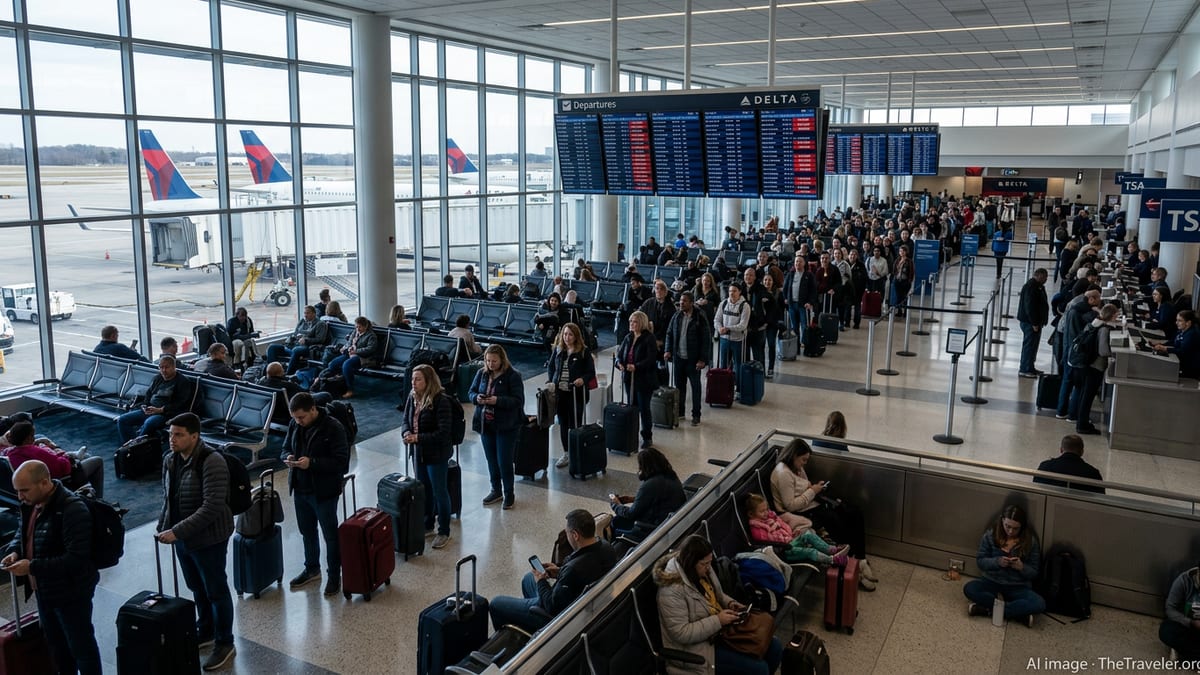
At the same time, scenes of hours-long security lines at airports in cities such as Houston, New Orleans and Atlanta have underscored how quickly localized staffing problems can escalate into national disruption. Even when flights are technically operating, passengers who cannot clear screening in time are missing departures, adding another layer of strain for airlines already juggling tight schedules.
What Delta Is Telling Its Customers
Delta has taken the unusual step of directly warning customers that government-driven disruptions may upend carefully laid travel plans. In recent communications, the airline has advised passengers that delays and cancellations attributed to shutdown-related constraints, such as FAA-ordered flight cuts or severe air traffic control staffing shortages, fall outside its normal operational control.
That distinction matters for travelers hoping the airline will pick up the tab for hotels, meals or rental cars if they are stranded overnight. Delta has told customers not to assume they will be reimbursed for out-of-pocket expenses caused by government shutdown impacts, aligning with a broader industry stance that classifies such events as external to airline responsibility.
Instead, the carrier is emphasizing transparency and flexibility on the flight side. Delta is offering change-fee waivers, the ability to switch to alternate dates or routes, and, in some cases, the option to request refunds on shutdown-affected itineraries, including certain lower-fare tickets that typically cannot be modified. The airline says its goal is to encourage proactive reshuffling of trips that are most exposed to disruption.
Customers are being urged to keep contact details up to date in their Delta profiles and to monitor email, text alerts and app notifications closely. When cancellations are made in advance, the airline is automatically rebooking passengers on the next available options, though those alternatives may involve different routings, longer layovers or departures on a different day during peak shutdown pressure.
How Your Trip Could Be Affected
For individual travelers, the impact of the shutdown on a Delta itinerary will largely depend on the route, timing and connection pattern. Flights into and out of the largest hubs and busiest airspace, including major coastal gateways and primary connecting airports, are the most vulnerable when the FAA reduces traffic volumes to match reduced controller staffing.
Early signs of strain are already apparent. Nationally, thousands of flights across U.S. carriers have been delayed or canceled on some days as federal traffic caps and ground delay programs ripple through hub operations. At airports where security staffing has been particularly thin, travelers have reported lines stretching to three hours or more, forcing some to miss departures despite arriving well ahead of schedule.
Delta customers may feel the disruption even if their own flight is not directly cut by a federal order. When controllers slow the overall flow of aircraft, late arrivals can leave crews out of position or bump pilots and flight attendants up against duty-time limits, prompting additional cancellations later in the day. Tight connection windows become riskier as minor delays cascade into missed links and unintended overnight stays.
International journeys and complex itineraries that rely on multiple domestic segments before an overseas departure are especially exposed. A lengthy hold at a domestic hub could mean missing a once-daily transatlantic or transpacific flight, forcing rebooking a day or more later. While Delta is working to re-accommodate affected customers as quickly as possible, limited seats on popular routes can constrain options when entire banks of flights have been reduced.
Steps Travelers Can Take Right Now
Even as Delta and federal authorities work to manage the disruption, there are practical steps passengers can take to make their trips more resilient. Travel advisers and airline industry analysts recommend, when possible, booking nonstop flights rather than itineraries with multiple connections, particularly through the most heavily used hubs. Fewer segments translate to fewer potential points of failure if schedules begin to fray.
Timing matters as well. Morning departures historically see fewer delays than flights later in the day, when rolling knock-on effects from staffing constraints and weather have had more time to build. Choosing earlier flights can provide a buffer for same-day rebooking if something goes wrong, while later departures may leave fewer fallback options.
Travelers are also being encouraged to arrive at the airport earlier than usual, especially at locations that have already reported unusually long security waits. Some airport operators have advised passengers to allow three to five hours before departure during the shutdown period. Building that cushion may feel excessive, but it can mean the difference between boarding and watching a plane push back without you after a checkpoint bottleneck.
Finally, experts suggest reviewing the fine print on travel insurance and credit cards. Many standard policies exclude coverage for disruptions caused solely by a government shutdown unless purchased before the funding lapse, yet some premium cards provide built-in trip delay and interruption benefits that can help cover hotels and meals when airlines are not obligated to pay. For Delta customers seeking peace of mind, confirming what protections already apply before departure can prevent unpleasant surprises later.
What to Watch in the Coming Days
For now, Delta is signaling cautious optimism that it can keep a large share of its schedule intact despite the shutdown, but the airline has been blunt that safety-driven FAA decisions will take precedence over maintaining normal operations. If air traffic controller absences increase or additional facilities become strained, regulators have warned that deeper cuts to flight volumes, or even temporary airspace closures in extreme scenarios, cannot be ruled out.
The airline industry as a whole is lobbying for a swift political resolution, warning that every additional week of shutdown erodes consumer confidence and chips away at travel spending. Trade groups estimate that billions of dollars in tourism and business travel revenue are at risk if flight limitations and security headaches persist into the heart of the spring and summer peak seasons.
For passengers, the immediate takeaway is clear. Anyone planning to fly with Delta in the days ahead should prepare for a less predictable travel environment, with a higher likelihood of schedule changes, longer lines and stretched airport services. While most journeys will still operate, the margin for error is thinner than usual, and flexibility and patience will be essential carry-on items.
Until Washington restores full funding to the aviation system, Delta and its customers will be navigating a landscape in which political gridlock has migrated from the halls of government to the departure boards. For travelers, staying informed and building extra time into every stage of the journey will be key to keeping trips on track.