

More news on this day
Delta Air Lines has suspended VIP travel perks for members of Congress, linking the move to the ongoing budget impasse over Homeland Security funding that has triggered a partial government shutdown and mounting strain across major U.S. airports.
Get the latest news straight to your inbox!
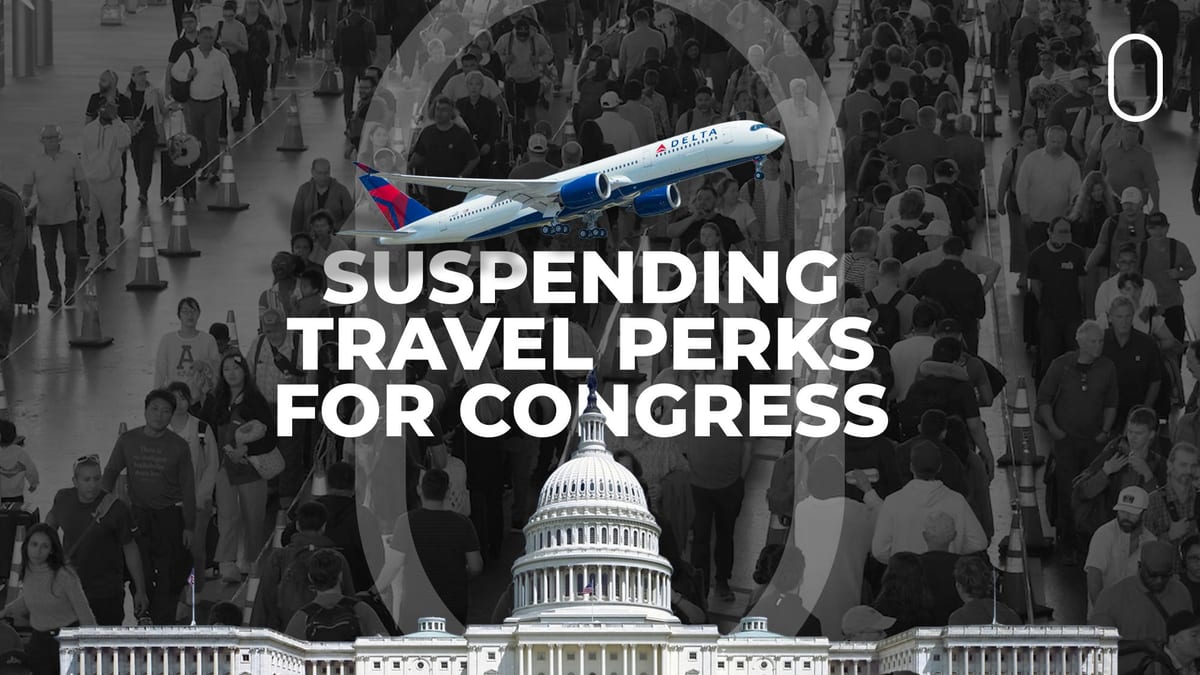
Image by Simple Flying
Airline Halts Congressional VIP Treatment Amid Shutdown Turbulence
Published coverage indicates that Delta has temporarily withdrawn specialty services previously offered to lawmakers and selected Capitol Hill staff, including access to a dedicated congressional service desk and related airport assistance. The suspension coincides with a partial shutdown of the Department of Homeland Security that has left Transportation Security Administration employees facing delayed or uncertain pay and has added pressure on already congested terminals.
Reports describe the now-suspended services as a form of white-glove handling for members of Congress, ranging from priority booking assistance and last-minute ticket changes to personalized airport escorts and streamlined lounge or gate access. While not a publicly advertised product, the perk functioned alongside premium offerings such as Delta’s VIP Select concierge service, which caters to high-spend corporate and entertainment clients.
According to widely shared statements from the airline, Delta framed the change as a resource-driven decision tied directly to the disruption caused by the protracted shutdown. The company indicated that specialty services for members of Congress would be paused until the federal funding dispute is resolved and normal operations can be sustained.
The move has quickly become a symbolic flashpoint, drawing attention to how the budget deadlock is reverberating through commercial aviation, not only for ordinary travelers waiting in extended security lines but also for the elected officials responsible for federal appropriations.
What Perks Are Being Suspended for Lawmakers
Publicly available descriptions of Delta’s congressional services suggest that affected perks go beyond standard elite-status benefits. The special desk and associated handling allowed lawmakers and key staff to secure flights near major votes, rebook disrupted itineraries with minimal friction, and in some cases coordinate curbside-to-gate assistance that bypassed much of the typical airport hassle.
These arrangements resemble premium concierge products used by corporate executives and celebrities, where agents manage check-in, baggage, and navigation through security before escorting travelers to a lounge or directly to the boarding gate. For members of Congress, such treatment has often been justified as a way to accommodate unpredictable voting schedules and high travel volumes on Washington-bound routes.
Delta’s suspension appears to target precisely those high-touch elements, rather than routine ticketing or government contract travel itself. Lawmakers can still purchase tickets on Delta and participate in federal travel programs, but without the added cushioning of dedicated support channels and VIP-style airport handling that once differentiated their experience from that of ordinary passengers.
The change highlights how discretionary and relationship-driven many VIP travel perks are. While elite frequent flyer tiers and lounge memberships are governed by published rules, bespoke services for political and corporate power travelers can be dialed up or down relatively quickly when business priorities or public optics shift.
Homeland Security Funding Standoff and Airport Disruption
The suspension of congressional perks is unfolding against a backdrop of intensifying concern about airport operations as the Homeland Security budget standoff persists. According to national media reports, TSA officers at multiple hubs have faced delayed compensation, staff shortages, and rising overtime demands, contributing to sporadic checkpoint closures and advice for travelers to arrive significantly earlier than usual.
Coverage of the standoff indicates that the dispute centers on funding for immigration enforcement and border operations within the Department of Homeland Security. While lawmakers wrangle over the scope and conditions of that spending, agencies tasked with front-line security functions have been forced to operate under emergency or piecemeal measures, creating uncertainty for workers and passengers alike.
In recent days, some airports have seen supplemental security personnel from other federal agencies deployed to help manage bottlenecks, even as political negotiations in Washington have struggled to produce a comprehensive funding bill. Travel industry analysts warn that prolonged instability in Homeland Security financing could erode confidence in the reliability of air travel, particularly during peak periods.
Within that context, Delta’s decision to halt VIP treatment for lawmakers has been widely interpreted as both a practical response to strained staffing and a pointed illustration of shared discomfort. The same impasse that has upended paychecks and security lines is now interrupting the preferential travel routines of elected officials.
Public Reaction and Political Optics
Reaction from travelers and commentators, especially on social platforms and aviation forums, has been swift and largely critical of Congress. Many users have framed Delta’s move as overdue, arguing that lawmakers should experience the same delays, crowded terminals, and security backlogs facing their constituents while the shutdown stretches on.
Some commentary has gone further, urging airlines and airports to abolish special treatment for members of Congress entirely, independent of the current dispute over Homeland Security funds. Advocates of that position contend that eliminating such perks would narrow the experiential gap between public officials and the traveling public, potentially sharpening the political urgency to avoid future shutdowns.
Other voices caution that the practical impact on individual lawmakers may be limited. Members of Congress retain access to military or charter options in some circumstances, and many still travel using standard airline channels that remain largely functional despite chronic delays. From that perspective, the suspended perks are seen as a symbolic inconvenience rather than a decisive pressure point.
Nevertheless, the optics are significant. At a moment when unpaid or underpaid federal workers are staffing checkpoints and handling baggage, a flagship airline publicly linking the suspension of VIP treatment for lawmakers to the very shutdown affecting those workers underscores a widening frustration within the broader travel ecosystem.
Implications for Future Travel Policy and Airline Relations
Industry observers note that the episode could mark a turning point in how airlines and political leaders manage their behind-the-scenes relationships. While carriers have long maintained specialized desks for government and corporate clients, there is growing scrutiny of arrangements that appear to shield public officials from the consequences of policy decisions that affect ordinary travelers.
The current standoff over Homeland Security funding has already spurred legislative moves to revisit airport privileges for members of Congress, including efforts to curb expedited screening and preferred access at crowded checkpoints. If those proposals gain traction, they could permanently narrow the gap between how lawmakers and voters experience federal aviation security.
For Delta, the suspension of VIP perks may also serve as a signal to investors, employees, and customers that the company is prepared to recalibrate low-visibility benefits when operational pressures mount. By tying the change explicitly to the impact of the shutdown on staffing and resources, the airline is positioning the decision as part of a broader effort to preserve core services for the wider traveling public.
As the budget dispute continues, other airlines and travel providers will be watching closely to see whether the move generates meaningful political momentum toward a funding deal or remains largely symbolic. Either way, the decision has already reshaped the travel narrative in Washington, putting the everyday airport experience of members of Congress under an unusually public spotlight.