

More news on this day
Delta Air Lines is preparing a striking premium shift on select Airbus A321neo aircraft, temporarily configuring them with one of the largest domestic first class cabins in the United States and fundamentally changing what passengers can expect at the front of the narrowbody jet.
A Temporary First Class Heavy Experiment
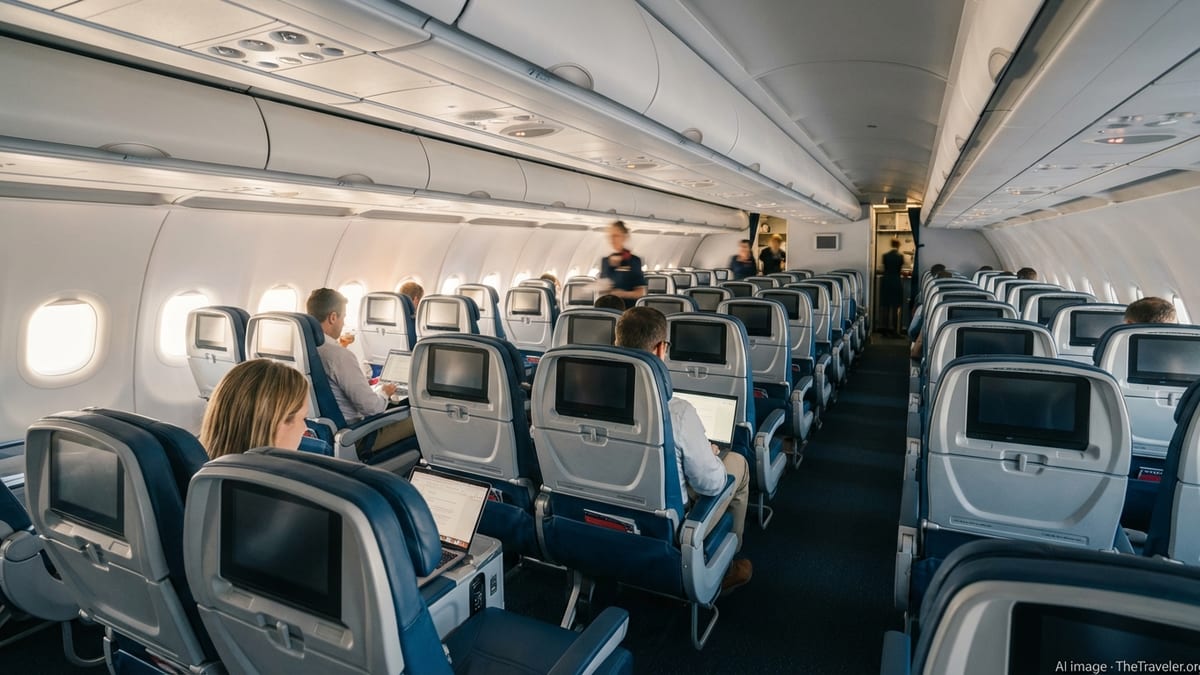
Starting in the summer of 2026, Delta plans to deploy up to seven Airbus A321neo aircraft with a dramatically enlarged first class cabin, featuring 44 recliner-style seats out of a total of 164 on board. That is more than double the standard 20-seat first class layout on Delta’s existing A321neo fleet, and it reflects a tactical response to delays in certifying a new lie-flat business class product designed for premium transcontinental flying.
Instead of leaving those aircraft idle while waiting for certification, Delta will initially fill the space reserved for the new business class with additional domestic first class seats. Industry data shows the interim layout will include 44 first class seats, 54 extra-legroom economy seats and 66 standard economy seats, a mix that heavily favors higher-yield passengers at the front while still offering a sizeable Comfort Plus section for those willing to pay for more space.
Delta has framed the move as a way to keep its new-generation narrowbodies earning revenue while “making the most of our fleet to better serve our customers.” For travelers, the result is an unusually premium-focused single-aisle aircraft, though not one with lie-flat beds. These airplanes are expected to fly some of the busiest domestic routes where demand for upgraded seats is consistently strong.
Once the new long-haul business class suite is finally certified, Delta intends to reconfigure these jets again to their originally planned layout with a smaller number of true business class seats plus a dedicated premium economy cabin. That means the 44-seat first class cabin is explicitly time-limited and likely to disappear once certification issues are resolved.
What the 44-Seat First Class Cabin Will Feel Like
Delta’s standard A321neo first class seat, designed in partnership with German manufacturer Recaro and London-based Factorydesign, already represents one of the more advanced domestic recliner products. The seats are 21 inches wide with about 37 inches of pitch in the current 20-seat configuration, and they feature fixed headrests with “wings” for added privacy, memory-foam cushions, larger tray tables and integrated storage including in-arm bottle holders and space for small devices.
On the 44-seat variant, travelers can expect a similar hard product, but arranged more densely at the front of the aircraft. Early technical details indicate a pitch of roughly 38 inches for these first class seats, a slight increase over many older Delta narrowbodies but still a traditional recliner configuration rather than anything approaching a long-haul lie-flat. Large overhead bins, seatback entertainment screens, power at every seat and personal reading lights remain part of the package, consistent with Delta’s broader A321neo cabin design.
One operational compromise is likely to be felt quickly: only one forward lavatory is slated to serve the entire 44-seat first class cabin. With more than twice as many premium passengers sharing that facility, flyers at the front may find themselves queuing or being directed to mid-cabin lavatories during busy periods. Catering capacity, by contrast, is getting a modest upgrade, with an extra oven built into the galley to support expanded hot meal service for the enlarged first class section on longer flights.
Comfort perception may also vary. While some passengers praise the A321neo first class seat for its supportive padding and privacy, others have found the shell-like design and headrest wings to feel tight or even claustrophobic on longer legs. With more seats installed in the same forward footprint, travelers who are highly sensitive to personal space will want to pay close attention to seat maps and reviews once the exact row layout is finalized.
Routes, Timelines and How to Spot the Aircraft
Delta’s first class heavy A321neos are currently expected to enter scheduled service from June 7, 2026, with the possibility of an earlier soft launch in May. The initial plan centers on Atlanta as the hub for these aircraft, with selected frequencies on high-demand West Coast routes including Los Angeles, San Diego, San Francisco and Seattle. These markets offer dense premium traffic, frequent business travelers and strong loyalty-program uptake, making them logical testbeds for such a premium-heavy layout.
On the busiest Atlanta to Los Angeles rotations, Delta has indicated that it will continue to operate widebodies and other aircraft equipped with lie-flat Delta One suites and Premium Select cabins alongside the A321neo. That means passengers will need to look beyond the route and focus on the specific flight number and aircraft type when choosing between a recliner-style first class seat and a true flat-bed business class experience.
For now, the airline has not advertised the 44-seat first class as a distinct branded product. On booking channels it will likely still appear simply as “First” on a Delta A321neo, which places some of the burden on travelers to identify which configuration they are selecting. Tools such as seat maps and equipment notes in reservation systems can help. If you see a layout with far more rows of first class than usual and a smaller total seat count than a standard A321, you are likely looking at one of these interim aircraft.
Because only a handful of jets are involved, the 44-seat first class cabin will remain a niche experience within the broader Delta network. Last-minute aircraft swaps are also possible, particularly as certification timelines evolve. Passengers specifically seeking or avoiding this configuration should be prepared for changes up to the day of departure.
Implications for Upgrades, Fares and Mileage Redemptions
With more than twice as many first class seats as a typical domestic narrowbody, these A321neos could materially improve the odds of scoring a complimentary or mileage upgrade on certain routes. Elite SkyMiles members traveling from Atlanta to the West Coast may see longer upgrade lists, but also more available seats clearing during the upgrade window and at the gate, especially on off-peak departures.
At the same time, Delta will be looking to monetize as many of those 44 seats as possible. Travelers should expect dynamic pricing to adjust to local demand, with modestly lower buy-up offers from Main Cabin and Comfort Plus on flights where the front cabin is not selling out. For cash buyers, that could translate into more opportunities to sit up front at a price closer to premium economy than traditional first class on certain dates.
For mileage redemptions, the picture may be more nuanced. A higher first class seat count does not automatically mean saver-level awards will become plentiful. Delta’s revenue-based program will still tie SkyMiles prices closely to underlying cash fares. However, where the airline is discounting first class to fill seats, mileage rates may occasionally reflect that softening, particularly on shoulder days around peak travel.
Corporate travelers and managed travel programs may also find it easier to keep frequent flyers in the front cabin without exceeding policy caps on fare classes, simply because more discounted or mid-tier first class fares should be available for longer on each flight. That could increase competition for the best specific seats within the cabin, such as the quieter first few rows away from galleys and bulkheads.
How This Fits into Delta’s Wider Premium Strategy
The oversized first class cabin on the A321neo is not an isolated experiment but part of a broader industry trend: U.S. airlines are chasing high-yield domestic and transcontinental travelers with more premium real estate and differentiated cabins. Delta has already invested heavily in its Delta One suites and Premium Select on long-haul routes, and its original plan for this subfleet of A321neo aircraft featured a true business class product tailored to coast-to-coast markets.
Delays in certifying that new business class have pushed Delta into this interim solution, but the result still aligns with the airline’s premium-first strategy. Rather than reverting to a traditional two-cabin configuration with a modest first class, Delta is leaning into demand for upgraded experiences even on routes where flat beds are not strictly necessary. The 44-seat first class cabin gives the carrier a real-world laboratory to understand how much appetite exists for an expanded but non-lie-flat premium product on busy domestic routes.
For passengers, the shift underscores the importance of reading the fine print when booking. On some days and flight numbers, a ticket marked “First” on Delta between Atlanta and the West Coast may mean a widebody with full Delta One suites and multiple premium cabins. On others, it will mean a single-aisle A321neo with a very large recliner-style first class section and no true business class. Both still come with priority check-in, early boarding, free checked bags and elevated onboard service, but the hard product is notably different.
As the certification process for Delta’s new business class seat progresses, these first class heavy A321neos are likely to have a defined shelf life. Travelers interested in sampling this unusually dense premium cabin will have a limited window once the first aircraft enters service in 2026, before Delta moves on to the next phase of its premium narrowbody strategy.