

More news on this day
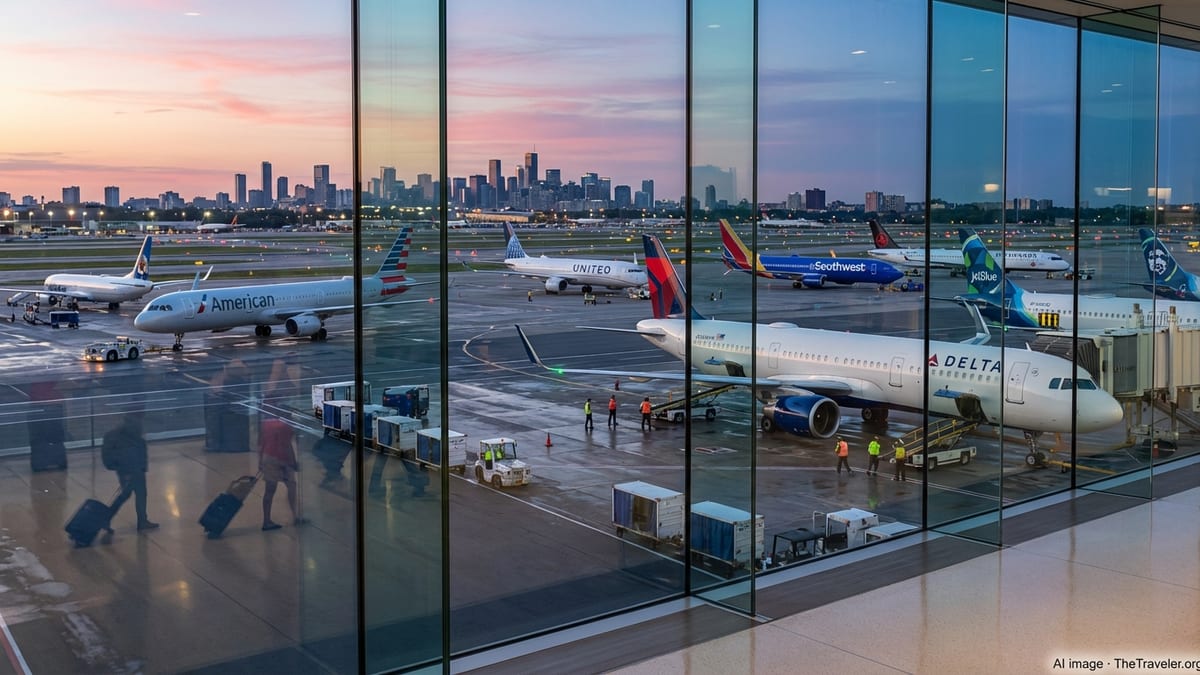
Delta Air Lines’ fresh commitment to the Airbus A321neo is rippling across North American aviation, reinforcing a rapid rebound in leisure and business travel linking the United States, Canada and Mexico and intensifying competition with American, United, Southwest, JetBlue, Air Canada and Alaska Airlines.
Delta Doubles Down on Next-Generation Narrowbodies
Delta Air Lines has exercised options for 34 additional Airbus A321neo aircraft, cementing the model as the backbone of its future narrowbody fleet and signaling continued confidence in demand across North America. The new jets, due to arrive from 2029, will lift Delta’s total A321neo fleet to 189 aircraft, the largest single aircraft type in the airline’s history and a cornerstone of its cost and emissions reduction strategy.
The A321neo, which offers double-digit fuel-burn savings versus older narrowbodies, is central to Delta’s plan to grow capacity while keeping unit costs in check. Executives say the aircraft’s combination of efficiency, range and a cabin configured with high-revenue premium seating enables the carrier to both densify core domestic routes and open new leisure and visiting-friends-and-relatives markets.
For travelers, the renewed investment means more frequencies on popular sun-and-city corridors and upgraded onboard product. Delta has been installing fast Wi-Fi, roomier overhead bins and refreshed interiors across its A321neo fleet, positioning the type as the workhorse for high-demand routes touching key U.S. gateways such as Atlanta, New York, Los Angeles and Seattle, with onward links to Canada and Mexico.
The decision underscores how North American carriers are leaning on advanced narrowbodies to capture resilient demand after several years of volatile recovery. By expanding its A321neo footprint, Delta is aligning itself with a regionwide shift toward fuel-efficient single-aisle aircraft that can profitably serve both dense hubs and emerging secondary markets.
Rivals Build Parallel A321-Fueled Networks
Delta’s move comes as other major North American airlines deploy their own Airbus A321neo and long-range A321 variants to reshape networks between the United States, Canada and Mexico. American Airlines has begun long-haul operations with its A321XLR, using the extended-range jet to connect secondary U.S. cities to Europe while also reinforcing premium transcontinental and sun markets closer to home. The same economics that make the aircraft attractive for transatlantic flying are being applied to long domestic and transborder routes.
United Airlines, an early adopter of next-generation narrowbodies, has been steadily integrating A321neo and Boeing 737 MAX aircraft to upgrade capacity from key hubs including Newark, Chicago and Denver. That fleet modernization supports denser schedules into Canadian cities such as Toronto and Vancouver, as well as major Mexican tourism gateways on both coasts.
Southwest Airlines, which remains all-Boeing, is still part of the narrowbody-driven surge, using its modernized 737 fleet to thicken service to Mexican leisure destinations and cross-border business markets from its U.S. bases. JetBlue has leaned heavily on its own new-generation narrowbodies on routes from the U.S. Northeast and Florida to Mexico and the Caribbean, emphasizing a differentiated cabin product to capture higher-spend travelers.
North of the border, Air Canada has tapped A321 and other efficient single-aisle jets to grow transborder flying from hubs in Toronto, Montreal and Vancouver into U.S. cities and Mexican resorts. Alaska Airlines, meanwhile, has been expanding its network from the U.S. West Coast toward both Canada and Mexico with fuel-efficient narrowbodies, often targeting underserved city pairs and shoulder-season leisure demand.
Transborder Tourism Rebounds Across North America
Industry data show that air connectivity and passenger volumes across the Americas continued to climb in 2025, with Latin America and the Caribbean posting steady year-on-year growth in seats and traffic. Mexico remained a powerhouse, with more than 120 million passengers and a notable increase in connectivity with Canada, where demand for winter getaways and multi-destination itineraries has remained robust.
Travel analysts say the proliferation of A321neo and similar aircraft is a critical enabler of this recovery. The jets allow airlines to add capacity in measured increments, supporting additional frequencies on established leisure routes such as U.S. and Canadian gateways to Mexican beach destinations, while also probing new markets that might not sustain larger widebody aircraft. That flexibility has made it easier for carriers to follow shifting seasonal patterns and respond quickly to emerging tourism hotspots.
Tourism boards in all three countries are capitalizing on the expanded lift. Canadian destinations are promoting city breaks and nature-focused trips tied to new or restored nonstop flights from U.S. hubs. Mexican resort areas are marketing extended-stay packages and multi-city itineraries connected by increased frequencies from Delta and its rivals. U.S. cities, for their part, are leveraging new routes and added seats to pitch culinary, cultural and event-driven travel to Canadian and Mexican visitors.
Despite pockets of economic uncertainty, forward bookings into the peak 2026 travel seasons suggest continued strength in cross-border leisure traffic. Airlines report solid demand for premium economy and business-class seating on key U.S.–Canada and U.S.–Mexico corridors, a trend made more sustainable by the improved unit economics of modern narrowbodies.
Delta Navigates Shifting Partnerships in Mexico
Delta’s A321neo expansion also comes at a time of change in its commercial relationships south of the U.S. border. Regulators in Washington have ordered the unwinding of the carrier’s joint venture with Aeromexico, citing concerns over competition and market access in Mexico City. While codeshare and loyalty cooperation are expected to continue, Delta will lose the ability to coordinate schedules and pricing as closely with its long-time Mexican partner.
Aviation analysts say the dissolution of the joint venture may reshape how Delta uses its own metal into Mexico, with the A321neo providing additional flexibility. Without a fully immunized partner, the airline is likely to rely more heavily on its in-house fleet to maintain a strong presence in core U.S.–Mexico markets, particularly from hubs in Atlanta, Los Angeles and Salt Lake City.
That shift overlaps with the broader regional growth in leisure flying announced by Delta, including its largest-ever winter schedule to Latin America and the Caribbean and new nonstop routes to island and coastal destinations. While many of those flights are operated with other narrowbody types, the expanding A321neo fleet provides a scalable platform for future growth as aircraft are delivered and older jets retire.
For Mexican tourism authorities and airport operators, the realignment presents both risk and opportunity. Although the joint venture’s rollback could initially create scheduling uncertainty, it may also spur Delta and competing U.S. and Canadian carriers to introduce new nonstop options and sharpen fares in contested markets, ultimately benefiting tourists chasing better connectivity and prices.
Fleet Modernization Sets Stage for the Next Travel Cycle
Across North America, the race to modernize fleets with A321neo-family aircraft and comparable new-generation jets is setting the stage for the next phase of travel growth. Carriers see these aircraft as essential tools to address growing environmental scrutiny, volatile fuel prices and evolving traveler expectations, while still adding capacity across a geographically vast, tourism-rich region.
By moving early and aggressively on the A321neo, Delta is positioning itself alongside American, United, Southwest, JetBlue, Air Canada and Alaska Airlines as a pace-setter in the post-recovery market. The carrier’s deep order book gives it the option to accelerate growth in favorable conditions or redirect capacity quickly should economic headwinds emerge.
Travel planners and tourism stakeholders are already mapping strategies around this emerging wave of capacity. Airports from Vancouver to Cancun and Mexico’s interior cities are investing in terminal upgrades and airside infrastructure, anticipating more high-density narrowbody traffic at peak times. Hotel groups and destination marketers are timing new openings and campaigns to coincide with the launch of additional frequencies and routes.
For travelers, the practical outcome is a denser web of nonstop connections linking secondary and major cities across the United States, Canada and Mexico, often on quieter, more comfortable and more fuel-efficient aircraft. As the A321neo becomes an ever more common sight at North American gates, it is quietly powering a tourism boom that shows little sign of slowing.