

More news on this day
Delta Air Lines is accelerating a sweeping inflight technology overhaul, combining free connectivity, smarter seatback screens, and new content partnerships in a strategy that could reshape how travelers choose routes and destinations worldwide.
Get the latest news straight to your inbox!
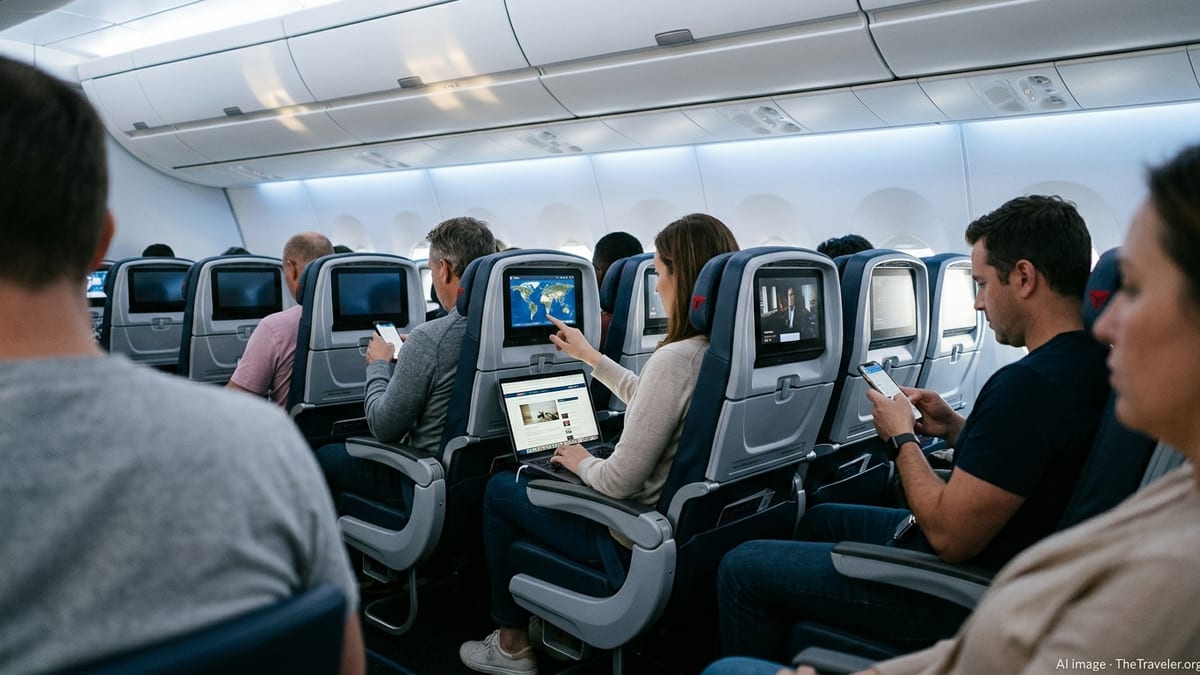
Free Wi-Fi and Delta Sync Redefine Time in the Air
Publicly available information shows that Delta is rapidly scaling its Delta Sync platform, which pairs free inflight Wi-Fi for SkyMiles members with a more personalized digital experience. Using satellite connectivity and a login tied to a passenger’s loyalty profile, the system is designed to let travelers stream, browse, message, and manage trips from gate to gate without buying traditional access passes.
Recent company updates indicate that fast, free Wi-Fi presented in partnership with T-Mobile is already active on a large share of Delta’s mainline fleet, with the airline describing a multi-year journey to extend connectivity across domestic and international routes. As more widebody aircraft join the program, the experience that first took hold on U.S. routes is increasingly available on long-haul flights linking major tourism gateways in Europe, Latin America, and Asia.
For destination marketers, this connectivity shift matters because it removes a long-standing barrier for travelers who need to stay online. Tourists who can confidently work or study in the air are more likely to book longer journeys and consider secondary or seasonal destinations that once felt too remote or time-consuming.
The Delta Sync ecosystem also aims to blur the line between “offline” flight time and the always-connected travel planning cycle. With the airline encouraging members to log in during flight, travelers are nudged toward real-time trip management, from rechecking onward connections to browsing destination content while they are still in the sky.
Cloud-Based Seatback Screens Turn Cabins into Smart Hubs
Delta continues to differentiate itself by doubling down on seatback entertainment at a time when several competitors are removing built-in screens in favor of passenger devices. Company materials highlight that Delta currently offers more than 165,000 seatback screens across its fleet, with work underway to expand its latest Delta Sync seatback experience to more aircraft types.
According to published coverage from aviation and travel outlets, the next generation of Delta’s inflight entertainment will rely on cloud-based technology, allowing the airline to refresh content and features more dynamically. Reports indicate that 4K QLED displays are planned on future aircraft, designed to stay clear and bright even in strong daylight, improving the viewing experience on long daytime sectors to popular leisure destinations.
Enhanced seatback systems also support live television, curated kids’ content, and interactive maps that showcase routes and destination information. Recent reporting notes that live news channels and global networks have been added to the lineup, giving travelers real-time windows into world events as they cross continents.
For travelers eyeing long-haul vacations, the promise of reliable screens at every seat can make multi-hour flights feel more manageable. Families, in particular, may gravitate toward routes with robust kid-friendly programming, while solo travelers use the screen as a gateway to destination inspiration, language practice, or local guides.
Content Partnerships Tie Entertainment to Destination Discovery
Delta’s inflight technology push is not limited to hardware. Reports from industry events such as the Consumer Electronics Show describe a growing roster of digital content partners linked to the Delta Sync platform, including global streaming services, video platforms, and niche entertainment providers.
Public information suggests that partners like Paramount+, YouTube, Crunchyroll, and others are being woven into both Wi-Fi and seatback experiences, giving passengers access to popular series, films, and creator content at cruising altitude. Over time, this framework could be used to highlight destination-themed collections, travel shows, and city guides tailored to the route travelers are flying.
Such integrations position the cabin as a discovery space where a movie set in Sicily, a food show filmed in Seoul, or a documentary about Patagonia appears just as passengers are headed toward Europe, Asia, or South America. If leveraged fully, the combination of connectivity and curated entertainment could subtly steer travelers toward new itineraries, repeat visits, and multi-city trips they had not considered at booking.
For tourism boards and local operators, this creates fresh opportunities to reach highly engaged audiences in a captive environment. Airlines increasingly act as media platforms, and Delta’s inflight tech strategy suggests that destination storytelling during the flight itself will become more targeted and data-informed.
Global Network Growth Meets High-Tech Cabins
Delta’s inflight technology investments are unfolding in parallel with an expanded long-haul network that targets both classic and emerging leisure markets. Delta News Hub coverage details record transatlantic schedules for upcoming summer seasons, including increased capacity to Italy and additional flights to cities such as Barcelona and Dublin, as well as expanded connectivity through hub airports like Atlanta and Boston.
As new routes launch, particularly between U.S. cities and secondary European or beach destinations, aircraft equipped with upgraded Wi-Fi and Delta Sync seatback systems are being deployed across a growing share of the network. This alignment of route growth and digital capability means that a traveler flying from a regional U.S. city to an island in the Mediterranean may increasingly enjoy the same tech-forward experience once limited to flagship trunk routes.
Travel industry analysts point out that such upgrades can influence how passengers perceive value. When multiple carriers offer similar schedules and prices, the promise of free connectivity, rich entertainment, and personalized interfaces can tip the scales in favor of Delta-operated flights, pushing more tourist traffic through its hubs and partner gateways.
This dynamic also benefits destination economies. Additional frequencies supported by strong onboard products can extend seasons, smooth demand beyond traditional peaks, and open new source markets, from North American digital nomads to hybrid business-leisure travelers willing to fly farther if they can stay connected.
What Travelers Should Watch for on Upcoming Trips
For travelers planning international journeys in 2026 and beyond, the most immediate impact of Delta’s inflight tech push will be felt in three areas: connectivity reliability, personalization, and cabin experience consistency. Not every aircraft or route offers identical capabilities yet, so passengers are advised to review fleet details and onboard amenities when selecting flights, especially on niche or regional segments.
Once onboard, SkyMiles members can typically unlock free Wi-Fi by logging into the Delta portal, while Delta Sync seatback screens where available offer profile-linked features such as saved preferences and tailored recommendations. Over time, travelers may see more route-specific content, language options, and offers that reflect their past behavior and upcoming destination.
There are still practical limits. Coverage gaps can appear on certain oceanic or polar routes, and older aircraft awaiting retrofits may provide traditional paid Wi-Fi or a reduced entertainment catalog. Nevertheless, the pace of installations and the scale of Delta’s partnership with satellite providers suggest that the share of flights with full-featured connectivity and modern seatback systems will continue to rise.
For tourism stakeholders, the message is clear: as aircraft cabins become smarter and more connected, the inflight experience is turning into a crucial touchpoint in the battle for visitors. Delta’s technology strategy underscores how airlines, technology companies, and destinations are converging to shape where, when, and how travelers explore the world.