

More news on this day
Delta Air Lines is accelerating an inflight technology overhaul that combines fast Wi-Fi, personalized entertainment and digital identity tools, a push that industry observers say could reshape how travelers discover, plan and experience tourism across global destinations.
Get the latest news straight to your inbox!
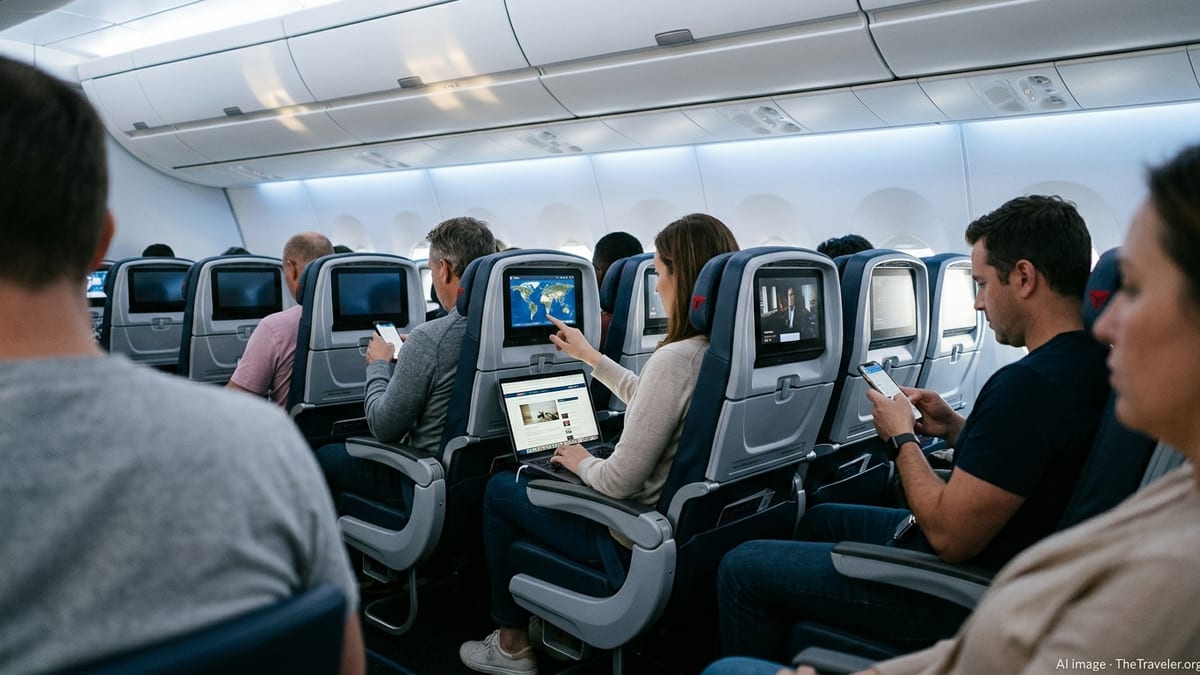
Fast, Free Wi-Fi Reaches Most of the Fleet
Publicly available company information shows that Delta has installed its fast, free Delta Sync Wi-Fi, presented in partnership with T-Mobile, on roughly 1,000 aircraft, representing about three quarters of its fleet as of early 2026. The service is available to passengers who log in with a free SkyMiles membership and is being promoted as a cornerstone of the carrier’s connected-cabin strategy.
The latest rollout figures indicate that the airline is moving closer to its stated goal of offering consistent, streaming-capable connectivity across most domestic routes, with expansion to select international services. Reports indicate that the upgraded system offers substantially higher bandwidth than earlier inflight connections, allowing multiple devices per customer and more reliable video streaming at cruising altitude.
For tourism, this level of connectivity is significant. Travelers can research hotels, tours and restaurants in real time, adjust ground transportation on the fly and share content from destination cities as they fly there. Travel analysts note that this type of always-on access helps smaller and emerging destinations reach potential visitors who may still be choosing what to do even after boarding the aircraft.
Industry commentary also highlights that free connectivity, tied to a loyalty account, could strengthen Delta’s data on customer preferences. That information, once anonymized and aggregated, may help the airline and its tourism partners tailor offers, seasonal campaigns and targeted content tied to specific regions or travel seasons.
Delta Sync Seatback Turns Screens into Smart TVs
Alongside the Wi-Fi upgrade, Delta is rolling out a cloud-based Delta Sync seatback experience developed with technology partners such as Thales Avionics. Company announcements describe a new generation of seatback systems built around large, high-resolution screens with expanded storage capacity and the ability to refresh content more frequently via the cloud.
The refreshed interface is designed to feel closer to a home streaming platform, with personalized recommendations, curated collections and profile-based preferences that follow passengers from flight to flight. Partnerships with services such as YouTube, Paramount Plus and anime streamer Crunchyroll are being promoted as a way to keep long-haul travelers engaged with familiar platforms during their journey.
For tourism boards and destination marketers, this type of environment offers a new, attention-rich space. Inflight entertainment menus can spotlight documentaries, vlogs and city guides about specific regions, turning the seatback screen into an always-on discovery channel. Travelers heading to Europe, Asia or Latin America, for example, may see tailored collections of films and shows set in cities on their itinerary, subtly encouraging longer stays or return visits.
Reports on early deployments suggest that as these systems become more interactive, they could support opt-in destination offers, such as discounted museum passes or attraction tickets that travelers can bookmark in-flight and purchase later via mobile. While many of these features are still emerging, aviation analysts expect airlines to increasingly treat the seatback as a digital storefront for the wider tourism ecosystem.
Personalized Portals and Partner Offers at 30,000 Feet
Delta’s broader Delta Sync platform includes an exclusives portal accessible through the onboard Wi-Fi, where logged-in SkyMiles members can view curated tiles featuring entertainment, partner offers and limited-time promotions. Published materials describe a “My Exclusives” landing page that serves as a personalized front door to streaming trials, shopping discounts and co-branded card benefits.
Among the headline offerings are trial access to streaming services such as Paramount Plus, as well as promotional tie-ins with brands including T-Mobile and American Express. While many of these partnerships focus on media and financial services, they also have clear tourism implications: travelers can use inflight downtime to sign up for digital services that they will carry into their stays abroad.
Industry observers note that this model effectively extends the trip’s commercial arc into the flight itself. A traveler en route to a major tourism hub might see offers tied to local events coverage, international sports, or lifestyle content related to that destination. Over time, the same architecture could support packages with hotel groups, tour operators or local city passes, especially if those partners are able to present geo-relevant offers as the aircraft approaches specific regions.
Because access is gated by a SkyMiles login, the experience can be tuned to a traveler’s history: frequent visitors to one region might see different recommendations than those embarking on a first-time long-haul trip. Travel strategists argue that this level of personalization, if managed transparently and with clear privacy controls, can nudge travelers toward lesser-known neighborhoods, off-season stays and local operators that benefit from more distributed tourism flows.
Digital Identity and Seamless Airport Journeys
Delta’s inflight push is complemented by a multi-year investment in digital identity and biometrics on the ground, especially at its key hubs. Earlier initiatives in Atlanta, Detroit and New York introduced optional facial-recognition boarding and a so-called biometric terminal concept for international departures, intended to speed movement from curb to gate.
More recent updates from airport and airline sources show that the use of facial recognition and digital IDs continues to expand, particularly for international flights at Hartsfield-Jackson Atlanta International Airport. The goal is a largely touchless journey for eligible travelers, where a combination of passport data, secure biometric checks and app-based credentials can reduce the need to display physical documents at multiple checkpoints.
For tourism flows, these changes matter in two ways. First, a smoother and more predictable airport experience can make long-haul and connecting itineraries less intimidating for infrequent travelers, encouraging more people to consider overseas trips. Second, faster processing may help airports and airlines handle peak-season surges more efficiently, potentially reducing missed connections that can disrupt complex multi-stop tourism itineraries.
Privacy advocates have raised questions about long-term biometric data use, retention and consent, and published commentary continues to call for robust safeguards and opt-out mechanisms. As digital identity tools spread, tourism stakeholders are watching how regulators, airports and carriers balance operational efficiency with travelers’ expectations for transparency and control over their personal information.
Apps, Planning Tools and the Future of Connected Tourism
The Fly Delta app is emerging as the central hub tying these technologies together. Recent feature updates highlighted by the airline include more granular trip management, real-time standby tools, easier updates to Known Traveler Numbers and deeper integration with in-cabin services. For connected travelers, the app acts as a bridge between home, airport, inflight experience and on-the-ground logistics at global destinations.
Travel planners point out that when inflight connectivity and entertainment sync smoothly with mobile tools, the entire journey becomes a continuous planning session. A traveler can use the app to change seats, then switch to the seatback screen to watch a destination guide, and finally use inflight Wi-Fi to reserve a local tour, all without waiting to land. This fluidity, they say, benefits destinations that are ready with mobile-friendly booking, clear visitor information and real-time service updates.
Looking ahead, industry analysis suggests that Delta’s inflight tech investments could foreshadow a broader shift across global aviation, where airlines act less as standalone transport providers and more as digital platforms linking travelers to tourism ecosystems. The most successful destinations may be those that align early with these platforms, ensuring that their stories, experiences and small businesses appear within the inflight discovery and booking environment.
At the same time, the uneven pace of fleet upgrades and airport infrastructure changes means that the experience will vary by route and aircraft for some time. Passengers may still encounter flights without free Wi-Fi or next-generation screens, particularly on regional services and older jets. As the rollout continues, travelers heading to major tourism gateways are the most likely to experience Delta’s connected vision first, offering a preview of how future trips to global destinations could be shaped long before touchdown.