

More news on this day
Delta Air Lines is sharpening Austin’s profile as a western gateway, with new nonstop service to Phoenix and seasonal flights to Bozeman that broaden Central Texas travelers’ access to both desert cities and Rocky Mountain escapes.
Get the latest news straight to your inbox!
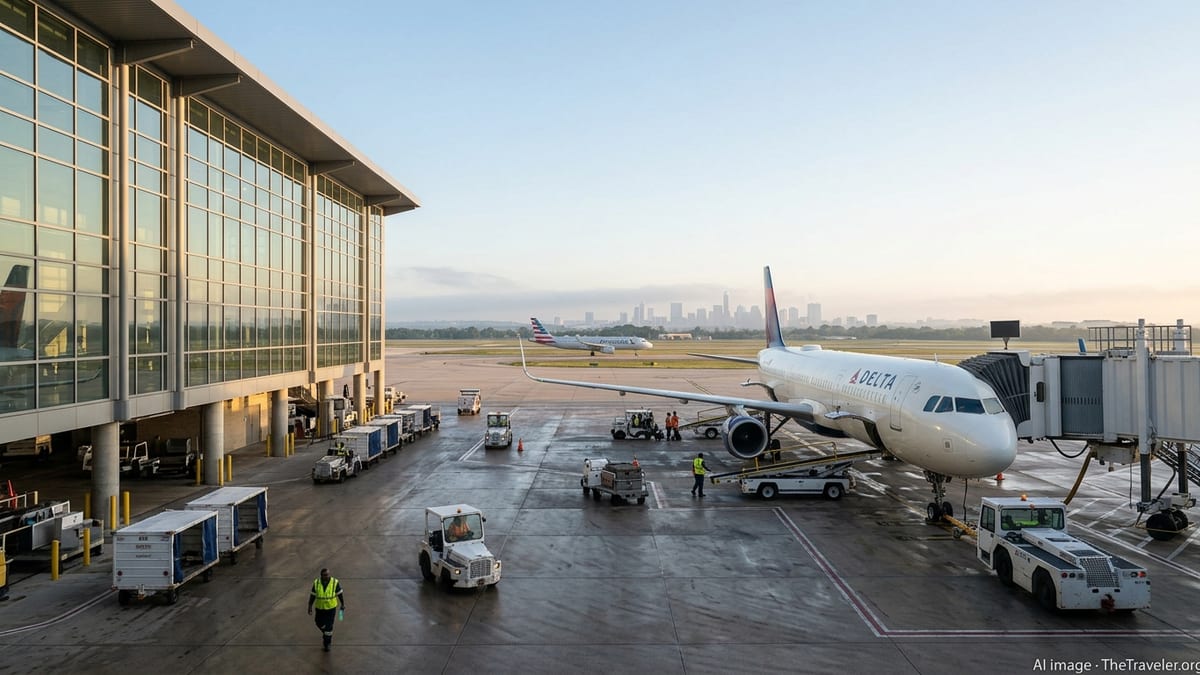
Austin’s Rapid Rise as a Western Connect Point
Austin-Bergstrom International Airport has been one of the fastest-growing airports in the United States, and airlines have steadily layered on new routes to keep pace. Delta’s latest additions, tying Austin directly to Phoenix and Bozeman, reflect a broader strategy to position the Texas capital as a convenient jumping-off point for both business and leisure travel across the western United States.
Publicly available airport planning documents and news coverage indicate that Austin’s nonstop map has expanded significantly since 2023, with new domestic and international links and rising daily departures. Analysts note that Delta has moved from a limited presence toward something closer to a focus city model, gradually filling out a network that allows passengers to bypass traditional megahubs in favor of more direct connections.
The new Phoenix and Bozeman routes arrive as Austin’s own tech-driven growth continues to generate demand for air service, drawing both corporate travelers and visitors to the region. With more nonstop options layered onto existing connections through hubs like Atlanta and Salt Lake City, the city is taking on a larger role in how travelers move around the Sun Belt and Mountain West.
Nonstop Austin–Phoenix Links Business Hubs and Desert Escapes
Phoenix Sky Harbor International Airport ranks among the busiest airports in the country, serving as a key node for both corporate travel and warm-weather getaways. Adding a Delta-branded nonstop between Austin and Phoenix gives Central Texas travelers another option on a corridor that has historically been dominated by other major carriers, according to route maps and schedule data.
The Austin–Phoenix market connects two fast-growing metros with strong technology, aerospace, and healthcare sectors, making it an attractive pairing for business travelers. At the same time, Phoenix serves as a gateway to destinations across Arizona and the greater Southwest, from Sedona and Flagstaff to the Grand Canyon, broadening the value of a direct link from Central Texas.
Reports on Delta’s Austin build-up suggest that additional western connectivity is part of a long-term play to compete more directly in markets where rival airlines already have a deep presence. A branded nonstop to Phoenix fits that approach, giving SkyTeam loyalists a consistent experience and easier mileage earning and redemption on a route that previously required either a different airline or a connection.
Seasonal Austin–Bozeman Flights Open a Direct Path to Big Sky Country
While Phoenix caters to year-round demand, Delta’s new Austin–Bozeman route is firmly aimed at summer and shoulder-season travelers chasing alpine scenery and outdoor adventure. Flight schedules published by Bozeman Yellowstone International Airport show that Delta will operate Saturday-only seasonal nonstop service between Austin and Bozeman from mid-June through early September, using Delta Connection regional aircraft.
Bozeman has emerged as one of the Mountain West’s most in-demand gateways, giving access to Yellowstone National Park, Big Sky Resort, and a growing slate of fishing, hiking, and cycling destinations across southwest Montana. Until now, many Central Texas travelers headed to Bozeman have relied on connections through larger hubs such as Salt Lake City, Denver, or Minneapolis. A nonstop from Austin trims travel time and simplifies weekend or weeklong trips during the peak summer season.
Airport communications and airline industry coverage highlight that Delta will be the only carrier offering nonstop service on the Austin–Bozeman route in its inaugural season. That exclusivity positions the airline to capture both leisure travelers heading for the Rockies and Montana-bound visitors connecting through Austin from elsewhere in Texas and the broader South.
What the New Routes Mean for Travelers
For travelers based in Central Texas, the most immediate impact of Delta’s new flights is a reduction in the number of connections needed to reach popular western destinations. Nonstop flights typically translate into shorter total journey times, fewer missed connections, and less risk of baggage delays, all of which are meaningful advantages during busy summer and holiday travel periods.
The Austin–Phoenix service adds schedule and carrier choice on a high-demand route, complementing existing options from other airlines. For passengers loyal to Delta and its SkyTeam partners, having a branded nonstop means easier elite-status qualification, more predictable onboard products, and streamlined itineraries when connecting onward to the West Coast, Mexico, or international destinations served from Phoenix and other Delta hubs.
The seasonal Austin–Bozeman flights, while operating only once a week, are tailored to leisure patterns. Saturday-only service aligns closely with vacation rental check-in days and typical weeklong stays at mountain resorts, which travel analysts note can make planning more straightforward for families and groups. Even with limited frequency, a nonstop option can influence where travelers choose to spend their summer holidays.
Strengthening Austin’s Position in the National Air Network
Delta’s Phoenix and Bozeman launches are part of a broader pattern that has seen the airline progressively expand its Austin schedule with new point-to-point routes. Industry observers point to other recent announcements from Delta involving additional domestic destinations, seasonal leisure flights, and infrastructure investments such as a larger Sky Club and long-term gate commitments at Austin-Bergstrom.
As more carriers add capacity, Austin’s role in the national air network continues to evolve from primarily an origin-and-destination market to a modest but growing connecting node. The new Phoenix and Bozeman services underscore that trend, giving Austin-based travelers more nonstop options while also positioning the city as an attractive connection point between the Southeast, Texas, and the Mountain West.
While Austin is not yet classified as a full-scale hub for Delta, route announcements, schedule filings, and airport strategy documents collectively suggest that the airline views Central Texas as a key growth market through the middle of the decade. The addition of Phoenix and Bozeman to the nonstop map reinforces that trajectory and signals that Austin’s transformation into a premier gateway is likely to continue as demand and airport capacity expand.