

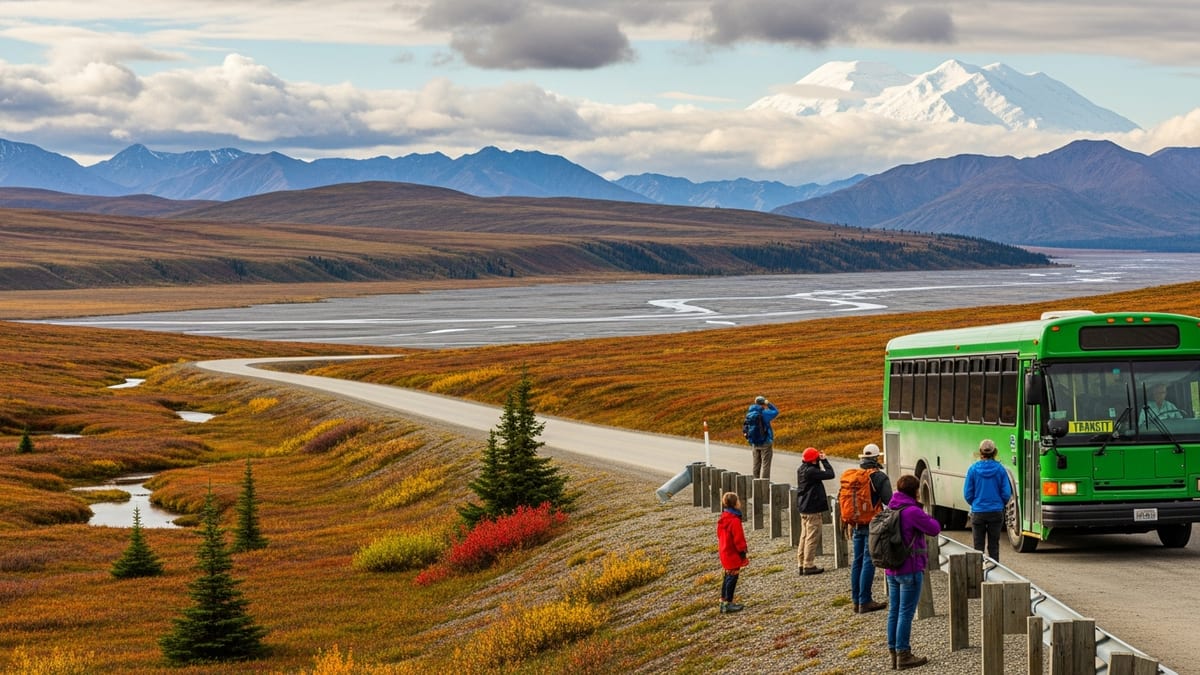
Denali National Park and Preserve is one of North America’s great wilderness destinations, a six-million-acre expanse of tundra, taiga, braided rivers and towering peaks crowned by Denali, the continent’s highest mountain. Planning a visit here is different from planning a trip to many other national parks.
With just one road, limited personal vehicle access, and fast-changing conditions, a successful trip depends on understanding how the park works, booking key services early, and preparing for the realities of Alaska’s interior climate. This guide brings together the latest information to help you plan a safe, rewarding visit to Denali in 2026 and beyond.
Understanding Denali’s Layout and Current Conditions
Denali National Park and Preserve revolves around a single 92-mile road that stretches from the George Parks Highway into the heart of the Alaska Range. Almost all visitor infrastructure is clustered near the park entrance at Mile 0 to Mile 3: the Denali Visitor Center, Denali Bus Depot, Riley Creek Campground and the Alaska Railroad depot. Beyond this entrance area, the Denali Park Road becomes progressively more remote, transitioning from paved to gravel and passing through prime habitat for grizzly bears, caribou, moose, Dall sheep and wolves.
Due to the long-running Pretty Rocks landslide and associated construction in the Polychrome area, the Denali Park Road is currently closed to most traffic at Mile 43. The National Park Service expects this closure to remain in effect through the 2026 main season. As a result, transit and most tour buses, as well as camper buses, operate only as far as Mile 43, known as the East Fork turnaround. Classic destinations farther west such as Eielson Visitor Center, Wonder Lake and Kantishna are not accessible by park buses in 2026, and Wonder Lake Campground is closed for the season.
Within the first 15 miles of the Denali Park Road, private vehicles may still drive themselves to Savage River in summer, conditions permitting. Campgrounds such as Sanctuary River, Igloo Creek and Teklanika River, which lie between Mile 12 and Mile 29, are open with some special access rules. This altered road access concentrates more visitor experiences into the front half of the park, making it even more important to plan ahead, manage expectations about how far into the park you can travel, and build flexibility into your itinerary in case of weather or operational changes.
Before finalizing your travel plans, review the National Park Service’s current conditions information for Denali, as this page is frequently updated with the latest on road status, facility hours and any temporary closures. Expect the unexpected: heavy rains can produce washouts, wildfires can trigger air quality issues, and wildlife activity can prompt short-notice restrictions. A solid plan is essential, but a mindset ready to adapt is just as important.
When to Visit and How Long to Stay
The main summer season in Denali runs roughly from May 20 to mid-September. This is when the Denali Visitor Center, park bus system, most campgrounds and ranger programs operate on full schedules, and when you will find the widest choice of lodging, tours and services in the surrounding area. Summer crowds peak from late June through mid-August, aligning with long daylight hours and relatively mild temperatures, but also higher prices and tighter competition for bus seats and campsites.
Visiting in late May or early June offers thinner crowds, snow lingering in the high country, and often clearer views of Denali’s summit, but some trails can be muddy and certain services may just be ramping up. Early September can be spectacular, with fall colors rippling across the tundra and fewer visitors on the buses, although cooler temperatures, frosty nights and a greater chance of storms come with the shoulder season. After mid-September, the park transitions quickly into fall and winter operations, with road plowing limited, many facilities closed, and a focus on self-reliant, cold-weather visitors.
The National Park Service suggests that a single full day or one overnight stay is the absolute minimum for experiencing Denali, and that recommendation is especially relevant under current road restrictions. One night allows time for a bus trip into the park, a short hike and a ranger program. Two nights give you a full day for a longer transit or tour bus ride plus partial days for trail exploration near the entrance. With three or more nights, you can better hedge against cloudy or rainy days that obscure mountain views and make wildlife sightings less likely, and you can explore more extensively on foot.
For first-time visitors focused on the classic Denali experience of wildlife watching and big-mountain scenery, plan at least two nights in the Denali area. If you enjoy hiking, photography or simply want to slow down and absorb the wilderness atmosphere, three nights or more will feel well spent. Travelers coming in spring, fall or winter should allow extra time for travel delays and reduced services, and be fully prepared for Alaska’s demanding conditions.
Getting to Denali and Around the Park
Denali sits along the George Parks Highway between Anchorage and Fairbanks, approximately 237 road miles north of Anchorage and 120 miles south of Fairbanks. Most visitors arrive either by rental car or via the Alaska Railroad. Driving the Parks Highway gives you maximum flexibility and provides ample opportunities to stop at viewpoints, small towns and trailheads along the way. Plan on roughly a four- to five-hour drive from Anchorage and a two- to three-hour drive from Fairbanks in good conditions, and build in extra time for road construction or weather.
The Alaska Railroad’s Denali Star service connects Anchorage and Fairbanks with a station near the park entrance. Train travel is more leisurely than driving, with large windows and dome cars that showcase the landscape. However, trains operate on fixed schedules and you will rely heavily on shuttle buses, taxis or tour operators to move between your lodging and park facilities. Cruise ship-based tour packages often bundle rail transportation, lodging and Denali tours; if you prefer to plan independently, be sure to coordinate train times with hotel check-in and bus departure schedules.
Once at Denali, movement inside the park is governed by the single park road and a mixture of free and paid bus services. In summer, free shuttle buses circulate around the entrance area, connecting the Denali Visitor Center, Denali Bus Depot, Riley Creek Campground, the sled dog kennels and the Savage River area. These free buses are especially useful if you have arriving trains or shared transportation and do not want to walk between scattered facilities. Most visitors heading deeper into the park rely on the paid transit and tour bus system, which departs from the Denali Bus Depot.
Because nearly all private vehicle travel stops at Mile 15 during summer, paying attention to bus options is crucial. Transit buses are flexible, hop-on/hop-off style vehicles geared to independent travelers and hikers, while narrated tour buses provide set itineraries with an interpretive focus. Reservations for these services are strongly recommended in 2026, especially during peak weeks and for visitors with only one or two days to spare. Build your daily plans around your chosen bus departure and return times, allowing buffer time to reach the bus depot and to navigate any lines at park facilities.
Bus System, Tours and Reservations in 2026
The Denali bus system is central to the visitor experience, and in 2026 it remains shaped by the Mile 43 road closure. Non-narrated transit buses operate to the East Fork turnaround at Mile 43, with the East Fork Transit being the main option for independent sightseeing and trail access. Adult tickets for this route are priced in the mid-$30 range in 2026, and children aged 15 and under ride free, though they still need reserved seats. A separate camper bus service is available for those holding overnight reservations in campgrounds or backcountry units, also turning around at Mile 43.
Transit buses are designed for flexibility: you can disembark at any approved stop, hike or explore, then flag down a returning transit bus later in the day as long as there is space. Drivers will stop for wildlife viewing, weather and safety permitting, and the buses make regular restroom and stretch breaks along the road. Seats are utilitarian rather than luxurious, and food is not sold on board, so you must bring your own meals, snacks and water. A full East Fork round trip typically occupies most of a day, depending on stops and wildlife sightings.
For visitors who prefer a more structured experience with on-board narration, the park’s concessioner runs tour buses such as the Denali Natural History Tour and the Tundra Wilderness Tour. In 2026, these tour routes are modified to comply with the Mile 43 closure, but they still provide guided commentary on geology, ecology, history and wildlife. Ticket prices for these tours are substantially higher than for transit buses and include the park entrance fee for adults. There is no fixed daily tour schedule; departures vary by date and demand, so securing reservations early is especially important.
All reservations for transit buses, tour buses and most park campgrounds are handled by the park’s concessionaire. Bookings for the summer 2026 season opened as early as December 1, 2025, and popular dates and departures can fill quickly. You can reserve online or by phone, with credit or debit card payment required. On-the-spot ticket purchases at the Denali Bus Depot are sometimes possible earlier in the season or on less busy days, but visitors with tight itineraries or mid-summer travel dates should not count on walk-up availability. Remember that in-park facilities like the bus depot and Riley Creek Mercantile are moving to cashless operations for 2026.
Where to Stay: Campgrounds and Lodging
Denali offers several frontcountry campgrounds within the park boundaries, along with abundant lodging options on private land just outside the entrance area. Inside the park, the main campgrounds are Riley Creek (near the entrance), Savage River, Sanctuary River, Igloo Creek and Teklanika River. Wonder Lake Campground is closed for the 2026 season due to the ongoing road situation. Each campground has a distinct character, ranging from RV-friendly sites with some amenities to walk-in tent sites suited to visitors seeking a quieter, more rustic base.
Riley Creek Campground, open to both tents and RVs, sits close to the park entrance and offers the greatest convenience to services like the visitor center, bus depot and mercantile. It is often the best choice for visitors relying on trains or shared transportation, as free shuttles make it easy to move between Riley Creek and other key facilities without a private vehicle. Savage River Campground lies around Mile 13 of the park road, backed by forest and mountains, and benefits from the nearby Savage River day-use area, a scenic location for short hikes and wildlife viewing.
Farther inside the park, Sanctuary River and Igloo Creek campgrounds offer smaller, tent-only settings that emphasize a quieter experience, with access only by camper bus or, in some seasons, limited vehicle permits. Teklanika River Campground at Mile 29 is the second-largest campground in the park and holds a special status: campers with reservations may drive their vehicles directly to Teklanika and must then commit to staying within the Teklanika zone for the duration of their stay, using the park’s Tek Pass bus option to travel beyond. This arrangement helps limit traffic while giving campers deeper access into the park.
Outside the park boundaries, a string of hotels, cabins, hostels and lodges stretches several miles along the Parks Highway corridor. These properties range from simple roadside motels to full-service resorts with restaurants, guided activities and gift shops. While the National Park Service does not endorse specific private lodging, regional visitor bureaus and booking platforms provide ample information. Because Denali’s summer season is short and demand is high, especially from late June to mid-August, booking lodging at least several months ahead is prudent. If you prefer specific room types or want to coordinate with rail arrivals, even earlier reservations are advisable.
Top Experiences: Wildlife, Hiking and Unique Denali Activities
Even with road access limited to Mile 43, Denali offers an impressive breadth of experiences. Transit and tour buses remain the centerpiece for wildlife viewing and big-sky scenery. From the low spruce forests near the park entrance, the road climbs through rolling tundra where caribou may graze, grizzly bears forage for berries, and Dall sheep rest on distant ridges. Wildlife sightings are never guaranteed, but a full-day bus journey gives you the best odds of seeing multiple species and of encountering varied landscapes that reflect the park’s immense scale.
For hikers, Denali combines a network of maintained trails near the entrance with vast areas of trailless wilderness. Around the visitor center and Riley Creek, well-marked trails such as Horseshoe Lake, Mount Healy Overlook and the Triple Lakes Trail provide options from easy strolls to strenuous, full-day outings. Near Savage River, short loop hikes and the Savage Alpine Trail deliver strong chances of seeing wildlife and sweeping alpine views, especially in the evening when day crowds thin out. These trails are particularly valuable in 2026, as they provide rich experiences without requiring access beyond Mile 43.
One of Denali’s signature offerings is its encouragement of off-trail hiking in designated zones along the park road. Transit buses make this style of exploration possible by dropping you at approved locations, from which you can walk cross-country through tundra and low brush, then flag down a returning bus later in the day. This kind of “choose your own route” hiking demands navigation skills, sound judgment and an understanding of wildlife safety, but it allows you to experience Denali’s wildness in a way that few national parks can match. Rangers can suggest suitable areas for your fitness level and experience at the visitor center.
No visit to Denali in summer is complete without experiencing the park’s historic sled dog kennels. Denali is the only U.S. national park that maintains a working kennel of sled dogs for winter patrols and traditional management tasks. In the main season, free shuttle buses connect the visitor center and the kennels, where daily demonstrations showcase the dogs’ training and the role they play in park operations. These programs are family favorites and also offer insight into Alaska’s longstanding dog mushing culture. Combine a kennel visit with a ranger talk at the visitor center for a rounded understanding of Denali’s natural and cultural stories.
Practical Planning: Permits, Safety and What to Pack
Most frontcountry activities in Denali, such as bus rides, day hikes and campground stays, do not require special permits beyond standard reservations. However, backcountry camping anywhere off road or outside designated campgrounds does require a free permit, which must be obtained in person after an orientation with rangers. Backcountry permits are issued for specific units to help disperse use and protect resources, and they can be competitive in popular areas during peak season. If you are interested in backpacking, plan to be flexible with your preferred routes and be prepared to adjust to conditions and availability.
Safety in Denali hinges on awareness of wildlife, weather and terrain. Bears, both grizzly and black, are present throughout much of the park. Visitors should know how to store food and scented items securely in campgrounds, how to travel in bear country by making noise and keeping a safe distance, and how to respond appropriately if they encounter a bear on the trail or roadside. Moose can be equally dangerous, especially cows with calves in early summer. The park strongly encourages carrying bear spray when hiking away from developed areas and offers educational materials and occasional demonstrations on wildlife safety.
Weather in interior Alaska is famously variable. Summer days can swing from sunny and warm to cold, windy and rainy in a matter of hours, and conditions can differ dramatically between the entrance area and higher elevations along the park road. Pack for a full range of weather: a waterproof shell, insulating layers, sturdy hiking shoes or boots, a warm hat and gloves even in July, along with sun protection for clear days. Because bus rides can last many hours without access to food sales, bring enough water, snacks and meals for your entire day, plus a bit extra. A small daypack, binoculars and a camera or phone with plenty of storage will enhance your experience.
In 2026, park concession facilities such as the Denali Bus Depot and Riley Creek Mercantile are operating as cashless businesses, accepting only credit and debit cards. Plan accordingly, particularly if you are accustomed to paying with cash at national park stores or if you want to pick up last-minute items like stove fuel, simple groceries or souvenirs. Cell service is limited throughout much of the park, and Wi-Fi access can be spotty even near the entrance, so do not rely on constant connectivity. Download maps, bus information and important reservation details ahead of time, and keep printed copies of essential documents as a backup.
Beyond Summer: Visiting Denali in Fall, Winter and Spring
While most visitors come between late May and early September, Denali in the off-season offers a radically different but deeply rewarding experience for those who are prepared. In fall, from mid-September into October, the park’s tundra and forests turn vivid shades of red, gold and orange as temperatures cool and daylight rapidly shortens. The Denali Park Road often remains open to private vehicles beyond Mile 15 for a limited distance, depending on conditions, giving independent drivers more freedom to explore. However, bus service winds down, many facilities close or scale back hours, and sudden storms can close the road with little notice.
Winter, broadly from October through April, transforms Denali into a quiet, snowbound landscape of low-angle light, extreme cold and surprising serenity. The park road is plowed only partway, and most travel is by ski, snowshoe, fat bike or dog team, with a small network of winter trails radiating from the entrance area. A winter visitor center provides information, and rangers may offer occasional programs, but most services common in summer are absent. Those who come in winter typically seek solitude, aurora viewing, and human-powered adventure rather than the conventional wildlife and bus-based experiences of summer.
Spring, from April into early May, is a transitional period when snow lingers, daylight surges and temperatures swing between thaw and freeze. Trails can be muddy, ice-covered or partially snowed in, and some facilities begin to ramp up ahead of the official summer opening. For independent travelers who can handle variable conditions, spring offers quiet roads, more affordable lodging and a sense of witnessing the park reawaken from winter. However, it demands flexibility, as opening dates for campgrounds, bus services and visitor facilities can vary from year to year based on weather and staffing.
Regardless of season, careful preparation and realistic expectations are key. Denali’s remote location, limited infrastructure and subarctic climate mean that visitors must be more self-reliant than in many national parks. When visiting outside the core summer months, double-check hours, road status and available services shortly before traveling, and pack with the assumption that conditions will be colder, snowier or windier than you might anticipate. For those ready to embrace the challenge, off-season Denali offers a rare chance to experience one of America’s wildest parks in near solitude.
The Takeaway
Planning a visit to Denali National Park and Preserve in 2026 requires more forethought than a simple scenic drive. The ongoing closure of the Denali Park Road at Mile 43, combined with a short high-demand summer season and limited facilities, makes it essential to understand how the bus system works, to reserve key services early and to build flexibility into your itinerary. Yet the essence of Denali remains unchanged: a vast subarctic wilderness where wildlife roams free, weather rules the day, and the sight of North America’s highest peak punctuates the horizon when clouds part.
By allowing at least two or three nights, choosing your bus experiences carefully, and pairing them with frontcountry hikes, sled dog kennel demonstrations and ranger programs, you can create a memorable, well-rounded visit even without reaching the park’s farthest interior. Attention to practical details, from weather-appropriate clothing and food planning to cashless transactions and limited connectivity, will help you avoid unnecessary stress and keep your focus on the landscape and wildlife around you.
Ultimately, Denali rewards those who travel with curiosity, patience and respect for wild places. The park’s scale and unpredictability mean that no itinerary, however carefully crafted, will unfold exactly as planned. Wildlife may appear when you least expect it, mountain views may come on your last morning, and your favorite memory may turn out to be a quiet moment along a gravel road or riverbank. Approach your trip as an invitation rather than a checklist, and Denali will meet you with experiences that linger long after you leave Alaska’s interior.
FAQ
Q1: How far into Denali can I travel in 2026?
In 2026, most park bus services and general traffic can travel only as far as Mile 43 at East Fork due to the Pretty Rocks landslide and ongoing construction in the Polychrome area. Private vehicles in summer are typically limited to Mile 15 at Savage River, with special exceptions for campers staying at Teklanika River Campground.
Q2: Do I need reservations for Denali buses?
Reservations are strongly recommended for both transit and tour buses, especially if you are visiting between late June and mid-August or if you only have one or two days in the park. Walk-up tickets may be available some days at the Denali Bus Depot, but you should not rely on same-day availability during peak season.
Q3: When is the best time of year to visit Denali?
The main visitor season from late May to mid-September offers the fullest range of services, open campgrounds and bus options. Wildlife viewing and hiking are generally best from mid-June through late August, while early June and early September bring fewer crowds and, often, striking scenery. Off-season visits in fall, winter and spring can be rewarding but require more advanced preparation and self-reliance.
Q4: Can I see Denali’s summit with the current road closure?
It is still possible to see Denali’s summit from several vantage points within the first 43 miles of the park road and from viewpoints along the Parks Highway near the park entrance, weather permitting. However, mountain visibility is never guaranteed, as clouds often obscure the summit. Spending multiple days in the area increases your chances of a clear view.
Q5: Are children allowed on the transit buses?
Yes, children are welcome on transit buses. In 2026, children aged 15 and under ride free on non-narrated transit buses and camper buses, but they still require their own reserved seats. Families should be prepared for long days on the bus with snacks, water, warm layers and quiet activities.
Q6: Do I need a permit to hike in Denali?
No permit is required for day hiking on established trails or for short off-trail walks near the road. However, if you plan to backpack overnight outside designated campgrounds, you must obtain a free backcountry permit in person and attend a short orientation with rangers. These permits are issued for specific units and are subject to availability.
Q7: What kind of wildlife might I see, and how can I stay safe?
Commonly seen wildlife includes grizzly bears, black bears, moose, caribou, Dall sheep, foxes and various bird species such as golden eagles and ptarmigan. To stay safe, always observe animals from a distance, never feed wildlife, store food properly in campgrounds, make noise while hiking and carry bear spray when traveling away from developed areas. Ranger programs and visitor center exhibits provide detailed guidance on wildlife safety.
Q8: Are services in Denali cashless in 2026?
Key concession facilities such as the Denali Bus Depot and Riley Creek Mercantile are operating without accepting cash in 2026, taking only credit and debit cards. Plan ahead by bringing at least one reliable payment card for bus tickets, campground items and small purchases within the park.
Q9: Is Denali suitable for visitors without a car?
Yes, visitors can experience Denali without a private vehicle by arriving via the Alaska Railroad or shared transportation and relying on the park’s free shuttles and paid bus system. Staying at or near the park entrance and choosing lodging that offers pick-up services can simplify logistics. Be sure to align train arrivals and departures with bus schedules and check shuttle options before booking.
Q10: How far in advance should I book lodging and campgrounds?
For peak summer travel, it is wise to book lodging outside the park and campsites inside the park several months in advance, especially for June through August. Bus and campground reservations open as early as December 1 for the following summer and popular dates, sites and departure times can fill quickly. If you prefer shoulder seasons or have flexible dates, you may find acceptable options with less lead time, but advance planning is still recommended.