

More news on this day
Spain’s Mediterranean town of Dénia is emerging as one of Europe’s most compelling food destinations, joining Burgos, Bergamo and Östersund in UNESCO’s exclusive circle of Creative Cities of Gastronomy and promising a standout year for culinary-focused travel in 2026.
Get the latest news straight to your inbox!
UNESCO’s Creative Cities of Gastronomy: A Small but Powerful Club
UNESCO’s Creative Cities Network brings together urban destinations that place culture and creativity at the heart of their development, with gastronomy as one of seven recognized fields. Within this network, Burgos, Bergamo, Östersund and Dénia form a select European group distinguished for using food heritage, local products and culinary innovation to drive sustainable growth and tourism.
Public information from UNESCO and municipal tourism bodies highlights common criteria: strong local know-how, preserved culinary traditions, vibrant markets, and policies that link farmers, artisans and chefs to culture and education. These cities are expected to champion short food supply chains, protect regional products and create year-round programming that attracts international visitors as well as supports residents.
For travelers, that translates into destinations where food is not simply something to eat, but a lens for understanding local identity. In 2026, as European tourism continues to pivot toward authenticity and sustainability, this cluster of gastronomy cities is positioned to benefit from growing demand for deeper, more meaningful trips.
Dénia: Mediterranean Produce, Signature Prawns and Festival Culture
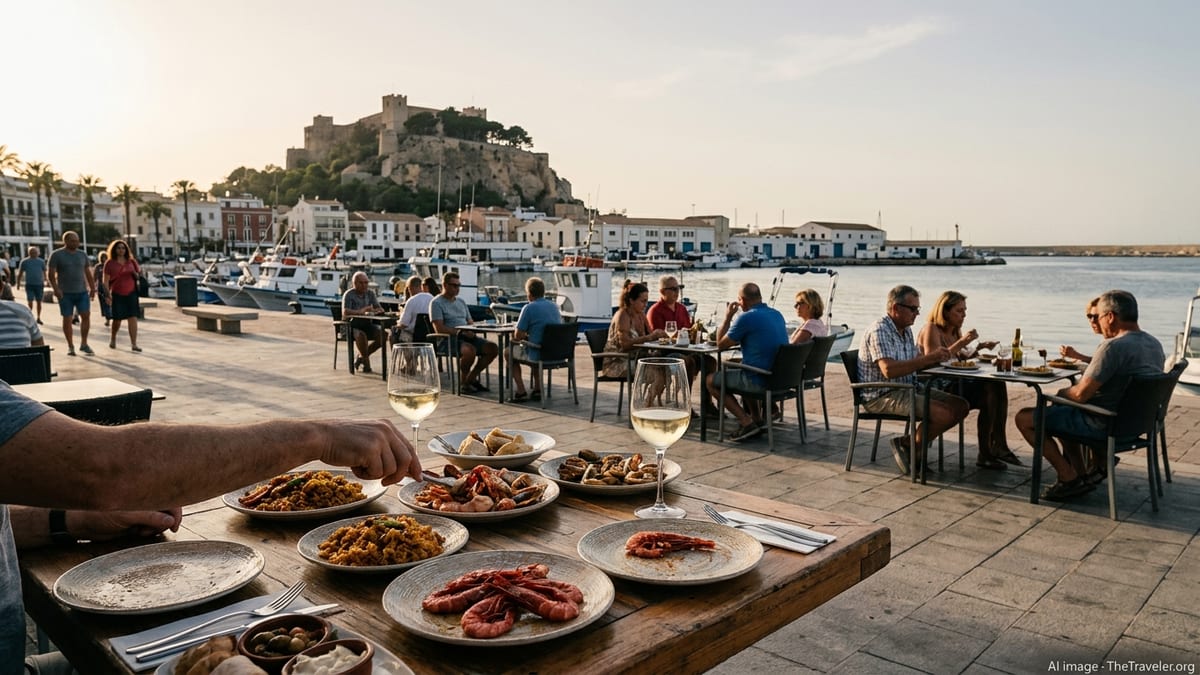
Dénia, on Spain’s Costa Blanca, was designated a UNESCO Creative City of Gastronomy in December 2015, and local and national coverage during 2025 marked the 10th anniversary of that title with large public celebrations and dedicated programming. The recognition reflects a coastal pantry dominated by the Mediterranean: red prawns from the local fish market, rice dishes such as arroz a banda and fideuà, and a long tradition of home-style cocas and seafood stews.
Reports on the destination point to Dénia’s calendar of food events as a major draw for visitors. The D*na gastronomic festival, staged along the seafront, has evolved into a flagship celebration of Mediterranean products and creativity, with recent editions framed as a showcase of food as a total art form and tied to the city’s UNESCO anniversary. Another highlight is the International Creative Cuisine Competition of the Dénia Red Prawn, which continues to attract chefs from across Spain, with the 2026 edition already reinforcing the city’s profile as a benchmark for innovative seafood cuisine.
Beyond headline events, Dénia’s appeal lies in its everyday food culture. Informational materials from the local tourism office emphasize traditional recipes collected from the Marina Alta region, the role of small producers in nearby valleys and fishing families in the harbor, and a commitment to keeping historic dishes alive while encouraging contemporary interpretations. For 2026, this mix of tradition and experimentation places Dénia at the forefront of Mediterranean culinary travel.
Burgos and Bergamo: From Heritage Recipes to Contemporary Food Policy
Further north, Burgos in Spain and Bergamo in northern Italy illustrate how historic cities are using their UNESCO status to sharpen their gastronomic profile. Burgos joined the Creative Cities of Gastronomy network in 2015, building on its reputation as a meat and cured products hub and on recognition as a national gastronomy capital earlier in the decade. Recent monitoring reports and regional media describe how the city has spent its first 10 years in the network deepening ties between chefs, local producers and cultural institutions.
In March 2026, news from Burgos highlighted the launch of a new Burgos Gastronomy City product club, bringing together dozens of restaurants, food businesses and sector organisations to coordinate promotion. This initiative, framed around the 10th anniversary of its UNESCO title, aims to curate experiences that take visitors from historic quarters and the cathedral area to contemporary dining rooms, rural grills and tasting rooms focused on Castilian products.
Bergamo, designated a UNESCO Creative City of Gastronomy in 2019, presents a contrasting yet complementary model. Information from its food policy and tourism bodies underscores the strength of its cheese-making heritage, with multiple protected designation cheeses, along with traditional polenta dishes and a surrounding landscape of vineyards and alpine valleys. The city has linked its status as a gastronomy hub to a wider urban food policy that addresses sustainability, education and access, while using its historic upper town and recently inscribed Venetian walls as a scenic stage for food events.
Together, Burgos and Bergamo show how mid-sized European cities are transforming deep-rooted culinary identities into structured, visitor-friendly offerings that should be increasingly visible on 2026 travel itineraries.
Östersund: Nordic Terroir and Small-Scale Artisanal Food
In Scandinavia, Östersund and the surrounding Jämtland region form Europe’s northern outpost in UNESCO’s gastronomy network. UNESCO materials and municipal information describe it as a centre of small-scale artisan food production, where long winters, forests and lakes have shaped a cuisine built on game, dairy, berries and preserved products.
Östersund received its designation as a Creative City of Gastronomy in 2010, and has since developed a reputation for connecting rural producers and urban consumers. The region’s national centre for small-scale artisan food processing supports training and product development, demonstrating how gastronomy can be an engine for creative industries as well as tourism. For visitors, this translates to farm visits, markets and restaurants that highlight origin, seasonality and craftsmanship.
In the context of 2026 travel planning, Östersund offers a markedly different experience from its southern counterparts: lakeside views, a compact town centre and easy access to outdoor activities where meals of cured fish, local cheeses and hearty stews follow days spent hiking or skiing. It rounds out the European quartet of UNESCO food cities with a distinctly Nordic expression of terroir.
Planning a 2026 Culinary Journey Across Europe’s UNESCO Food Cities
The convergence of recent anniversaries in Dénia and Burgos, ongoing programming in Bergamo and the steady rise of Nordic cuisine in Östersund is creating momentum for multi-stop culinary itineraries in 2026. Publicly available information from tourism boards and UNESCO reports indicates that all four cities are intensifying efforts to pair food experiences with cultural events, heritage visits and nature-based activities.
Travelers can expect increasingly curated offerings that extend beyond restaurant tables: guided tastings that explain local ingredients, workshops tied to regional recipes, and festivals that bring together chefs, producers and artisans. In Dénia, late-summer and autumn events around the seafront promise a combination of beach atmosphere and high-level cooking. Burgos and Bergamo, with their historic centres and easy rail connections, are positioned as ideal stops on broader Spain and Italy routes. Östersund, more remote, invites a slower pace, pairing long-distance journeys with immersive stays.
As bookings for 2026 begin to take shape, these four UNESCO Creative Cities of Gastronomy stand out as a cohesive yet diverse group for travelers who choose their destinations by what is on the table. Together, they illustrate how food, culture and sustainability are redefining Europe’s most compelling places to visit.