

More news on this day
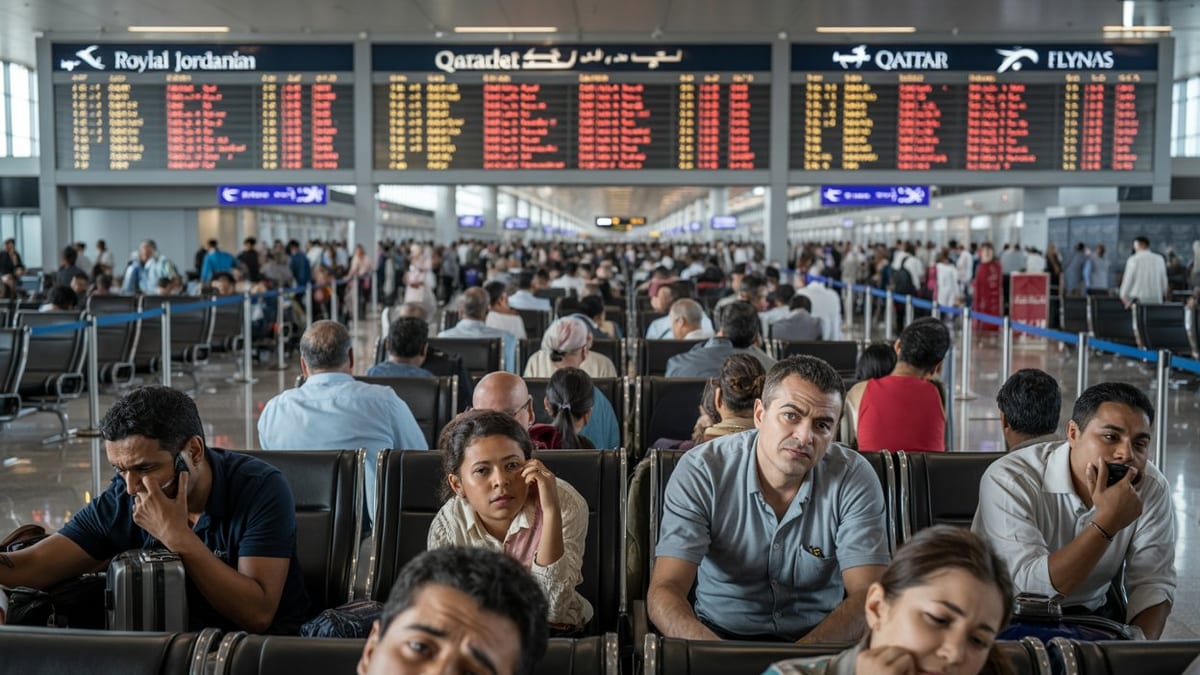
Hundreds of passengers were left in terminal queues and crowded gate areas at Denver International Airport on Tuesday as 175 flights were delayed and three were cancelled, disrupting operations for United Airlines, Southwest, American Airlines and several smaller carriers during an already strained period for U.S. air travel.
Get the latest news straight to your inbox!
Ripple Effects Across Denver’s Busy Hub
Tracking data and aviation reports indicate that Denver International, one of the nation’s busiest connecting hubs, saw a sharp spike in late departures and arrivals today, with delays clustering around peak morning and early afternoon banks. United Airlines, the largest operator at the airport, experienced the biggest share of schedule disruptions, while Southwest and American also logged significant knock-on delays as crews and aircraft fell out of position.
Publicly available flight boards showed a growing backlog of late departures, with many services pushed back between 45 minutes and two hours. The pattern added strain to an airport that already manages a high proportion of connecting passengers, leaving many travelers facing missed onward flights and last-minute rebookings.
The three cancellations recorded at Denver on Tuesday created relatively small gaps in the day’s schedule compared with the larger wave of delays, but they contributed to longer standby lists and sharper competition for remaining seats. For affected travelers, even a single cancelled rotation meant disrupted family trips, business meetings and international connections that had been routed through the Colorado hub.
Observers note that Denver’s exposure to fast-changing weather and its role as a key transfer point for coast-to-coast and mountain region traffic can amplify the impact of even modest operational hiccups. Once departure banks begin to slide, crews, aircraft and gate space can quickly fall out of sync.
Weather, Staffing Strains and a Fragile National Network
The disruption in Denver comes against a broader backdrop of stress across the U.S. aviation system, where recent winter storms and a tightening labor environment have left carriers with less margin for error. Industry data for late March show that storm systems sweeping through the central United States and the upper Midwest have caused rolling delays and diversions at multiple hubs, forcing airlines to juggle aircraft assignments and crew schedules.
Nationally, recent tallies of delays and cancellations highlight how quickly localized issues can cascade into multi-state disruptions. On other days this week, major hubs such as Chicago and Boston have logged thousands of late flights combined, even on days when formal cancellation counts remained relatively low. Travel trade outlets describe the situation as a form of “gridlock,” where the majority of flights eventually operate but at significantly shifted times, eroding passenger confidence and stretching airport facilities.
At the same time, lengthy security lines linked to a partial federal government shutdown earlier in March have placed additional pressure on departure banks. Coverage from multiple outlets reports that certain checkpoints around the country recently saw record-setting wait times, in some cases exceeding an hour, increasing the risk that passengers reach gates just as flights are closing or after boarding has ended.
In Denver, these national pressures intersect with the airport’s own growth curve. Analytical reports on 2025 performance show that roughly one in four departing flights from the airport operated behind schedule, underlining how susceptible the hub already is to disruption even before unusual events are factored in.
Major Carriers Bear the Brunt
Based on carrier schedules and independent tracking services, United Airlines absorbed a substantial portion of today’s delays at Denver, reflecting its status as the dominant hub airline at the airport. Many of the affected flights were short and medium-haul services linking Denver to destinations across the Mountain West, Midwest and West Coast, routes that depend heavily on tight connection windows.
Southwest Airlines, which maintains a strong presence at Denver with a high frequency of point-to-point services, also experienced visible knock-on effects. When early flights slip, subsequent rotations using the same aircraft often depart late in turn, compounding delays throughout the day and reverberating into evening schedules at other airports.
American Airlines and several regional operators likewise faced scattered delays, particularly on feeder routes that bring passengers into Denver from smaller cities. These flights are often crucial links for communities that rely on a single daily connection; when those services run late, travelers may have limited backup options.
Travel industry analysts point out that U.S. carriers have tried in recent years to prioritize keeping cancellations relatively low, even on difficult weather or staffing days. The tradeoff often shows up in higher delay counts instead, with airlines opting to operate flights later rather than scrub them entirely.
Passengers Face Long Waits and Limited Options
For passengers on the ground at Denver International, the math of 175 delayed flights translated directly into crowded concourses and packed gate areas. Social media posts from travelers described queues stretching out from customer-service counters as people sought alternative routings, same-day standby seats, or overnight accommodation in case connections failed.
Families traveling with young children and international passengers with tight onward itineraries were particularly vulnerable. When a delayed arrival reaches Denver after a long-haul leg, even a modest delay can cause travelers to miss shorter domestic connections, especially in a large facility where moving between concourses can take additional time.
Consumer advocates frequently encourage travelers facing this type of disruption to make use of airline apps and websites as early as possible, often rebooking digitally before reaching an agent in person. Experience from previous disruption days suggests that customers who rebook proactively have a better chance of securing remaining seats on the few flights that operate close to on time.
Airport crowding also raises practical challenges around food, seating and rest, particularly during extended delays. When multiple departure banks are affected at once, concession areas and seating zones may struggle to accommodate travelers waiting hours beyond their planned boarding times.
What Today’s Delays Signal for the Spring Travel Season
The disruption in Denver is emerging just as airlines gear up for a busy spring and summer travel season, a period that typically brings higher passenger volumes and denser schedules. Recent national data show that a significant share of flights at major U.S. hubs departed late in 2025, suggesting that the system is already running close to capacity in normal conditions.
Industry commentary indicates that even incremental strains, such as ongoing staffing gaps in specialist roles or maintenance backlogs, can tip a busy day into widespread delay. With major airports across the country preparing for peak holiday and school vacation periods, today’s issues in Denver are likely to be watched closely as an indicator of how resilient the network will be in the months ahead.
Travel planners note that passengers connecting through high-altitude or weather-sensitive hubs such as Denver may want to build in longer connection buffers, particularly when traveling on the last flights of the day or during storm-prone periods. Selecting earlier departures, when available, can also provide more fallback options if initial flights run late.
For now, the experience at Denver International underscores a continuing reality for U.S. air travel: even on days when outright cancellations are limited, a wave of delays can strand hundreds of people far from their intended destinations, turning routine journeys into extended, and often exhausting, marathons of waiting.