

More news on this day
Travelers moving through Denver International Airport faced hours of unexpected disruption as at least 175 flights were delayed and several more canceled in a single day, creating gridlock in terminals and rippling through air travel across the United States.
Get the latest news straight to your inbox!
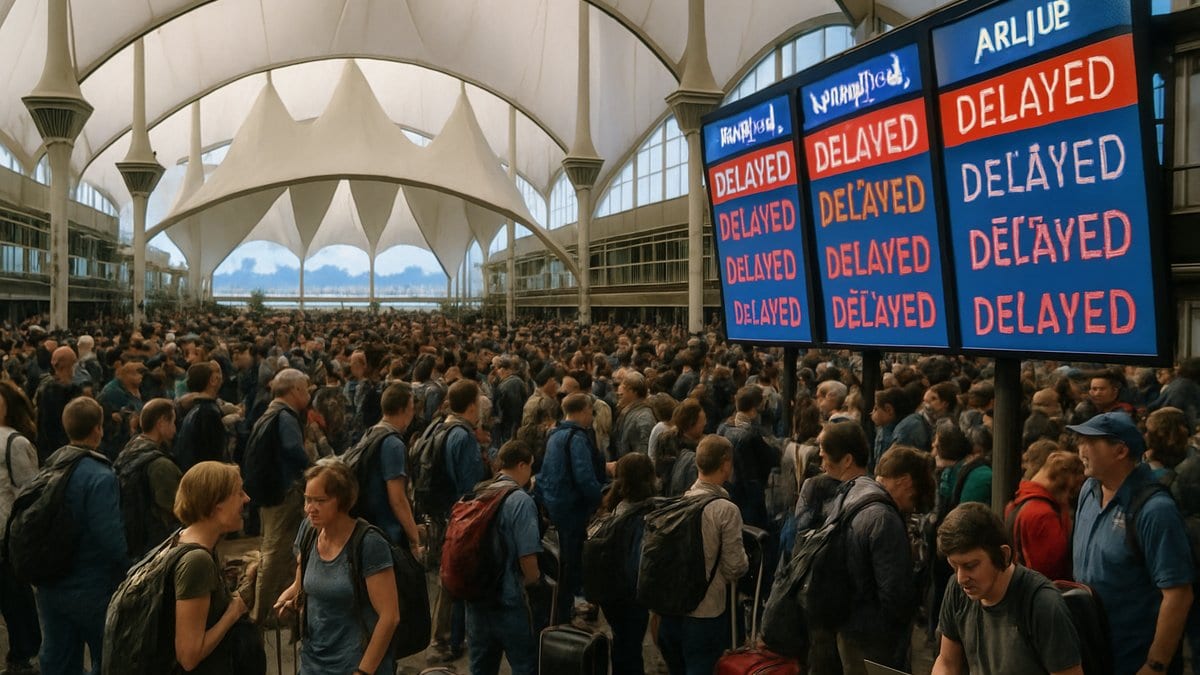
Image by Nomad Lawyer
Delays Mount Across a Busy Denver Hub
Publicly available flight-tracking data for Denver International Airport on Tuesday indicated at least 175 delayed departures and arrivals alongside a handful of cancellations, turning one of the country’s busiest hubs into a chokepoint for travelers. The slowdown affected a mix of domestic routes and regional connections, impacting airlines that rely heavily on Denver as a transfer point.
Reports indicate that the disruption built steadily through the morning as minor schedule slippages compounded into missed connections and backed-up gates. By midday, the volume of delayed flights had grown large enough to be visible across national tracking dashboards, with Denver standing out among major U.S. airports for its share of late operations.
The scale of the gridlock translated directly into crowded concourses and extended waits at departure gates. Passengers reported jammed seating areas, long lines for food and restrooms, and difficulty finding updated information on revised boarding times as airline apps and airport displays refreshed repeatedly throughout the afternoon.
According to published coverage, the delays at Denver were particularly disruptive for travelers trying to connect between the Mountain West and major coastal cities, as the airport’s central role in national route networks meant even short disruptions could cascade quickly through the system.
Commuter Chaos in Terminals and on the Tarmac
The surge in delayed flights translated into visible congestion both inside the terminal and on the airfield. Aviation observers noted that aircraft were frequently held away from gates while earlier flights finished boarding or deplaning, a pattern that can lead to tarmac queues and further scheduling knock-on effects.
Inside the terminal, passengers described scenes of compressed foot traffic around key pinch points such as security exits, train platforms, and the central food courts. With many travelers forced to remain airside for hours beyond their planned departure times, seating near power outlets and flight information displays became especially scarce.
Some travelers opted to rebook for next-day departures to avoid the uncertainty of rolling delays, adding pressure to airline customer service desks and call centers. Others attempted to reroute through alternative hubs, which can be challenging during high-demand periods when spare seats are limited.
Observers noted that Denver’s extensive use as a connecting node may have amplified the feeling of gridlock. When an early wave of delays affects inbound aircraft, subsequent departures that depend on those planes and crews can quickly fall behind schedule, concentrating large numbers of stranded passengers in a relatively short window.
Possible Drivers Behind the Disruption
While a single, clear-cut cause for the latest gridlock at Denver was not immediately evident, past episodes at the airport highlight how several pressure points often intersect. Published accounts of recent travel days at Denver have pointed to a combination of weather variability along the Front Range, air-traffic flow constraints into and out of the region, and tightly timed airline schedules that leave limited slack for recovery.
Denver’s location at high elevation and near the Rockies means conditions can shift quickly, from low clouds to gusty crosswinds or passing snow, which can reduce arrival and departure rates even without a major storm. When air-traffic managers slow the pace of landings or takeoffs for safety reasons, departures can stack up on the ground and arriving aircraft may face holding patterns or diversions.
Industry analysis of U.S. aviation performance has also underscored how high utilization of aircraft and crews can magnify small operational hiccups into broader disruptions. When aircraft arrive late into Denver, they may be scheduled to operate additional legs later in the day, meaning a delay of less than an hour can ripple into the evening for multiple flights and sets of passengers.
According to recent coverage of nationwide delays, Denver has periodically ranked among U.S. airports with some of the higher percentages of late departures on peak travel days, reflecting the intensity of its use as a central hub and the sensitivity of its operations to upstream disruptions elsewhere in the system.
Knock-On Effects Across National Flight Networks
The day of gridlock at Denver did not remain a purely local issue. Because many airlines structure their networks around banks of arrivals and departures through key hubs, delayed aircraft leaving Denver often arrived late to their next destinations, where they were scheduled to operate further flights.
As a result, travelers departing from cities far from Colorado could still feel the impact of the Denver disruption through late inbound aircraft, shortened connection windows, or missed flights. In some cases, publicly available tracking information showed flights arriving at Denver hours behind schedule, forcing airlines to reshuffle aircraft assignments and adjust crew duty times.
Travel industry analysts note that such ripple effects illustrate the fragility of high-throughput hub operations. When a major connecting airport encounters a sustained wave of delays, there can be limited spare capacity elsewhere in the network to absorb displaced passengers, particularly during school breaks, holidays, or other demand spikes.
In the short term, the most visible consequence is often a nationwide patchwork of delays, as downstream airports work through late-arriving aircraft and attempt to re-synchronize schedules. For travelers, that pattern can transform an isolated problem in one city into a broader day of uncertainty across multiple regions.
What Travelers Can Do on High-Delay Days at Denver
With Denver’s latest gridlock highlighting how quickly conditions can deteriorate on a busy travel day, frequent flyers and travel advisors emphasize preparation and flexibility as key strategies. Many recommend building extra time into itineraries that connect through Denver, particularly during seasons known for volatile weather or during major holiday periods.
Consumer travel guidance often suggests opting for earlier departures when possible, as morning flights may be less exposed to the day’s accumulating delays. Passengers are also encouraged to monitor flight status through both airline apps and airport information channels so that they can respond quickly to gate changes, schedule revisions, or same-day rebooking options.
Some travelers also consider routing choices that reduce dependence on a single hub when their schedules are especially tight. While such options can be more expensive or less direct, they may provide an extra layer of resilience on days when operational stress at a major airport translates into widespread commuter chaos.
For now, the episode at Denver serves as a fresh reminder of how a concentrated burst of delays at a key U.S. hub can swiftly ripple outward, turning routine travel days into a test of patience for thousands of passengers both in Colorado and across the national air network.