

More news on this day
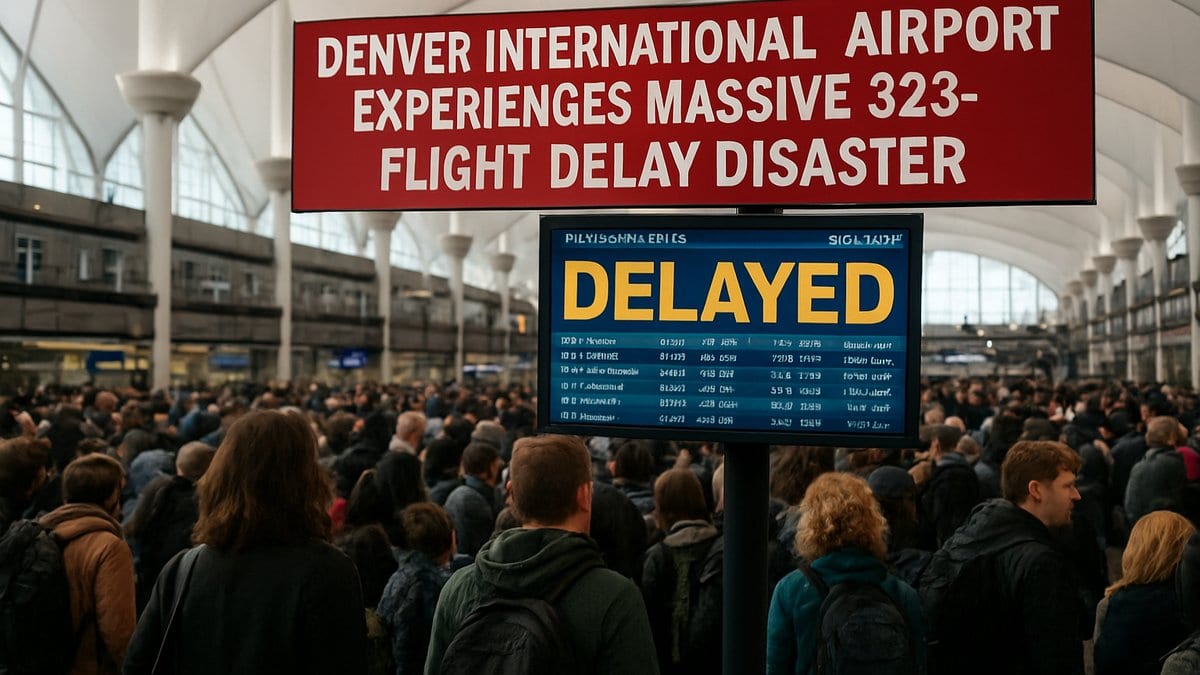
Denver International Airport faced another day of severe disruption as aviation tracking data showed 323 flights delayed, snarling connections, stranding travelers and underscoring the hub’s vulnerability during an already turbulent spring travel season.
Get the latest news straight to your inbox!
Deepening Turbulence at a Key U.S. Hub
Denver International Airport, one of the country’s busiest connection points, has emerged as a prominent trouble spot in a broader wave of nationwide aviation disruption. Publicly available flight-status dashboards for the latest incident indicate that 323 flights linked to Denver were delayed within a single operating window, a volume that pushed the airport toward the top tier of impacted U.S. hubs.
The latest disruption builds on an already volatile period for Denver. In early March, a powerful storm system crossing the Rockies and central United States produced a mix of heavy snow and severe weather, contributing to more than 1,300 delays and cancellations tied to Denver over several days. Analysts tracking aviation performance point to that event as a turning point in an unusually difficult late winter and early spring for the airport.
Denver’s role as a central connecting hub magnifies the impact of concentrated delays. A large share of passengers passing through the airport are connecting between other cities, meaning schedule problems in Denver can quickly cascade to secondary airports that might otherwise be unaffected by local weather or congestion.
While the latest 323-flight delay spike did not coincide with the most extreme blizzard conditions seen earlier in the season, it unfolded against a backdrop of tight airline schedules, fuller planes and limited slack in crews and equipment. That combination has left little room to absorb even modest operational shocks.
Weather, Winds and a Stressed Spring Schedule
Weather remains a central storyline in the current disruption pattern. Denver’s high-altitude location on the Front Range exposes it to rapid swings in conditions, including high winds, snow squalls and low visibility that can quickly reduce runway capacity. Meteorological summaries for March and early April describe a series of fast-moving systems bringing periods of snow to the mountains, thunderstorms on the plains and gusty crosswinds around the metro area.
When weather reduces arrival or departure rates, traffic managers typically slow the flow of aircraft into Denver to maintain safety margins. Such measures, combined with ground-hold programs at origin airports, can turn what begins as a short operational pause into multiple waves of knock-on delays. With airlines already operating near peak spring schedules, recovery can stretch late into the day, especially when incoming aircraft and crews arrive out of position.
Nationally, data compiled by flight-tracking services show that spring 2026 has brought several days with thousands of delays and hundreds of cancellations across the United States. Denver has repeatedly appeared among the most affected hubs, alongside Chicago, New York and major Texas airports, as storm systems sweep across the country.
Industry observers note that even when Denver is not bearing the brunt of a particular storm, disruption elsewhere can spill into the Colorado hub. Aircraft diverted from other cities, rerouted traffic and rolling crew changes all contribute to scheduling complexity that can surface hours later as fresh delays on Denver’s departure boards.
Passenger Experience: Missed Connections and Overnight Stays
For travelers, the raw figure of 323 delayed flights at Denver translates into long lines, missed connections and a scramble for scarce rebooking options. With many flights running near capacity, finding open seats on later departures can be difficult, especially for families or larger groups attempting to travel together.
Recent coverage of delays at Denver describes passengers confronting extended waits at customer service counters, with some travelers accepting reroutes through alternative hubs or opting to travel the next day. In peak periods, nearby airport hotels and on-site accommodations can fill quickly, leaving late-arriving passengers with limited choices.
Operational bottlenecks are not confined to the airfield or gate areas. Ground transportation around Denver International has shown signs of strain during major disruption days, with reports of traffic backups on airport access roads and heavy demand for ride-hailing services and rental cars. These conditions can further complicate plans for travelers attempting to reach the airport to catch rebooked flights or pick up delayed arrivals.
The strain can be particularly acute for international and long-haul passengers, whose journeys depend on tight connection windows through Denver. When a first segment falls behind schedule, the risk of misconnecting onto transcontinental or overseas flights increases, leading to longer delays and, in some cases, forced overnight layovers.
Operational Pressures on Airlines and Airport Systems
The latest wave of delays at Denver arrives as airlines contend with a difficult mix of high demand, evolving fleet plans and tight staffing. Public reports from recent months highlight how carriers serving Denver, including large network airlines and ultra-low-cost operators, have already faced multiple days of elevated delays linked to weather, congestion and broader system shocks.
When hundreds of flights fall behind schedule at a single hub, the logistical challenges multiply. Carriers must secure fresh takeoff slots, reposition aircraft, reassign crews within duty-time limits and manage gate availability, all while operating within air traffic control constraints. Even as individual storms or wind events pass, the process of realigning these elements can continue late into the evening.
Airport operations also experience significant pressure. Concessionaires and retail outlets face overcrowding as passengers wait for revised departures, while baggage systems must cope with late-arriving flights and re-tagged luggage for rebooked itineraries. Facilities that were designed around more typical traffic flows can quickly become congested when delay totals reach into the hundreds.
Transportation planners and aviation analysts have increasingly pointed to Denver’s recent performance as a case study in how a combination of weather vulnerability and rapid growth can challenge existing infrastructure. Projections for 2026 travel volumes suggest demand will continue to climb, raising questions about whether current systems can comfortably absorb repeated days with multi-hundred-flight delay totals.
What Travelers Can Do as Delays Mount
With Denver International repeatedly appearing among the most disrupted U.S. airports this season, travel experts are emphasizing preparation and flexibility for anyone planning to connect through the hub. Guidance compiled in recent consumer travel advisories stresses the value of monitoring flight status early and often, particularly in the 24 hours before departure, and building in extra time for connections when routing through weather-sensitive airports.
Passengers are encouraged by many travel resources to familiarize themselves with airline policies on rebooking and refunds before a trip begins. When large numbers of flights are delayed, digital tools such as mobile apps and online rebooking portals can sometimes offer faster options than in-person queues, especially when call centers are busy.
Some analysts also recommend considering alternative routings that bypass the most disruption-prone hubs during volatile weather periods, even if such options require longer itineraries or slightly higher fares. For travelers whose plans are less flexible, choosing earlier departures in the day may offer a better chance of avoiding rolling delays that accumulate by afternoon and evening.
As Denver works through the aftermath of its latest 323-flight delay surge, the episode underscores how quickly one major hub’s problems can ripple across the wider U.S. aviation network. With storm patterns expected to remain active into the heart of the spring travel period, passengers and industry stakeholders alike are bracing for the possibility that Denver’s recent experience may not be an isolated event.