

More news on this day
Spring travelers across the United States faced another day of disrupted plans as Denver International Airport logged 323 delayed departures and 15 canceled flights, a concentrated bottleneck that rippled across networks for Southwest Airlines, SkyWest, United and other carriers serving major hubs including Chicago, Atlanta and Los Angeles.
Get the latest news straight to your inbox!
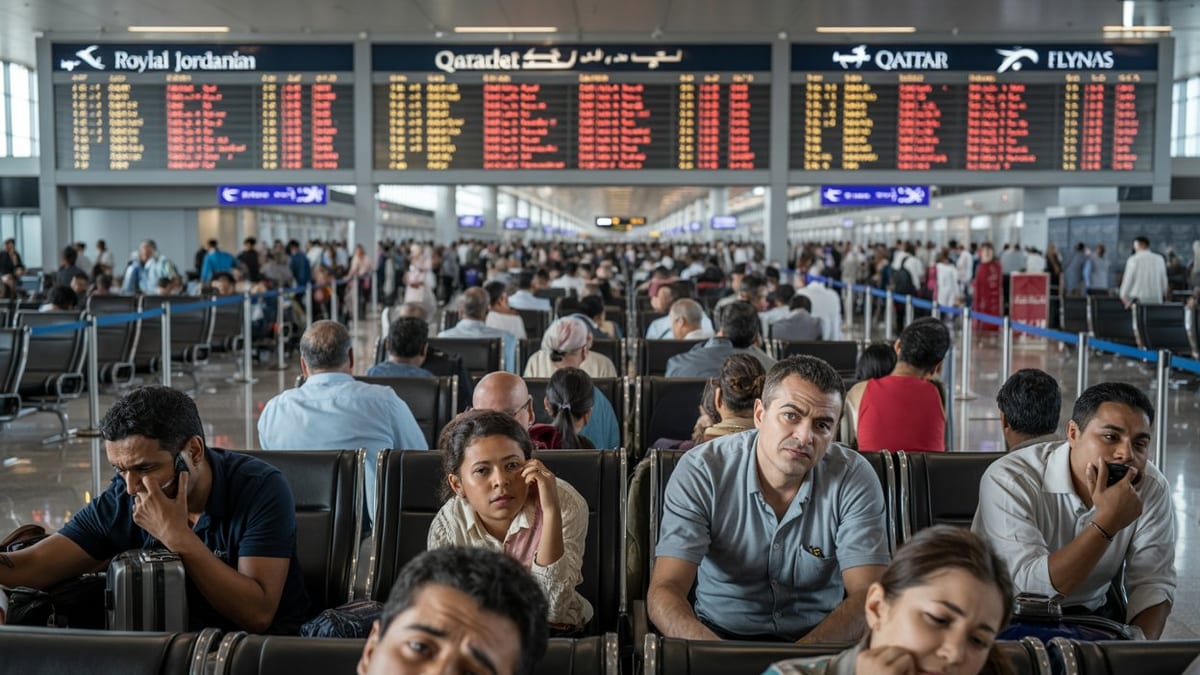
Denver Bottleneck Sends Shockwaves Through Airline Networks
Publicly available flight-status tallies for early April indicate that Denver International Airport emerged as one of the most congested nodes in the national air system, with 323 delays and 15 cancellations recorded over a single disruption window. While the raw numbers are modest compared with nationwide totals, the concentration of affected services at a major connecting hub amplified the knock-on effects for passengers across multiple regions.
Denver’s role as a central connecting point for both transcontinental and north-south routes meant that delays quickly cascaded beyond Colorado. Aircraft and crews starting the day behind schedule at Denver arrived late into downstream airports, compressing turnaround times and reducing the buffer available to absorb additional weather or air-traffic constraints elsewhere in the system.
Reports indicate that the disruption touched every segment of the market, from mainline operations to regional feeders. Larger carriers with substantial Denver schedules, particularly United and Southwest, saw their banks of departures slow, while regional operator SkyWest experienced follow-on impacts across the shorter routes it flies on behalf of major airlines. That mix of affected services left both business travelers and leisure passengers scrambling to rebook.
Operational data compiled over the broader spring period also shows that Denver has been a recurring pressure point during peak travel days. As demand rises ahead of the summer season, modest schedule slippage at the Colorado hub has increasingly translated into systemwide challenges, especially when paired with storms or low-visibility conditions at other key airports.
Southwest, SkyWest and United Among Hardest-Hit Carriers
Southwest Airlines, which relies heavily on point-to-point flying but still depends on key nodes such as Denver, Chicago Midway and Los Angeles, featured prominently in disruption tallies tied to the Denver slowdown. Recent published coverage of the broader April 3 disruption wave shows the carrier experiencing hundreds of late operations across its network, underscoring how delays at a handful of busy airports can ripple through a high-frequency schedule.
Regional carrier SkyWest also faced significant turbulence, particularly on routes feeding into and out of Denver, Chicago and West Coast hubs. Aggregated tracking data from spring 2026 already indicated that SkyWest has been among the more affected operators during recent weather and congestion events, reflecting the vulnerability of thinner spoke routes when larger hubs struggle to keep departures on time.
United Airlines, which maintains one of its largest hubs at Denver, saw its network pressured by the concentration of delayed departures. When aircraft and flight crews start the day late from a core hub, the impact tends to spread quickly to secondary destinations, including smaller cities that may have only a few daily departures. Passengers on those routes often have fewer rebooking options and are more susceptible to missed connections when initial segments from Denver run behind schedule.
Other carriers, including low-cost and ultra-low-cost competitors, were not immune. While some operate fewer Denver departures, they rely on the same runways, taxiways and airspace, meaning congestion and ground holds at the airport can slow operations even for airlines with relatively lean schedules.
Ripple Effects From Chicago to Atlanta and Los Angeles
The disruption originating at Denver coincided with a wider wave of delays across the U.S. network, with coverage from national outlets highlighting thousands of delayed and hundreds of canceled flights nationwide on April 3. Data sets reviewed by TheTraveler.org show that major hubs such as Chicago O’Hare and Midway, Atlanta’s Hartsfield-Jackson, and Los Angeles International all reported elevated disruption during the same period.
According to published tallies, Chicago experienced one of the heavier concentrations of cancellations and late departures, particularly among United, American and SkyWest services at O’Hare. Those issues compounded the knock-on effects from Denver, as aircraft arriving late from Colorado compressed turnaround times for onward flights to destinations across the East Coast and West Coast.
In the Southeast, Atlanta’s role as a dominant connecting hub meant that even a relatively small number of delayed inbound flights from Denver had outsized consequences. Aircraft arriving behind schedule contributed to rolling pushbacks on subsequent departures, especially during afternoon and evening banks when the airfield is already operating near capacity. Publicly available information on spring performance at Atlanta shows that even minor weather or traffic constraints can extend delay timelines when paired with upstream disruptions.
On the West Coast, Los Angeles International also appeared in disruption snapshots linked to the April 3 pattern. Services connecting Denver and Los Angeles, and onward flights to other western cities, registered higher-than-normal delay rates as the day wore on. Travelers on popular leisure routes found themselves waiting at crowded gates while aircraft arrived late from inland hubs.
Weather, Congestion and Tight Schedules Create a Perfect Storm
Analysis of recent weeks suggests that no single factor fully explains the disruption centered on Denver. Instead, a mix of challenging spring weather, tight scheduling practices and ongoing air-traffic constraints combined to push operations beyond their normal tolerance. National coverage of the March 2026 blizzard and other severe weather systems has already documented the strain that storms place on airline networks, particularly when snow, high winds or low visibility affect multiple hubs in quick succession.
In Denver’s case, typical early-spring patterns of shifting winds, intermittent snow showers and fast-changing visibility conditions can prompt air-traffic managers to reduce arrival and departure rates. When that happens during peak travel periods, flights may be held at their origin or pushed onto longer taxi queues, immediately cutting into airlines’ planned buffers for connections and crew rest.
At the same time, carriers across the industry have been operating with leaner slack in their schedules, a trend that magnifies the impact of even small disruptions. Published commentary on spring 2026 performance emphasizes that once early-morning flights depart late, the resulting misalignment of aircraft and crew rotations can last throughout the day, especially at complex hubs where dozens of flights are scheduled to connect within tight windows.
Some analysts also point to ongoing runway and airspace efficiency measures at several large airports, which, while designed to improve safety and long-term capacity, can temporarily reduce the number of flights that can arrive or depart in a given hour. When combined with weather-related restrictions, those measures can leave airlines little room to recover from an early bottleneck at a critical hub such as Denver.
What Travelers Can Expect in the Coming Days
For passengers booked through Denver and other major hubs in the days following the disruption, publicly available data and past patterns suggest that operations typically stabilize within 24 to 48 hours, provided no new storms or large-scale air-traffic issues emerge. However, residual delays and scattered cancellations are common as airlines reposition aircraft and crews to the routes where they are most needed.
Travel experts reviewing current performance metrics recommend that passengers transiting congestion-prone hubs build additional connection time into their itineraries whenever possible, particularly during the volatile spring period. Data from recent events show that tight connections at large hubs are among the first segments to be lost when inbound flights arrive late, leading to unplanned overnight stays or lengthy rebookings.
Industry observers also note that travelers booked on regional or less-frequent routes may face longer recovery times when broad disruptions occur. With fewer daily departures from smaller airports, a single canceled flight from Denver or another hub can mean a full-day delay in reaching the final destination.
While the 323 delays and 15 cancellations at Denver represent only a slice of the national traffic picture, the episode underscores how sensitive the U.S. air network remains to localized bottlenecks at key hubs. As spring travel demand builds, passengers connecting through Denver, Chicago, Atlanta, Los Angeles and other high-volume airports may need to prepare for occasional schedule shifts as airlines and airports work to keep complex operations moving.