

More news on this day
Hundreds of passengers in the United States and Germany faced major disruptions after operations at Denver International Airport were snarled on Wednesday, triggering 47 flight cancellations and 887 delays affecting United, Lufthansa, Air Canada, Southwest, SkyWest, Delta and several other carriers.
Get the latest news straight to your inbox!
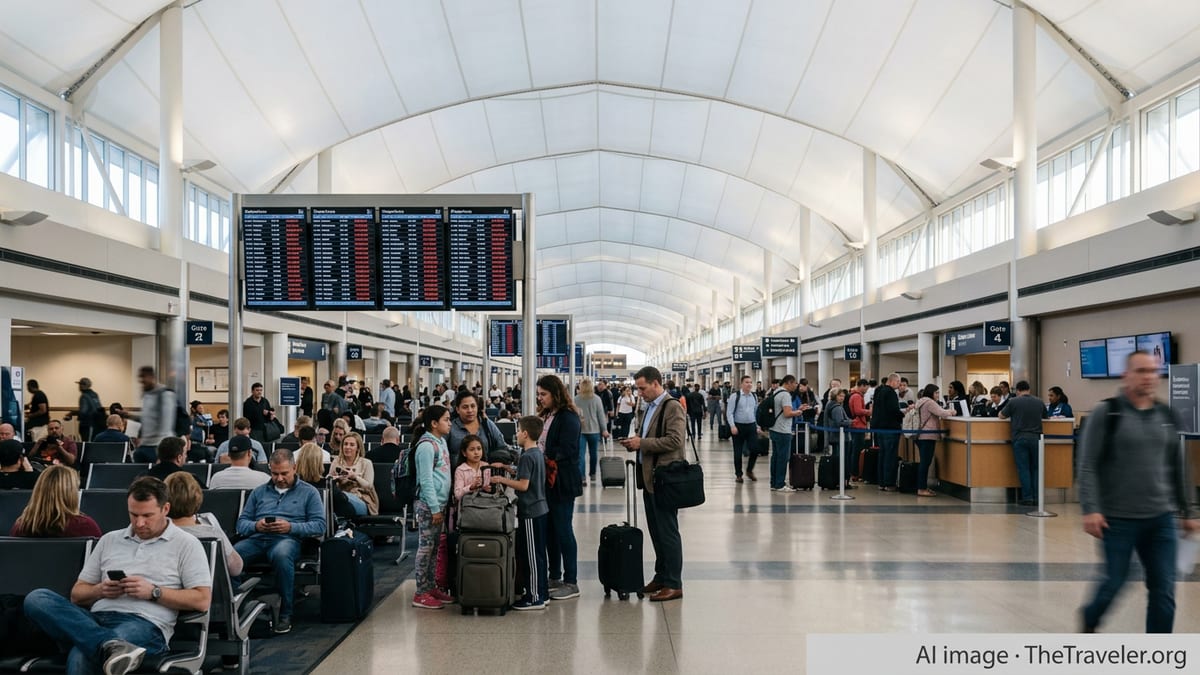
Ripple Effects From Denver Across Two Continents
The latest disruption at Denver International Airport, a major hub for domestic and transatlantic traffic, quickly cascaded across airline networks in North America and Europe. With Denver serving as a key connection point for United Airlines and its Star Alliance partners, delays radiated out to major U.S. cities and several German destinations, notably Frankfurt and Munich.
Passengers connecting between the U.S. interior and Germany reported missed onward flights, forced overnight stays and unplanned rerouting through alternative hubs such as Chicago, Newark and Toronto. Travelers on itineraries involving Lufthansa and Air Canada were particularly exposed, as many of their long-haul and codeshare services depend on tightly timed links through Denver and other U.S. gateways.
Operational data from airline and airport dashboards showed that while only dozens of flights were outright canceled, the knock-on effect of nearly 900 delayed departures and arrivals was far more disruptive. Even modest schedule slips of 30 to 60 minutes at Denver were enough to break transatlantic connections and leave travelers rebooked on next-day services.
Major Airlines Struggle to Reprotect Stranded Passengers
United Airlines, Denver’s dominant carrier, shouldered a significant share of the disruption as its banks of domestic departures ran behind schedule, compressing connection windows for international flights. Customer service counters and rebooking desks saw long lines as agents attempted to reconfigure complex itineraries involving Germany-bound passengers and those traveling onward to other European and Middle Eastern destinations.
Lufthansa, which relies on U.S. partners for a substantial portion of its transatlantic feed, also had to juggle capacity as delayed inbound traffic from Denver and other U.S. cities arrived late into German hubs. Some passengers reported being shifted to later flights from Frankfurt and Munich or moved onto partner airlines on alternative routings through other European cities.
Air Canada, Southwest, SkyWest and Delta each reported a smaller but still notable number of affected flights. For these carriers, the challenge centered on crew and aircraft rotations. A delayed Denver sector could leave a plane out of position for its next departure from cities as varied as Las Vegas, Dallas, Vancouver or Chicago, resulting in rolling delays well beyond Colorado.
Regional carrier SkyWest, which operates flights on behalf of several major airlines, faced additional pressure as its aircraft and crews cycle rapidly through multiple hubs each day. Any slowdown at Denver risked reverberating through secondary markets across the Mountain West and Midwest, complicating recovery efforts.
Passengers Face Missed Connections, Hotel Scrambles and Rebooking Battles
For travelers, the operational complexities translated into long waits, frayed nerves and last-minute changes to carefully planned trips. Families en route from smaller U.S. cities to Germany via Denver found themselves overnight in airport hotels when their domestic legs arrived too late to make evening transatlantic departures. Others were rerouted through different hubs, adding extra stops and many hours to their journeys.
Business travelers reported crowded customer service lines and limited same-day alternatives on already busy transatlantic routes. With premium cabins often booked to capacity, some were forced to accept downgrades or to travel a day later to secure a seat. Economy passengers, meanwhile, described difficulty reaching call centers and limited options once peak departure waves had passed.
In terminals, airport staff and airline agents urged passengers to monitor mobile apps and airport displays closely, as gate assignments and departure times shifted frequently throughout the day. Some travelers who arrived early at Denver were able to switch to slightly earlier flights and salvage connections, while those on later arrivals found the rebooking options narrowing rapidly by evening.
Operational Strain Highlights Fragility of Hub-and-Spoke Networks
The scale of the disruption relative to the number of cancellations underscored how sensitive modern hub-and-spoke airline networks are to even moderate irregular operations. When a high-altitude hub such as Denver experiences reduced arrival and departure rates, either due to weather or airspace constraints, the effect is magnified across multiple route banks and partner schedules.
Airlines increasingly rely on complex, tightly timed connections to maximize aircraft utilization and offer broad network coverage. That efficiency comes at the cost of resilience. Once rotations are disrupted and crews hit duty time limits, recovery can take many hours, especially when aircraft and staff are scattered across a wide geographic area.
Aviation analysts noted that the situation at Denver mirrored other recent flare-ups at major U.S. hubs in which delays quickly exceeded cancellations in terms of passenger impact. Even when most flights eventually operate, severe knock-on delays can leave travelers arriving after midnight, missing international links or losing a valuable day at their destination.
What Travelers Can Expect in the Coming Days
While airlines moved to stabilize operations by trimming select flights and repositioning crews, passengers were warned to anticipate residual delays as disrupted rotations slowly realign. Aircraft out of place overnight in Denver, Chicago, Los Angeles and key German hubs may lead to schedule adjustments over the next 24 to 48 hours as carriers work back to normal patterns.
Travel advisors recommended that anyone scheduled to connect through Denver or to fly between the U.S. and Germany in the short term build extra time into itineraries, avoid last-connection-of-the-day bookings where possible and make use of mobile rebooking tools. Many carriers allow affected passengers to move to alternative flights within a limited date window without additional change fees, subject to seat availability.
At Denver International Airport, additional staff were deployed in terminal areas and at information points to help wayfinding and manage crowds during peak banks. Airlines emphasized that passengers should update their contact details in reservation profiles so they can receive real-time notifications of gate changes, rolling delays or unexpected cancellations that may still arise as operations normalize.