

More news on this day
Travelers across the United States experienced fresh disruption this weekend as operational data showed more than 220 flight delays and four cancellations at Denver International Airport, snarling schedules for United Airlines, SkyWest Airlines, Frontier Airlines and other carriers on routes touching Los Angeles, Atlanta, Miami, Orlando and additional major hubs.
Get the latest news straight to your inbox!
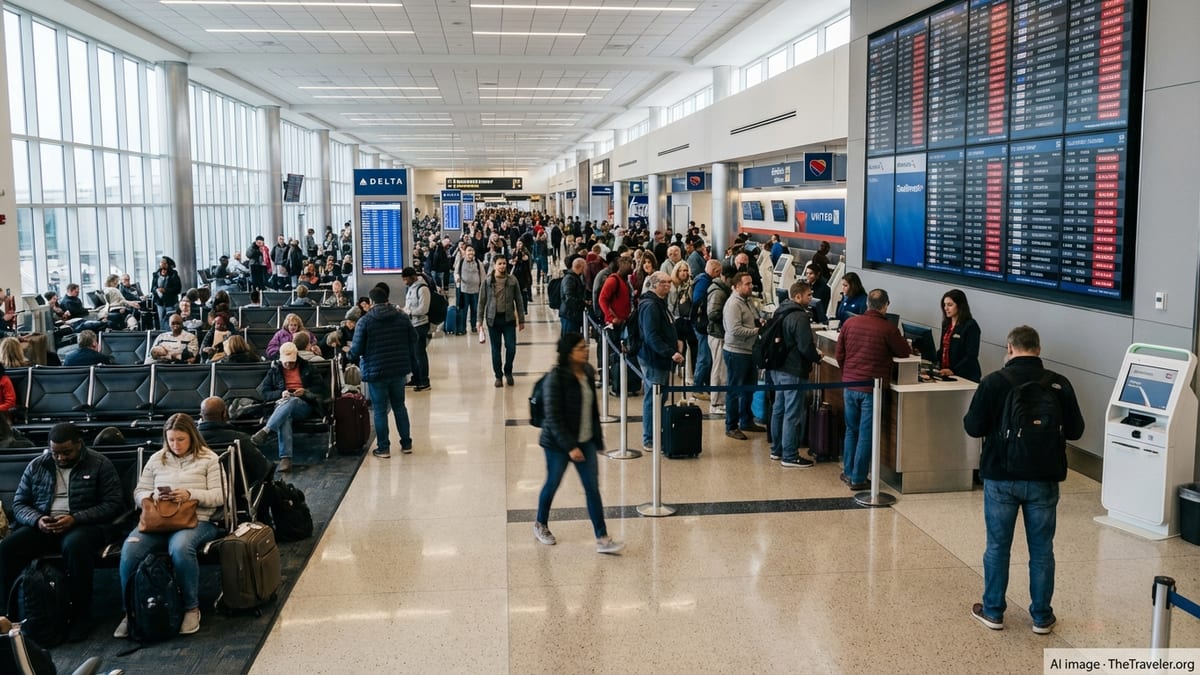
Denver Emerges as a Major Bottleneck
Publicly available flight-tracking tallies for Denver International Airport on March 29 indicated roughly 220 delayed departures and arrivals and four cancellations, placing the Colorado hub among the country’s most impacted airports for the day. The figures, compiled from nationwide tracking dashboards and industry summaries, point to a crowded operations day even by Denver’s high-volume standards.
Reports indicate that United Airlines, which operates a large connecting hub at Denver, was among the hardest hit, alongside regional partner SkyWest Airlines and ultra-low-cost carrier Frontier Airlines. Additional disruption was recorded across other domestic carriers with smaller Denver schedules, contributing to a wave of late departures that pushed into the evening.
The uneven pattern of delays, with a high number of late departures but relatively few outright cancellations, suggests airlines were attempting to keep the network moving by turning aircraft as conditions allowed. For passengers, however, that translated into extended waits at crowded gates, tighter connections and missed onward flights throughout the day.
Denver’s role as a central connecting point between the US coasts, the Mountain West and the South meant that the localized disruption quickly rippled outward, touching dozens of cities even where local operations appeared relatively normal.
United, SkyWest and Frontier Struggle to Keep Schedules Intact
According to aggregated operational data cited in trade coverage, United Airlines accounted for a significant share of the day’s Denver delays, reflecting the carrier’s extensive schedule from the airport to both domestic and international destinations. SkyWest, operating regional flights on behalf of United and other major airlines, also saw a notable number of late services, underscoring how regional partners often bear the brunt of congestion at large hubs.
Frontier Airlines, which uses Denver as its primary base, recorded a series of delayed flights spanning leisure-oriented routes. Services linking Denver with cities such as Los Angeles, Orlando, Miami and Atlanta were among those reported running behind schedule, a development with particular impact on price-sensitive travelers who typically have fewer rebooking options than at full-service carriers.
Southwest Airlines and several legacy competitors also appeared in delay tallies, though to a lesser extent than United and its partners. Industry observers note that varying network structures, spare aircraft availability and crew positioning can influence how intensely any given airline feels the strain when a single hub experiences disruption.
While only four flights at Denver were recorded as cancelled for the day, even a small number of cancellations can leave hundreds of travelers waiting for seats on already busy subsequent departures, especially during late March when spring break demand remains elevated across many US markets.
Impacts Felt From Los Angeles to Atlanta, Miami and Orlando
The knock-on effects of Denver’s operational strain were felt far beyond Colorado. Routes connecting Denver with Los Angeles and other Southern California airports reported clusters of delays, complicating onward connections to Asia-Pacific and Latin America from West Coast gateways. Passengers arriving late into Los Angeles faced compressed transfer windows and, in some cases, missed evening departures.
In the Southeast, flights linking Denver to Atlanta, Miami and Orlando were among those noted in disrupted schedules. Orlando in particular has been dealing with heavy visitor traffic and recent periods of congestion, so additional inbound delays from Denver added to pressure on already busy security lines and baggage systems.
Travel patterns show that many of these Denver routes serve both leisure and business travelers, amplifying the disruption’s reach. Families headed to Florida theme parks, skiers returning from the Rocky Mountains and corporate travelers routing through Denver on multi-city itineraries all encountered the cascading effects of late-running aircraft.
Because delays accumulated through the day, some later flights departed hours behind schedule even when weather at their origin or destination appeared benign, highlighting how early operational challenges at a major hub can reverberate across the national network long after the original trigger has eased.
Operational Strain and Recent Weather Context
While March 29’s Denver delays were primarily described in industry roundups as operational rather than tied to a single extreme-weather event, they occurred against the backdrop of a turbulent travel season. Earlier in March, a powerful North American blizzard disrupted large portions of the Central and Upper Midwest, while a separate January winter storm produced one of the highest single-day tallies of weather-related flight cancellations in recent US history.
Denver International Airport is particularly vulnerable to rapid shifts in wind, snow and visibility given its elevation and proximity to the Rocky Mountains. Even on days without headline-grabbing storms, localized conditions can force air traffic managers to slow arrival and departure rates, creating airborne holding patterns and ground queues that translate into downstream delays.
Staffing, runway usage and airspace constraints can further limit how quickly airlines recover once delays start to build. When heavy passenger demand coincides with constrained capacity, airlines may opt to operate flights several hours behind schedule rather than cancel them outright, preferring to move as many travelers as possible even at the cost of extended waits.
Recent weeks have also seen pockets of congestion at other major hubs including Chicago, Dallas and New York-area airports, underscoring how interconnected the national network has become. A bottleneck at any one of these hubs can easily spill over to others, especially on routes that rely heavily on connections.
What Travelers Can Expect in the Coming Days
Industry reporting suggests that, despite the elevated disruption at Denver on March 29, national totals for cancellations remain well below the levels seen during the most severe winter storms earlier in the year. However, the episode serves as a reminder that even a modest number of cancellations paired with several hundred delays can significantly affect travel plans during peak periods.
Travel analysts note that hubs like Denver, Chicago O’Hare, Dallas Fort Worth, Los Angeles and Orlando are likely to remain sensitive to weather swings and operational bottlenecks through the remainder of the spring break window. As airlines continue to operate near pre-pandemic capacity levels, there is less slack in the system to absorb disruptions when they do occur.
For passengers connecting through Denver in the days ahead, publicly available guidance from aviation and consumer sources continues to emphasize practical steps such as allowing extra connection time, monitoring airline apps for real-time gate and schedule changes, and considering early-morning departures, which are often less affected by rolling delays.
While airlines are gradually clearing backlogs and returning to more typical on-time performance after each disruption spike, the Denver episode underscores a broader trend of tight margins in US air travel, where even limited local issues can quickly translate into coast-to-coast inconvenience for thousands of travelers.