

More news on this day
Travelers moving through Denver International Airport in Colorado faced mounting disruptions as publicly available flight-tracking data showed roughly 166 departures and arrivals delayed and at least one flight cancelled, creating knock-on impacts for United, Southwest, Frontier and other carriers serving major hubs such as Chicago, Dallas, Los Angeles and New York.
Get the latest news straight to your inbox!
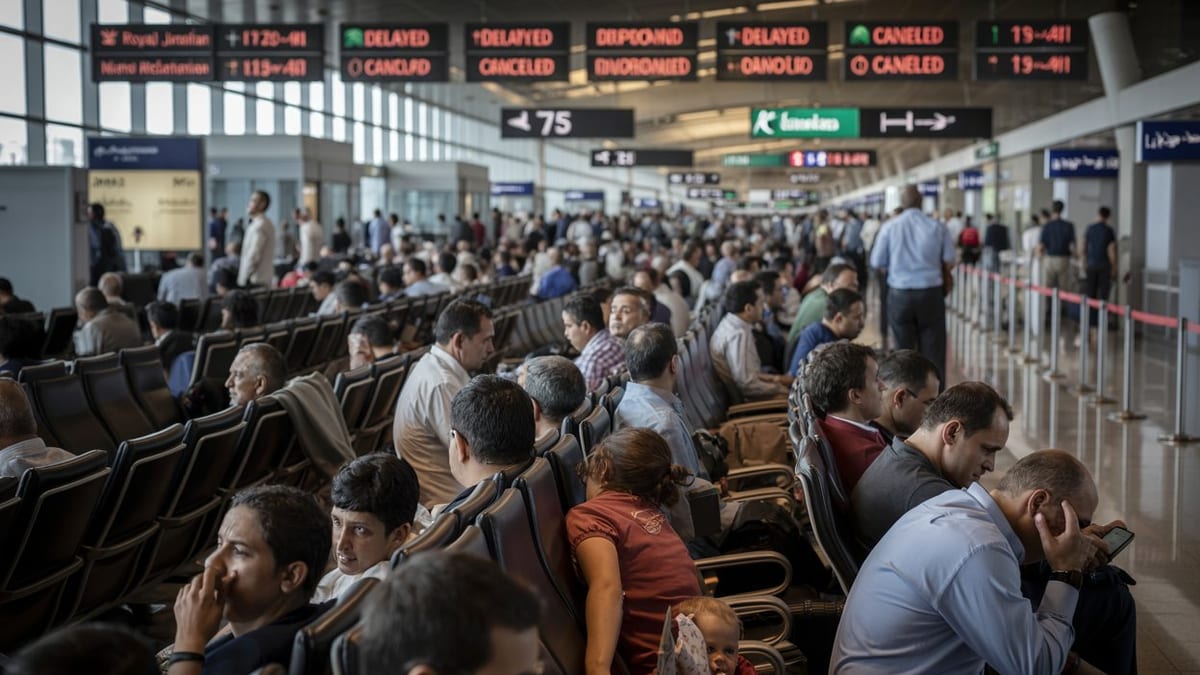
Image by Travel And Tour World
Delays Mount at One of the Nation’s Busiest Hubs
Denver International Airport functions as a critical connecting point in the US air network, and the latest wave of disruptions highlighted how quickly operations can become strained. Flight-status boards showed a steady build-up of delays, with a relatively small number of outright cancellations but a far larger share of aircraft running behind schedule on both departures and arrivals.
Publicly available information from flight-tracking platforms indicated that around 166 flights linked to Denver were delayed, with one flight cancelled. The imbalance between delays and cancellations meant that many passengers remained in limbo at the airport, waiting for revised departure times, aircraft swaps or updated connection options rather than being rebooked outright for another day.
Reports indicate that the impact was widely distributed across the day’s schedule, affecting early-morning departures that set the tone for the rest of the network as well as late-afternoon and evening banks that depend on aircraft and crews arriving on time from other cities.
As delays accumulated, gate areas became more crowded and rebooking queues lengthened, particularly for travelers relying on onward connections through Denver to secondary destinations that have fewer daily flights.
United, Southwest, Frontier and Others Face Operational Strain
The disruptions were felt most sharply by the airlines that rely heavily on Denver as a connecting or focus city. Public schedules and airline network maps show that United Airlines maintains one of its largest domestic hubs at Denver, while Southwest Airlines and Frontier Airlines also operate substantial point-to-point and connecting traffic through the airport.
According to published coverage and airline timetables, United’s Denver hub links the Rocky Mountain region to major east and west coast cities, including Chicago, New York, Los Angeles and San Francisco. Any extended delays on core trunk routes out of Denver can quickly propagate through the carrier’s national network, leading to missed connections and aircraft out of position for later departures.
Southwest and Frontier, which market Denver as a key base for low cost and leisure travel, also appeared prominently among the delayed flights. Publicly available data showed setback departure times on routes serving both high-demand business destinations and popular vacation spots, with travelers facing anything from modest schedule slips of 30 to 45 minutes to delays stretching beyond two hours.
Other domestic carriers with smaller footprints at Denver, including American and Delta, were not immune. Even when individual airlines maintain some operational buffer, shared use of runways, taxiways and airspace can translate broader congestion into slower turns and longer ground times.
Ripple Effects for Chicago, Dallas, Los Angeles and New York
The ramifications of Denver’s disruptions extended far beyond Colorado. Because the airport serves as a major connecting node, delays there frequently spill into the schedules of other large US hubs. Public flight-status data and airline network maps showed that Chicago, Dallas, Los Angeles and New York were among the most affected destinations.
Chicago’s airports, which already manage dense traffic patterns and weather-sensitive operations, saw arrivals from Denver pushed back, which can compress turnaround times for aircraft scheduled to continue on to other cities. Similar patterns were visible in Dallas, where carriers like United’s partners and other domestic airlines rely on predictable arrivals from Denver to maintain tightly timed connection windows.
On the West Coast, flights between Denver and Los Angeles are important both for local demand and for travelers connecting onwards to international and transcontinental services. Delays on these routes complicate the task of matching passengers with their onward flights, particularly for evening departures where fewer backup options remain later in the day.
New York area airports, where airspace is often congested and gate capacity constrained, also felt downstream effects when Denver-originating flights missed scheduled slots. In some cases, aircraft arriving late from Denver faced additional holding patterns or minor ground delays as they were integrated into already busy arrival banks.
Travelers Navigate Missed Connections and Limited Options
For travelers, the statistics translated into hours of uncertainty and reworked plans. When disruptions cluster around a single hub, options for same-day recovery can narrow quickly, particularly for passengers bound for smaller regional airports or those holding separate tickets on different carriers.
Passenger accounts shared on social media platforms described missed connections in Chicago and Dallas, overnight stays triggered by late-arriving Denver flights, and difficulty securing alternative routings that did not involve significant detours. In many cases, travelers reported being offered rebooking through other hubs or standby positions on later departures out of Denver.
Public information from airline customer-service policies indicates that carriers typically prioritize moving passengers whose trips begin or end at Denver, while those with more complex itineraries may face longer waits. Families, business travelers with fixed meeting times, and those connecting to final flights of the day were among the most vulnerable to extended disruption.
Airlines also appeared to balance the need to protect long-haul and international connections against the constraints of crew duty limits and aircraft availability. That often meant shorter domestic legs bore the brunt of rolling delays as carriers attempted to keep core strategic routes on time where possible.
What Passengers Can Do During Denver Disruptions
The events at Denver underline the importance for travelers of monitoring conditions at major connecting hubs even when flying on seemingly routine domestic routes. Publicly available guidance from airlines and consumer advocates suggests that passengers can reduce the impact of sudden disruptions by checking flight status frequently, enabling push notifications in airline apps, and building extra buffer time into itineraries that involve tight connections through busy airports.
Travel experts commonly note that rebooking options are often more plentiful early in a disruption, before later flights fill with displaced passengers. Using mobile tools to request new routings, considering alternative connections through less affected hubs, and remaining flexible with departure times can improve the chance of securing a workable same-day itinerary.
For those already at Denver International Airport when delays mount, seeking out less crowded service desks, using self-service kiosks where available, and contacting call centers or chat support can sometimes yield faster assistance than waiting in a single long line. Travel insurance policies that include trip interruption coverage may also offer some reimbursement for additional accommodation or meal costs when delays stretch overnight.
The latest round of disruptions at Denver, affecting more than 160 flights and radiating out to major cities including Chicago, Dallas, Los Angeles and New York, underscores how interconnected the US air system has become. Even when outright cancellations remain limited, extended delays at a single hub can ripple across the country, reshaping travel days for thousands of passengers in a matter of hours.