

More news on this day
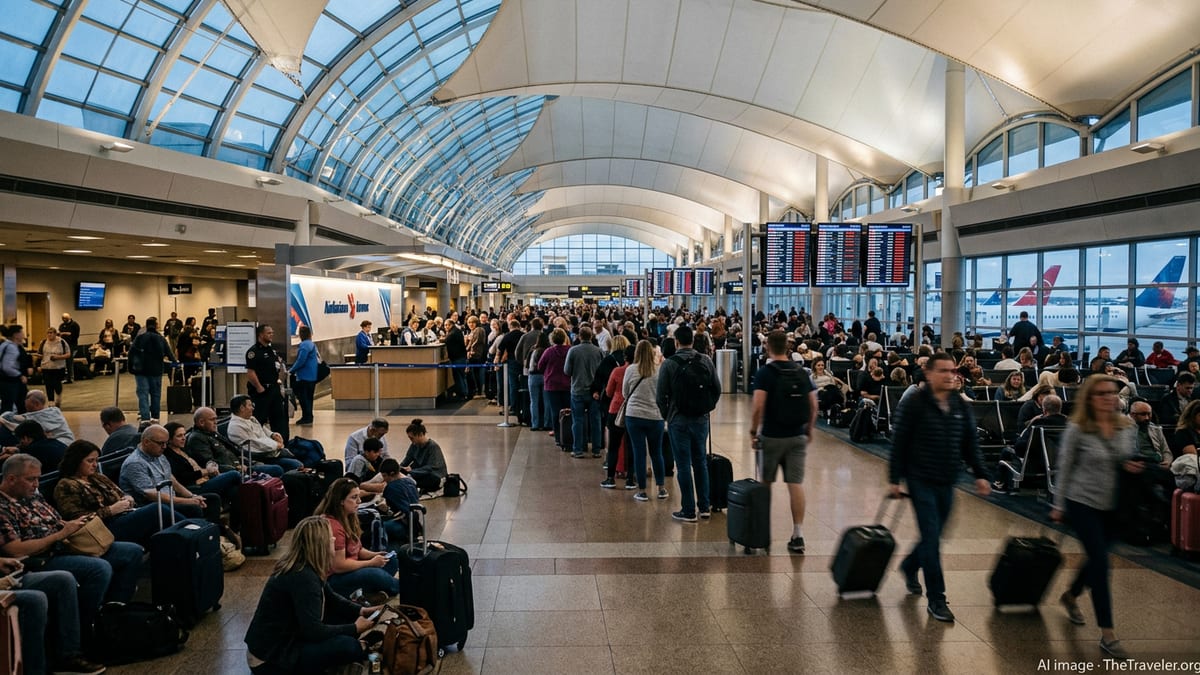
Hundreds of travelers at Denver International Airport faced hours of uncertainty as Alaska Airlines, SkyWest Airlines, United Airlines and Lufthansa scrubbed 16 departures and arrivals and triggered more than 100 delays, disrupting connections to Seattle, Dickinson, Laramie, Boston, Munich and other key destinations across the network.
Get the latest news straight to your inbox!
Disruptions Ripple Across Major Carriers at Denver Hub
Denver International Airport, one of the nation’s busiest connecting hubs, saw a sharp spike in cancellations and late departures as the four carriers cut 16 flights from Monday’s schedule and struggled to keep remaining services on time. The operational crunch hit a mix of regional and long-haul routes, amplifying the impact for travelers relying on Denver as a connection point.
United Airlines and its regional partner SkyWest bore the brunt of disruption on domestic services, particularly on thinner routes to smaller communities. Alaska Airlines reported a cluster of delays on its westbound services, while Lufthansa’s transatlantic operations between Denver and Munich faced cascading knock-on effects as aircraft and crews fell out of position.
Airport departure boards showed rolling delays building through the afternoon into the evening peak, with many flights pushed back 60 to 90 minutes and some departing more than two hours late. Ground staff struggled to rebook affected passengers as available seats on alternative flights quickly disappeared.
The wave of disruption came as Denver continues to grapple with high traffic volumes and a complex operating environment where weather, ramp congestion and crew duty limits regularly intersect to test airline schedules.
Regional Links to Smaller Cities Hit Hard
Among the most affected services were regional routes linking Denver to smaller cities such as Dickinson, North Dakota, and Laramie, Wyoming, where travelers often depend on a single daily round-trip. SkyWest, which operates many of these services under contract for United and Alaska, canceled and delayed multiple flights, leaving passengers with limited same-day alternatives.
In Dickinson and Laramie, delays and cancellations at Denver quickly cascaded into missed onward connections, including flights to major hubs and coastal cities. For some travelers, that meant forced overnight stays in Denver or unexpected returns home to await replacement flights later in the week.
Travelers on these routes expressed frustration at the lack of redundancy in the schedule. With few competing carriers and constrained regional fleets, a single cancellation can effectively sever a community’s air link for the day, underscoring the vulnerability of smaller markets to disruptions at major hubs like Denver.
Airline representatives said they were prioritizing reaccommodation on the next available departures and, where possible, rerouting passengers through alternative hubs in the central and western United States. However, the tightness of regional capacity limited how quickly stranded travelers could be moved.
Coast-to-Coast and Transatlantic Travelers Face Long Delays
The disruption extended beyond regional services, affecting key domestic and international routes that rely on Denver as a connecting node. Flights to Seattle and Boston, two of the busiest coastal markets served from Denver, saw departure times slip as aircraft arrived late and crews bumped up against federally mandated duty-hour limits.
On the international side, Lufthansa passengers bound for Munich reported extended waits at the gate as ground operations and air traffic control spacing combined to slow departures. Late departures from Denver threatened to erase buffer times built into European connections, raising the risk of missed onward flights across the continent.
For international travelers, the disruption was compounded by the challenge of rebooking on already busy transatlantic services. With spring travel demand building, many alternative flights in the next 24 hours were operating close to full, forcing some passengers to accept rebookings days rather than hours away.
Despite the difficulties, airline staff at Denver worked to prioritize families, elderly passengers and those with critical onward connections, arranging overnight accommodation where required and issuing meal vouchers to those facing protracted waits in the terminal.
Operational Strains, Weather and Crew Limits Converge
Industry analysts noted that the situation at Denver highlighted the fragility of tightly packed airline schedules at major hubs, where a combination of weather, ground congestion or technical issues can quickly ripple across multiple carriers. Denver’s high-altitude location and proximity to the Rockies frequently expose it to rapidly changing conditions, including gusty crosswinds and fast-moving storm cells that can slow operations.
On the ground, airlines continued to deal with the enduring challenges of crew availability and aircraft positioning. Even minor maintenance issues or late-arriving inbound flights can cause crews to exceed their legally mandated duty times, forcing airlines to cancel or delay flights while fresh teams are assembled.
Carriers have attempted to build more resilience into their schedules in recent seasons, but periods of intense traffic at major hubs can still strain ramp operations, baggage handling and air traffic control capacity. When multiple airlines are affected simultaneously, options for rerouting or swapping equipment become more limited, lengthening recovery times.
Denver airport officials said teams were coordinating closely with airline operations centers to manage gate assignments, prioritize banked departures and keep passengers informed through terminal announcements and push notifications in airline apps.
Passengers Scramble for Alternatives as Airlines Offer Waivers
As delays mounted, passengers turned to airline apps, customer service counters and social media channels in search of alternatives. Same-day standby lists on remaining departures swelled, particularly for evening flights to coastal cities and key hubs across the Midwest and West Coast.
In response, United, Alaska and other affected carriers introduced temporary change-fee waivers for certain Denver-originating or Denver-connecting itineraries, allowing customers booked on later flights to switch to earlier or next-day services where seats were available. Some carriers also relaxed fare rules to provide more flexibility for travelers willing to reroute through secondary hubs.
Travel advisers recommended that passengers with upcoming Denver connections monitor their flights closely, build additional buffer time into connections, and consider early-morning departures, when schedules are less burdened by the day’s accumulated delays. They also urged travelers to keep essential items, including medications and key documents, in carry-on bags in case of last-minute cancellations or unexpected overnight stays.
While airlines expected operations to gradually stabilize as aircraft and crews returned to position, the day’s disruption served as a stark reminder of how quickly conditions can deteriorate at a major hub, and how far-reaching the consequences can be for travelers across the United States and beyond.