

Two hours apart on Interstate 80, Des Moines and Omaha are classic under-the-radar Midwest cities that work beautifully for a two or three day escape. Both have walkable historic districts, serious food and craft beer scenes, big-ticket family attractions and prices that are still refreshingly down to earth compared with coastal city breaks. Yet they deliver very different moods: Des Moines leans polished, compact and capital-city cultured, while Omaha feels a little grittier, more historic and riverfront industrial turned cool. If you only have one weekend, which one should you choose?
Getting There, Getting Around and General Vibe
For many travelers in the central United States, the decision between Des Moines and Omaha starts with logistics. The two cities sit about 135 miles apart, roughly a two hour drive along Interstate 80 in good conditions, so it is very realistic to fly into one and out of the other or even sample both on a long weekend road trip. If you are based in Chicago, Minneapolis, Kansas City or St. Louis, both cities are typically a six hour drive or less, which keeps them in easy long weekend range. Nonstop flights into Des Moines International Airport and Omaha’s Eppley Airfield from hubs like Denver, Dallas and Chicago are common, and weekend fares can often be significantly lower than to coastal destinations, especially outside peak summer or college football weekends.
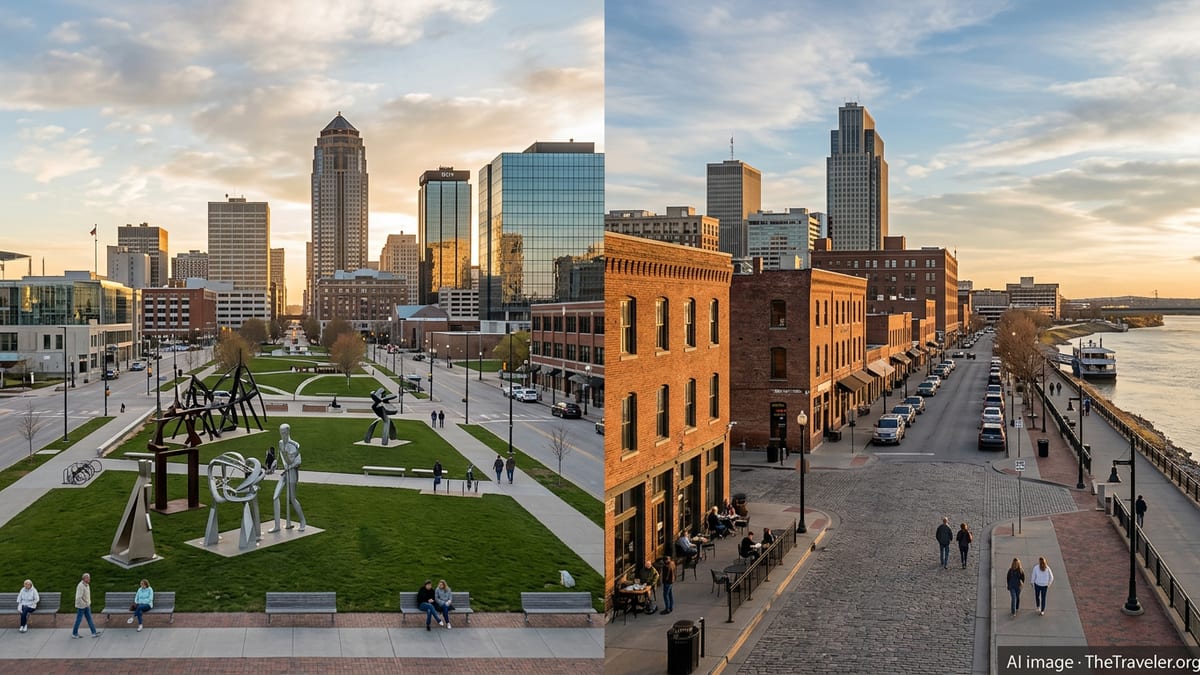
Once you arrive, both downtowns are compact enough that many visitors simply park the car and walk or use rideshares. In Des Moines, most weekend visitors stay near the East Village or Western Gateway areas, which put them within a 10 to 15 minute walk of major attractions such as the Iowa State Capitol, Pappajohn Sculpture Park and the Principal Riverwalk. Omaha’s equivalent is the Old Market district, a brick-and-cobblestone warehouse area where you can step out of your boutique hotel or short term rental and be surrounded by restaurants, galleries and bars without needing to drive.
The feel of each city is distinct. Des Moines comes across as a polished state capital with newer mid-rise towers, clean-lined public art and an increasingly modern skyline. The city has made major investments in projects like the Principal Riverwalk and Western Gateway Park, which ties together the sculpture park and downtown office towers with lawns and fountains. Omaha, by contrast, leads with history. The Old Market’s 19th century brick warehouses have been turned into lofts, wine bars and jazz clubs, and you still see vestiges of its stockyard and railroad past down by the river. Nightlife in Omaha tends to feel a little louder and more late night, while Des Moines skews slightly more low key and local, with craft beer patios and live music in smaller venues rather than big clusters of nightclubs.
If budget is a deciding factor, you will find that both cities are reasonably priced compared with larger metros. A midrange downtown hotel in either city often runs in the range of around 150 to 250 dollars per night on a typical weekend outside of major concerts, big college sports matchups or festival dates. Parking at downtown hotels is often an added 15 to 25 dollars, but both cities still have some garages and surface lots that are free or inexpensive on evenings and Sundays, which helps keep overall weekend costs manageable.
Downtowns and Neighborhoods: East Village vs Old Market
For many travelers, the heart of a weekend getaway is the neighborhood where you will stroll, snack, browse and linger. In Des Moines, that is usually the Historic East Village, just downhill from the Iowa State Capitol. Here, narrow brick streets hold a mix of independent boutiques, coffee shops and restaurants. You might browse local goods at a design-forward general store, then wander into a plant shop or vinyl record store before settling at a patio table for a locally roasted latte. On Saturday mornings in season, the Downtown Des Moines Farmers Market spreads across several blocks nearby, with dozens of farm stalls, food vendors serving breakfast burritos or fresh mini-doughnuts, and street musicians at the corners.
West of the river, Des Moines’ Western Gateway area offers a different downtown feel. The big lawn of Pappajohn Sculpture Park, dotted with large scale contemporary works, is ringed by office towers and several major hotels, along with casual spots for burgers, wood fired pizza and craft cocktails. It feels a bit like a pocket-sized version of a newer corporate downtown, and in the evenings visitors often sit on the grass or at sidewalk tables watching the light change on the sculptures and skyline.
Omaha’s Old Market plays a similar role to the East Village and Western Gateway combined, but with more of a historic twist. The district’s cobblestone streets and three and four story brick warehouses have been converted into an appealing jumble of indie bookstores, vintage shops, galleries, pubs and ice cream counters. Street musicians sometimes set up on weekends, and in warm weather you will see horse drawn carriages clip clopping past patios filled with people enjoying happy hour. Inside one former warehouse you might find an eclectic candy store piled high with retro sweets, while around the corner a narrow alleyway holds a tucked away wine bar that fills quickly on Friday nights.
Beyond the core neighborhoods, each city offers pockets worth exploring if you have a car. In Des Moines, Ingersoll Avenue and the Drake University area have clusters of neighborhood bars and restaurants, along with small theaters and music venues. In Omaha, the Blackstone District and Benson are go-to nightlife strips for locals, with excellent breweries, cocktail bars and late night taco spots, especially popular with the city’s university crowd.
Cultural Highlights, Museums and Events
For culture focused travelers, Des Moines tends to punch slightly above its weight. As the state capital and largest city in Iowa, it has a broad range of museums and performance spaces for its size. The Des Moines Art Center, located a short drive from downtown, is set in a combination of striking modernist buildings and houses an impressive collection of contemporary and 20th century works. Admission is typically free, which makes it an easy stop even on a packed weekend. In summer, the Des Moines Arts Festival transforms the Western Gateway area into an open air gallery, with artists’ tents, live music and food vendors drawing large regional crowds.
The Iowa State Capitol is another cultural anchor. Its gilded dome is visible from many points around Des Moines, and free guided tours run on weekdays with limited offerings on some Saturdays, allowing visitors to see the ornate interior, including marble staircases and historic legislative chambers. Nearby, smaller attractions such as the State Historical Museum of Iowa help fill in the story of the state’s early settlers and agricultural roots. In the evening, touring Broadway shows, concerts and comedy acts pass through downtown venues, particularly the Des Moines Civic Center.
Omaha’s cultural scene leans toward a mix of history and contemporary creativity. The Durham Museum, housed in the former Art Deco Union Station, is a highlight, combining regional history exhibits with restored train platforms and vintage railcars. The building itself, with its soaring ceilings and period fixtures, is reason enough to visit. Art lovers gravitate to the Joslyn Art Museum campus, which has been undergoing a significant expansion and renovation; depending on timing, portions of the collection and grounds may be open, so it is worth checking current status when planning your weekend. Nearby, smaller galleries and performance spaces cluster around the Old Market and midtown districts, where you can often catch local theater productions or live jazz on any given weekend.
Both cities also have strong annual event calendars that can dramatically change the feel and cost of a weekend. In Des Moines, the Iowa State Fair in August is the headline event, drawing hundreds of thousands of visitors with its mix of concerts, agricultural displays, midway rides and famously creative foods on sticks. Visiting during fair time means higher hotel prices and busy restaurants, but it also offers a uniquely Iowa experience. In Omaha, College World Series baseball in June transforms downtown, with fans filling Old Market bars and temporary fan zones set up near the stadium. If you enjoy big-event energy and do not mind crowds, those periods can be exciting; if you prefer a quieter weekend, it may be better to book in shoulder seasons like late spring or fall.
Food, Drink and Nightlife
When it comes to eating and drinking, both Des Moines and Omaha have progressed well beyond the caricature of meat-and-potatoes Midwestern dining. In Des Moines, newer restaurants in the East Village and along Ingersoll Avenue specialize in farm-to-table menus that make excellent use of Iowa’s agricultural bounty, with dishes like pork tenderloin served with seasonal vegetables, or house-made pastas featuring local cheeses. It is common to find small plates in the 10 to 18 dollar range and mains from about 18 to 30 dollars at well regarded bistros, which feels approachable compared with big city prices.
Craft beer is a major part of Des Moines’ weekend culture. Breweries near downtown pour hazy IPAs, lagers and seasonal experimental brews, often in family friendly taprooms equipped with board games and food trucks parked outside. On a warm Saturday, you might start at a brewery tasting room for a flight, then walk to a nearby gastropub for dinner. Coffee culture is also on the rise: independent cafes throughout the East Village and Western Gateway serve locally roasted beans, and a typical latte or cappuccino will run under 6 dollars, making frequent caffeine stops easy on the wallet.
Omaha’s dining scene has a distinct feel shaped by its history as a stockyard and meatpacking hub. You will still find old school steakhouses where locals celebrate anniversaries with thick cuts of beef and generous martinis, often in wood-paneled dining rooms that feel straight out of another era. At the same time, the city has seen a wave of contemporary restaurants in the Old Market, Blackstone and Benson districts, where menus might feature inventive takes on fried chicken, modern Mexican cooking, or seasonal small plates meant for sharing. Prices are broadly similar to Des Moines, with upscale dinners generally landing in the 20 to 35 dollar main course range.
Nightlife in Omaha tends to be livelier and slightly more varied than in Des Moines, especially for those who like live music and bar hopping. In the Old Market, you can move from a basement jazz club to a rooftop bar with river views to a craft cocktail lounge, all within a few blocks. Neighborhoods like Benson offer a denser strip of music venues and bars where local bands often play late into the night. Des Moines does have its share of live music bars and breweries with weekend performances, but the city’s evening scene generally quiets a bit earlier, making it comfortable for travelers who want a few drinks and conversation rather than a full night on the town.
Family Fun, Zoos and Outdoor Time
Both Des Moines and Omaha work exceptionally well for family weekends, and your choice may come down to how much you value headline attractions versus a slower-paced outdoor experience. Omaha has one major trump card for families: Omaha’s Henry Doorly Zoo and Aquarium, consistently ranked among the top zoos in the United States. Plan on devoting at least half a day, and ideally most of a day, to its massive domed desert habitat, indoor rainforest, aquarium and outdoor animal exhibits. Admission is not cheap compared with smaller regional zoos, but for many families it is the single biggest draw that tips the scale toward Omaha for a weekend trip.
Des Moines counters with a solid lineup of family friendly attractions at a smaller scale. Blank Park Zoo, south of downtown, is compact enough to enjoy in two or three hours, which fits nicely into a weekend itinerary alongside other stops. The Greater Des Moines Botanical Garden, just north of downtown, offers an attractive domed conservatory with tropical plants and carefully landscaped outdoor gardens along the river, creating a calm change of pace from urban exploring. Kids often enjoy spotting koi in the ponds and walking the curved paths under the glass dome. Meanwhile, attractions like the Science Center of Iowa bring hands-on exhibits and occasional traveling shows to the edge of downtown.
Outdoor time looks a little different in each city. Des Moines has invested heavily in riverfront trails and urban parks, including the Principal Riverwalk, which circles the downtown stretch of the Des Moines River with pedestrian bridges and public art. On a sunny morning you can rent bikes from a local shop or bring your own and ride along the river before brunch. Water Works Park and nearby Gray’s Lake Park offer miles of trails, paddle boat rentals in season and picnic areas, all just a short drive from downtown hotels. In Omaha, the revamped riverfront area, including parks straddling the Missouri River between Omaha and Council Bluffs, provides walking paths, playgrounds and green spaces with skyline views. A short drive south of downtown brings you to Fontenelle Forest, where boardwalk trails wind through 1,000 plus acres of protected woodland, a pleasant way to spend a few hours when the weather cooperates.
For theme park minded families, regional amusement parks sit within day trip range of both cities, though they are not right in town. From Des Moines, travelers sometimes pair a weekend with a side trip to a regional amusement park in eastern Iowa later in their itinerary. From Omaha, families might plan a broader Great Plains road trip that incorporates water parks in neighboring states. In both cases, however, most weekend visitors find that the combination of zoos, science museums and easily accessible parks provide more than enough to fill two or three days.
Costs, Hotels and Practical Considerations
On straightforward practicalities, Des Moines and Omaha are more alike than different, but there are nuances that can help you decide. Hotel supply is healthy in both cities, with a mix of national chains, boutique properties in historic buildings and budget friendly roadside options within a short drive of downtown. In Des Moines, several well regarded business hotels in the Western Gateway and near the Iowa Events Center frequently offer attractive weekend rates when there are no major conferences or sporting events, since their core clientele is weekday business travelers. In Omaha, the Old Market has a cluster of hotels in renovated historic buildings, where you pay a modest premium for character and a location right amid the action.
Food costs are comparable. A typical casual sit down meal for two in either city, including a shared appetizer, two mains and nonalcoholic drinks, will generally land in the ballpark of 40 to 70 dollars before tip, depending on your choices. Tipping norms follow standard U.S. practice. Breakfast and lunch can be kept especially affordable in both cities thanks to a healthy ecosystem of diners, taco spots and bakery cafes, where you can easily keep individual meals under 15 dollars by choosing sandwiches, breakfast plates or slices of pizza.
Parking and getting around are slightly easier in Des Moines, largely because the downtown street grid feels a bit less congested around event venues. Many downtown Des Moines garages offer free or reduced rate parking on weekends and evenings, and it is common to find on street spaces within a few blocks of major attractions. Omaha’s downtown, particularly during events like baseball tournaments or large concerts, can feel more crowded, and hotel garages in the Old Market area sometimes fill up in the evenings. In both cities ride-hailing services operate at typical Midwestern small city price points, making it realistic to leave the car parked and rely on short rides when heading out to neighborhoods like Benson or Ingersoll Avenue.
Weather is another practical factor to weigh. Both cities experience the full range of Midwest seasons, from humid summer days to windy, icy winters. In winter months, it can be more pleasant to choose a city where you will spend less time walking outdoors between attractions. Omaha’s zoo and riverfront are less comfortable in subfreezing temperatures, while Des Moines’ compact downtown and indoor museums make it easier to dart from place to place without long outdoor stretches. In shoulder seasons like May or October, either city can be lovely, with mild temperatures that invite patio dining and riverfront walks, and hotel prices are often softer than in peak summer event weeks.
Which City Fits Your Travel Style?
Because Des Moines and Omaha have more similarities than differences on paper, the best choice often comes down to matching the city to your specific travel style. If you are a couple that loves art, design forward public spaces and a relaxed, walkable downtown where you can punctuate museum visits with good coffee and craft beer, Des Moines is often the better fit. A typical romantic weekend might look like this: arrive Friday afternoon, check into a hotel near the Western Gateway, stroll the Pappajohn Sculpture Park before dinner at a local bistro, then finish the evening with drinks on a quiet patio. Saturday could be spent at the farmers market and East Village shops, followed by an afternoon at the Des Moines Art Center and sunset along the riverfront.
Families with young children or travelers who want one major, must do attraction sometimes gravitate toward Omaha, largely because of the zoo. A weekend built around Henry Doorly Zoo and Aquarium might consist of a full day on the zoo grounds, with dinner in the Old Market afterward, then a second day exploring the Durham Museum, wandering the riverfront parks and sampling ice cream or pizza in the Old Market and neighboring districts. For kids, the combination of animals, trains and playgrounds within a short radius is hard to beat, and adults can still enjoy good food and perhaps a nightcap in a nearby cocktail bar once the younger travelers are asleep.
If nightlife and music are your primary focus, Omaha generally offers a slightly more intense experience, with more venues and later hours in neighborhoods like Benson and the Old Market. You can piece together a bar crawl that moves from breweries to live music venues to late night diners without needing to cover huge distances. Des Moines does have live music and bar districts, but the scene is more spread out and the energy level is somewhat lower once the workweek crowd disperses on Friday night. On the other hand, if you are seeking a low key, restorative city break with good restaurants, affordable hotels and enough culture to feel engaged without being overwhelmed, Des Moines may well suit you better.
Travelers on tighter budgets or those who prefer quieter, under the radar destinations might also lean slightly toward Des Moines, especially outside of big event weeks. While both cities are affordable by national standards, Des Moines can feel less tied to one blockbuster attraction, which means hotel and restaurant demand spreads more evenly across the calendar. This can translate into easier last minute bookings and more flexibility in choosing where to stay. Ultimately, both cities offer a lot of value for a reasonably priced weekend, so you can make your choice with the reassurance that you will eat and sleep well either way.
The Takeaway
Choosing between Des Moines and Omaha for a Midwest weekend is less about finding a clear winner and more about understanding which city aligns best with your interests. Des Moines excels as a compact, polished capital with strong public art, a growing culinary and craft beer scene and easily walkable downtown districts anchored by the East Village and Western Gateway. It is a smart pick for couples, culture seekers and travelers who want an easygoing city break where you can park the car and move mostly on foot between museums, cafes and parks.
Omaha, on the other hand, leans into its historic and family friendly strengths. The Old Market’s brick streets and repurposed warehouses offer a satisfying sense of place, while Henry Doorly Zoo and Aquarium and the riverfront parks create a full weekend of activities almost by themselves. Nightlife is a touch livelier and more concentrated, and those who love classic steakhouses, live music and long evenings out with friends will find plenty to keep them entertained.
If you have the time, the ideal solution is to sample both, perhaps splitting a long weekend between the two and driving the short stretch of Interstate 80 that connects them. For travelers who must choose, let your priorities guide you: art, walkability and a softer, design focused city feel point to Des Moines; headline attractions, history and a busier after dark scene suggest Omaha. Either way, you will come home with a deeper appreciation for how much the Midwest has to offer beyond its larger, better known cities.
FAQ
Q1. Which city is better for a first time Midwest weekend, Des Moines or Omaha?
Both work well for first time visitors, but Omaha often wins if you want a marquee attraction like the zoo, while Des Moines is ideal if you prefer art, walkable downtown exploring and a slightly quieter atmosphere.
Q2. Is it realistic to visit both Des Moines and Omaha in one weekend?
It is possible, since they are about a two hour drive apart, but you will be rushing. Most travelers get more out of the trip by choosing one city per weekend and saving the other for a future visit.
Q3. Which city has the better downtown for walking and browsing?
Des Moines has the polished East Village and Western Gateway areas that are easy to navigate on foot, while Omaha’s Old Market offers a denser, more historic district with cobblestone streets and converted warehouses. Your preference may come down to whether you like sleek modern public spaces or older brick architecture.
Q4. Where will I find more nightlife and live music?
Omaha generally has a livelier nightlife scene, with clusters of bars and venues in the Old Market and neighborhoods like Benson. Des Moines does have breweries and music bars, but the evening energy tends to be a bit more low key.
Q5. Which city is more budget friendly for hotels and dining?
Prices are broadly similar, with midrange hotels in both cities often in the same general nightly range outside major events. Day to day dining costs are also comparable, though Des Moines sometimes offers slightly better last minute weekend hotel rates when there are no big conferences or festivals.
Q6. Is Des Moines or Omaha better for families with young children?
Omaha has an edge for families because of Henry Doorly Zoo and Aquarium and the nearby riverfront parks. Des Moines still works well for kids, with its own smaller zoo, botanical garden and science center, but lacks a single blockbuster attraction on the scale of Omaha’s zoo.
Q7. How far are the main attractions from downtown hotels in each city?
In Des Moines, the major downtown sights such as Pappajohn Sculpture Park, the riverwalk and the East Village are typically within a 10 to 15 minute walk of many central hotels. In Omaha, Old Market hotels place you close to restaurants and bars, while the zoo, museums and some riverfront parks are a short drive or rideshare away.
Q8. Which city is easier to get around without a car?
Both cities are manageable without a car if you stay downtown and rely on walking and rideshares. Des Moines is especially convenient if your plans focus on downtown museums, the riverfront and the East Village. In Omaha, you can explore the Old Market on foot and use short rides to reach the zoo and other neighborhoods.
Q9. When is the best time of year to visit Des Moines or Omaha?
Late spring and early autumn are generally the most comfortable, with mild temperatures that favor walking and patio dining. Summer brings major events like the Iowa State Fair and College World Series but also higher prices and humidity, while winter can be very cold and better suited to indoor focused itineraries.
Q10. If I like art and architecture, which city should I choose?
Des Moines is often the better fit for art and architecture fans, thanks to attractions such as the Des Moines Art Center, Pappajohn Sculpture Park, the gilded dome of the Iowa State Capitol and thoughtfully designed riverfront spaces. Omaha does have notable cultural sites, but its core appeal leans more toward history, food and the zoo.