

Milwaukee has a distinctive mix of lakefront scenery, industrial history, unpretentious neighborhoods, and a quietly confident arts scene. Yet travelers who love Milwaukee’s balance of culture and waterfront views have more options than they might expect. Across the United States and Canada, a number of mid-sized cities are pairing revitalized rivers or lakeshores with emerging food scenes, museums, and working-class roots, offering experiences that feel pleasantly familiar to Milwaukee fans while still being refreshingly new.
What Makes a City Feel Like Milwaukee?
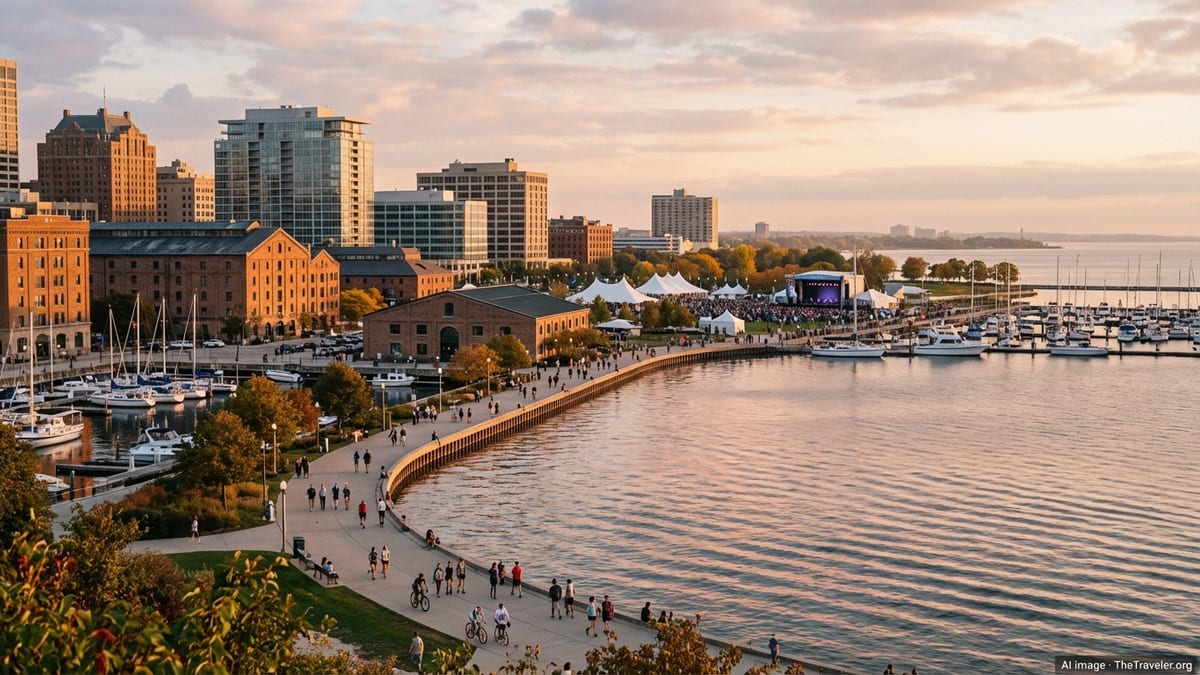
To find destinations that echo Milwaukee’s appeal, it helps to understand what truly defines the city. Lake Michigan is the most visible asset, but it is only part of the story. Milwaukee’s character is built on a long brewing and manufacturing heritage, a still-active port, and compact, walkable neighborhoods that embrace both festivals and everyday life along the water. Its lakefront parks, from Veterans Park to Bradford Beach, link up with bike trails and museums rather than isolated resort districts. The result is a city that feels lived-in first and touristed second.
Milwaukee also stands out for its strong, accessible cultural institutions that never feel intimidating. The Milwaukee Art Museum, with its striking Santiago Calatrava wing, sits right on the lakefront but remains tied to the city’s broader fabric through seasonal events and community programs. Summer brings a dense calendar of festivals at Henry Maier Festival Park, where music, food, and heritage celebrations are folded into a harborfront setting. Visitors often remark that this gives the city an easy-going, local-first atmosphere, even at large events.
When looking for comparable destinations, it makes sense to seek out port or river cities that have recently invested in reconnecting residents with the water, especially those that once relied heavily on shipping or heavy industry. These are places where former warehouse districts and industrial yards are slowly becoming parks, markets, galleries, and brewpubs. The best matches share Milwaukee’s scale and sensibility: friendly, affordable, and culturally rich without being overwhelming.
The following destinations, across the Great Lakes, East Coast, South, and Pacific Northwest, embody many of the same strengths. Some are further along in their waterfront renaissance than others, but each offers a blend of culture and waterside experience that will resonate with travelers who already feel at home on Milwaukee’s lakefront.
Buffalo, New York: A Great Lakes Comeback Story
On Lake Erie’s eastern edge, Buffalo has become one of the clearest parallels to Milwaukee for travelers seeking culture on a working waterfront. The city’s fortunes rose and fell with the Erie Canal and the Great Lakes shipping trade, leaving behind historic warehouses, grain elevators, and industrial slips. Over the past decade, public investment and local entrepreneurs have turned many of these spaces along the Buffalo River and Inner Harbor into places to stroll, listen to music, and get out on the water.
Canalside, a redeveloped district at the historic western terminus of the Erie Canal, is at the heart of Buffalo’s lakefront turnaround. Here, visitors find seasonal ice skating and curling in winter, outdoor yoga and concerts in summer, and a boardwalk lined with public art and family activities. Recent projects such as The Chandlery, home to a new visitor center and Erie Canal bicentennial installation, underline how central the waterfront has become to the city’s identity. Just beyond, the Erie Basin Marina offers an observation tower, gardens, and panoramic views across Lake Erie that recall the sweeping perspectives Milwaukee fans enjoy along Lincoln Memorial Drive.
Buffalo’s cultural scene has grown alongside the waterfront revival. The city is home to major institutions such as the Albright-Knox’s expanded Buffalo AKG Art Museum and a nationally respected symphony orchestra. At the same time, grassroots arts organizations, repurposed industrial sites used for light installations, and neighborhood galleries give the scene an exploratory feel. Food and drink trends lean toward the casual and hearty, from classic wings in corner taverns to craft breweries occupying former factories. For travelers who like Milwaukee’s balance of culture, sports, and local flavor, Buffalo delivers a very similar energy on a different Great Lake.
Cleveland, Ohio: Lake Erie With an Arts Edge
Cleveland shares Milwaukee’s reputation as a blue-collar Great Lakes city rediscovering the value of its shoreline. Set on Lake Erie and cut by the Cuyahoga River, the city’s waterfronts were long dominated by shipping and infrastructure. In recent years, however, public agencies and nonprofits have advanced an ambitious “lakefront to downtown” vision that aims to open more parts of the shoreline to walking, biking, parks, and cultural spaces.
The downtown stretch of the lakefront, around North Coast Harbor, brings together several anchors that will feel familiar to Milwaukee visitors who like culture within sight of the water. The Rock and Roll Hall of Fame and the Great Lakes Science Center sit right on the lake, while a historic steamship museum evokes the region’s maritime past. Seasonal festivals and open-air markets activate the plazas here, and the city has launched temporary projects such as pop-up parks to give residents more immediate ways to experience Lake Erie even as long-term construction plans move forward.
Further inland, Cleveland’s cultural richness rivals cities much larger than its population would suggest. The Cleveland Museum of Art offers free admission to an encyclopedic collection set in a park-like campus, while the surrounding University Circle neighborhood concentrates a botanical garden, contemporary art museum, and performance halls. This mirrors Milwaukee’s mix of strong institutions and neighborhood-scale arts organizations, all reachable on a compact urban grid. Add in a thriving regional food scene, with everything from Slovenian bakeries to innovative tasting menus, and Cleveland starts to feel like a cousin city with a different accent but similar soul.
For travelers who want a city where they can bike along the water in the morning, tour a top-tier museum in the afternoon, then settle into a craft beer bar in a historic district at night, Cleveland delivers many of the same satisfactions that make Milwaukee so appealing.
Pittsburgh, Pennsylvania: Rivers, Bridges, and Neighborhood Culture
Although Pittsburgh sits inland, its waterfront experience will feel familiar to anyone who enjoys watching boats and barges move through Milwaukee’s harbor and rivers. Built at the confluence of the Allegheny, Monongahela, and Ohio rivers, Pittsburgh is framed by water and crossed by a dense network of bridges. Decades after the decline of heavy industry, many riverfront parcels now host trails, parks, stadiums, and residential districts that allow people to live and play along the water’s edge.
On the North Shore, riverfront promenades connect the city’s professional sports stadiums with public art, bike paths, and spaces that host festivals and fireworks. The view back toward Downtown, with its compact cluster of towers and flanking hillsides, is one of the most distinctive cityscapes in the country. In several neighborhoods, reclaimed industrial riverfronts now support breweries, food halls, and climbing gyms in former mills, reminiscent of Milwaukee’s use of historic brick warehouses along the Menomonee River and in the Third Ward.
Pittsburgh’s cultural scene is similarly layered. Major institutions such as the Carnegie Museums, the Andy Warhol Museum, and a respected symphony sit alongside smaller galleries and experimental arts spaces in neighborhoods like Lawrenceville, Bloomfield, and the Strip District. The city’s long history of immigration and labor activism has left a legacy of tight-knit communities, ethnic festivals, and casual, family-run restaurants. Travelers drawn to Milwaukee’s blend of serious art, sports passion, and unpretentious hangouts will find Pittsburgh resonates in unexpected ways, especially if they spend time exploring by bike or on foot along the rivers.
The city’s hilly topography sets it apart visually, yet the emotional experience is similar: a place where industry once defined daily life now leans into innovation, education, and culture, without erasing its working-class roots.
Providence, Rhode Island: Creative Energy on a Compact Waterfront
On the East Coast, Providence offers a smaller-scale counterpart to Milwaukee’s relationship with its rivers and lake. The city’s downtown is threaded by the Providence River and its tributaries, with a series of carefully designed riverwalks and pedestrian bridges that bring residents and visitors up close to the water. While the Atlantic Ocean lies a short drive away, it is these urban waterways that define the city’s sense of place.
In recent decades, Providence has turned former rail and industrial parcels along the river into parks, plazas, and mixed-use developments. Seasonal lighting and public art enliven the water’s edge, and event series use the downtown basin as a kind of outdoor living room. Travelers familiar with Milwaukee’s summer festivals and outdoor music along the lakefront will recognize the civic impulse: using public spaces near the water as stages for shared cultural experiences.
Providence’s status as a university city, with institutions such as Brown University and the Rhode Island School of Design, lends it a creative intensity that feels different from Milwaukee’s but equally compelling. Galleries, design shops, and pop-up installations spill from the hilltop campuses down into former industrial areas now reborn as studio complexes and lofts. Food culture is a major draw, ranging from Italian bakeries on Federal Hill to inventive small-plate restaurants in historic brick buildings near the river.
For travelers who love to pair waterfront strolls with architecture, Providence is especially rewarding. Restored 19th-century commercial blocks, modern academic buildings, and historic churches stand in close proximity, with river reflections adding a sense of drama in the evening. The city is compact enough to explore largely on foot, echoing the ease of getting around Milwaukee’s central neighborhoods without needing a car at every turn.
Norfolk, Virginia: Harbor Life and Maritime History
If Milwaukee’s industrial port scenes intrigue you as much as its beaches, Norfolk brings that maritime drama to the Atlantic tidewater. Located where the Elizabeth River meets Chesapeake Bay, Norfolk is one of the country’s key naval and commercial ports. Massive ships and working yards are never far from view, yet the city has carved out inviting public spaces and cultural districts along its waterfront.
The downtown riverfront features promenades, plazas, and a growing collection of residential towers, hotels, and cultural venues facing the water. From the walkways, visitors can watch tugboats maneuver cargo vessels and naval ships in scenes that echo the working waterways of Milwaukee’s harbor. Harbor cruises and water taxis provide easy ways to get onto the water itself, while nearby beaches along the bay and ocean offer a change of pace.
Norfolk’s cultural identity is shaped by both its maritime role and a diverse local population. The Chrysler Museum of Art anchors the arts scene, accompanied by glass art studios, performing arts venues, and a calendar of festivals that often spill out into waterfront parks. Historic districts blend brick row houses with small galleries and bistros, creating the sort of comfortable, approachable urban texture that Milwaukee visitors often appreciate.
Food culture centers heavily on seafood, from casual dockside spots serving fresh catch to upscale restaurants experimenting with regional flavors. Craft beer and small-batch distilleries add to the mix, mirroring the way Milwaukee’s contemporary beverage producers have reinterpreted its brewing legacy. For travelers, Norfolk offers a chance to experience a major port city that still feels grounded, with culture and history visible at street level and along the water’s edge.
Chattanooga, Tennessee: A Riverfront Turned Living Room
While Chattanooga sits far from the Great Lakes, its riverfront transformation offers a southern counterpart to Milwaukee’s embrace of its shoreline. The city curves around a broad bend in the Tennessee River, with steep ridges and mountains rising nearby. Decades ago, much of this waterfront was dominated by industry and rail yards. Today, it is a showcase for how a mid-sized city can reclaim its relationship with a river.
At the heart of Chattanooga’s revival is the Tennessee Aquarium, whose striking buildings anchor a network of plazas, fountains, and pedestrian routes that cascade down to the river. Adjacent parks and a long, landscaped riverwalk provide space for festivals, outdoor concerts, and casual evening strolls. Families rent bikes, kayaks, and paddleboards, while public art installations encourage visitors to linger. Travelers who enjoy how Milwaukee’s RiverWalk connects dining, public art, and casual recreation will find a similar sensibility here, with the added drama of hills and bridges in the background.
Chattanooga’s cultural growth has paralleled its environmental and urban design initiatives. Former manufacturing structures now house design studios, tech companies, and performance spaces. Independent music venues, neighborhood theaters, and galleries contribute to a creative energy that exceeds the city’s size. Restaurants draw from southern culinary traditions and regional farms, delivering comfort food and inventive dishes in equal measure.
Although its history and geography differ from Milwaukee’s, Chattanooga shares the feeling of a city that has consciously turned toward its river, using design, arts, and community events to knit waterfront spaces into daily life rather than reserving them solely for tourists.
Portland, Maine: Working Waterfront With Small-City Charm
For travelers who love Milwaukee’s combination of serious food, approachable art, and a real working harbor, Portland, Maine, offers a compelling coastal counterpart. Set on a peninsula extending into Casco Bay, Portland’s downtown slopes toward a waterfront that still hums with fishing boats, ferries, and supply vessels. Instead of hiding its utilitarian side, the city integrates it with public spaces, restaurants, and galleries, giving visitors a candid look at harbor life.
The Old Port district, with its cobblestone streets and historic brick warehouses, sits just above the piers and docks. Many of these buildings now host bistros, boutiques, and tasting rooms, yet traces of their maritime past remain in architectural details and alleyways leading to the water. From the harborfront, travelers can watch lobster boats heading out at dawn, ferries shuttling to island communities, and working wharves stacked with traps and gear. It is an everyday spectacle that will appeal to anyone who has watched freighters and tour boats move through Milwaukee’s harbor channel.
Culturally, Portland punches above its weight. The city’s arts district includes a respected art museum, smaller contemporary galleries, and frequent First Friday events that turn several blocks into an open-air showcase. A strong community of chefs and food entrepreneurs has made Portland a destination for dining, with seafood at the center but not the only story. Breweries, coffee roasters, and bakeries fill in the gaps between meals, often in modest, adaptive-reuse spaces that maintain the city’s laid-back personality.
Because Portland is compact and walkable, visitors can easily split their time between waterfront views, cultural stops, and residential neighborhoods full of Victorian architecture. For Milwaukee fans, it offers a different coastline and climate with a familiar balance of authenticity and creativity.
Victoria, British Columbia: Harbor Views and Laid-Back Culture
Across the border in Canada, Victoria on Vancouver Island presents a Pacific twist on Milwaukee’s waterfront appeal. The city wraps around a natural harbor, where floatplanes, ferries, sailboats, and small fishing vessels all vie for attention. Strollable promenades and parks line much of the inner harbor, giving visitors abundant vantage points for watching maritime life and taking in views of historic architecture.
Victoria’s cultural scene blends British colonial heritage with Pacific Northwest creativity. Landmark buildings, including the provincial legislature and a grand harborside hotel, frame public lawns and plazas that host festivals, markets, and performances during warmer months. Street musicians, food vendors, and local artisans often set up near the water, infusing the area with a casual, convivial energy that echoes Milwaukee’s festivals and waterfront events.
Beyond the postcard-perfect harbor views, Victoria offers a network of neighborhoods filled with independent coffee shops, bookstores, galleries, and small theaters. Local museums explore regional history, maritime heritage, and Indigenous cultures. The city’s gardens and nearby coastal trails add another layer of appeal for travelers who like to mix urban exploration with nature. Like Milwaukee, Victoria invites visitors to slow down, walk or bike between districts, and treat the waterfront as a recurring backdrop rather than a single attraction.
Food and drink are central to the experience, with a growing craft beer scene, cideries on the surrounding island, and restaurants that highlight local seafood and produce. For those willing to travel a bit farther, Victoria rewards them with a city that feels intimate yet cosmopolitan, tied closely to its harbor and surrounding waters.
The Takeaway
Milwaukee’s particular blend of waterfront views, industrial roots, and approachable culture can be hard to replicate exactly, but a surprising number of mid-sized cities come close. From the Great Lakes harbors of Buffalo and Cleveland to the riverfront promenades of Pittsburgh and Chattanooga, travelers can find places that echo Milwaukee’s strengths while introducing new landscapes and local stories.
What these destinations share is not simply water and skyline, but intentional efforts to reconnect people with their rivers, lakes, and harbors. They have invested in trails, plazas, festivals, and cultural institutions that treat the waterfront as a communal asset rather than a backdrop for private development alone. At the same time, each city has leaned into its own history, allowing industrial structures, working docks, and historic neighborhoods to remain visible and functional.
For travelers who prefer cities that feel lived-in rather than polished, these Milwaukee-like destinations offer the right mix of authenticity and evolution. They are places where you can watch a cargo ship or fishing boat glide past, step into a museum or gallery within minutes, and end the day at a neighborhood bar or café that feels more like a local hangout than a tourist zone. Exploring them not only broadens your sense of what waterfront cities can be, it also deepens appreciation for Milwaukee’s own role in the ongoing story of urban waterside renewal.
FAQ
Q1. What makes a destination genuinely comparable to Milwaukee?
Comparable cities typically combine an active waterfront, visible industrial or maritime history, a strong but approachable arts scene, and neighborhoods that feel lived-in rather than purely touristic.
Q2. Which Great Lakes city feels most similar to Milwaukee?
Buffalo and Cleveland are often cited as the closest analogues, thanks to their Lake Erie settings, revived waterfront districts, and mix of blue-collar roots with growing cultural scenes.
Q3. Are these cities generally more affordable than major coastal hubs?
Most of these destinations offer lower lodging and dining costs than larger coastal cities, though prices vary by season and neighborhood, especially in popular summer spots.
Q4. Can I explore these waterfronts without a car?
In many cases yes. Districts such as Canalside in Buffalo, downtown Cleveland’s lakefront, and central Portland, Maine, are walkable and often linked by local transit or bike-share systems.
Q5. Are the waterfronts active year-round or mainly in summer?
Activity peaks in warmer months, but several cities program winter events such as ice skating, light displays, and cold-weather festivals to keep their waterfronts lively in colder seasons.
Q6. How do these destinations compare to Milwaukee for food and drink?
While each has its own specialties, from seafood on the coasts to wings in Buffalo, all offer robust craft beer scenes and a range of casual, locally focused dining options.
Q7. Are these cities suitable for family travel?
Yes. Waterfront parks, aquariums, boat tours, museums, and seasonal events provide a variety of family-friendly activities in nearly every destination mentioned.
Q8. What is the best time of year to visit cities with colder climates?
Late spring through early fall usually offers the warmest weather and most outdoor programming, though shoulder seasons can bring lower prices and fewer crowds.
Q9. How much time should I plan to spend in a Milwaukee-like destination?
A long weekend is often enough to sample key waterfront spots and cultural highlights, but adding extra days allows for neighborhood exploration and day trips into surrounding regions.
Q10. Is it realistic to visit several of these cities on one trip?
Combining multiple Great Lakes or East Coast cities in a single itinerary is feasible, especially by train or car, but each destination also stands well on its own for a focused visit.