

More news on this day
Passengers across the United States are facing another bruising day of air travel disruption on March 9, as fresh cancellations and delays at Detroit Metropolitan Wayne County Airport ripple outward to major hubs from Houston and Fort Lauderdale to Minneapolis and San Francisco, leaving travelers scrambling for scarce alternatives and updated flight options.
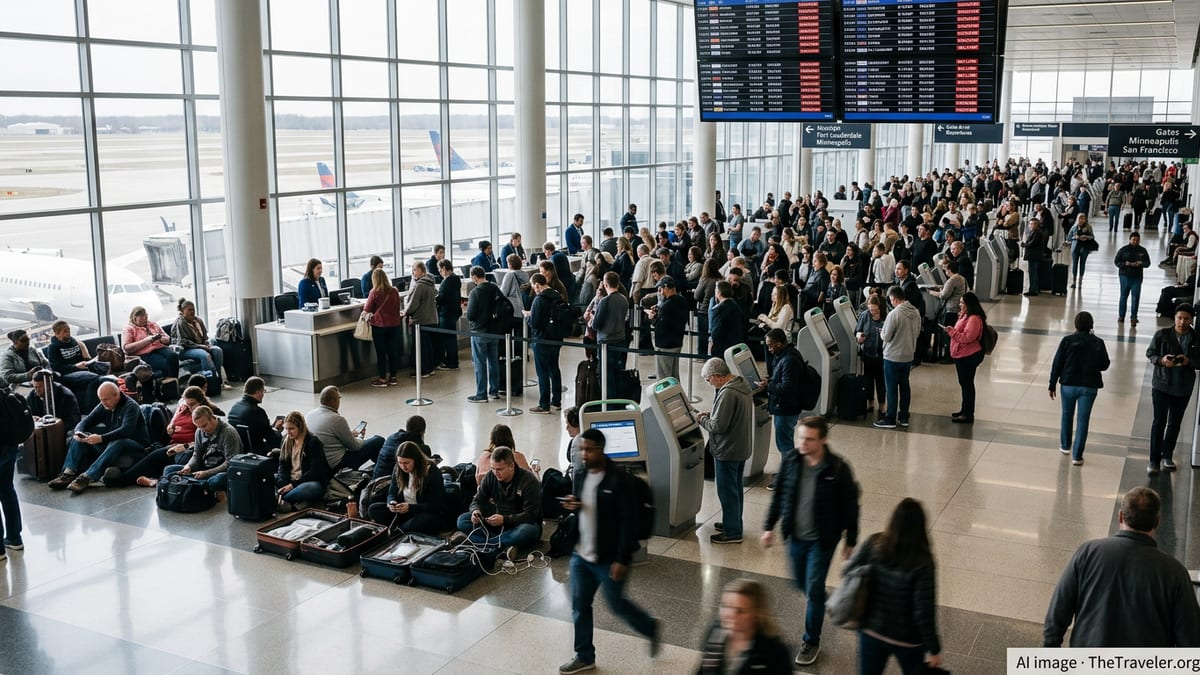
Detroit Metro Registers Dozens of New Cancellations and Delays
Operational pressures converged on Detroit Metropolitan Wayne County Airport on Monday, with at least 40 additional flights canceled and 81 delayed, according to flight-tracking data reviewed by multiple industry outlets. The figures add to an already difficult early March for U.S. aviation, with carriers trying to recover from severe weather, staffing gaps and lingering network imbalances.
Delta Air Lines, SkyWest, Spirit and regional partners servicing Detroit have been among those most affected in recent days, after a broader wave of disruption saw 53 cancellations and nearly 200 delays tied to the airport and its connecting network. The latest tally underscores how fragile schedules remain as airlines juggle aircraft and crews that are still out of position from earlier storms and system strains.
At Detroit, a mix of late-arriving inbound aircraft, crew time-out issues and congestion at connecting hubs has translated into rolling delays across domestic routes. Passengers bound for New York, Miami, Washington, Minneapolis and other key cities reported last-minute gate changes, tight connection windows and difficulty securing rebooked itineraries as March travel demand swells.
While airport operations at Detroit are continuing, the elevated disruption levels mean that even routine departures are at risk of knock-on delays. With Detroit serving as a vital Midwest hub, relatively small schedule changes can rapidly cascade through the national network, amplifying the impact far beyond Michigan.
Ripple Effects Hit Houston, Fort Lauderdale, Minneapolis and San Francisco
The strain at Detroit is combining with localized pressures at other major airports to produce a patchwork of headaches for travelers. In Houston, flyers at George Bush Intercontinental have faced a combination of weather-related ground delay programs and longer security lines, forcing some to miss connections coming from or heading to Detroit and other northern hubs. Airlines warned that aircraft arriving late from the Midwest and East Coast were complicating recovery plans as storms and staffing issues overlapped.
In Fort Lauderdale, a popular spring break gateway, the impact has been felt most acutely in crowded boarding areas and overbooked customer service desks. Carriers that rely on Detroit and other northern hubs for feeder traffic into South Florida have struggled to keep schedules intact, with some flights departing with significant delays or consolidated passenger loads. Travelers connecting through Detroit reported being re-routed via alternative hubs such as Atlanta, Charlotte or Dallas in order to reach South Florida beaches.
Minneapolis–St. Paul, another key Upper Midwest hub with heavy Detroit connectivity, has similarly seen its operations complicated by the disruptions. Tight turn times on regional jets, combined with crews arriving late from Detroit and other affected airports, have led to rolling, hour-by-hour schedule revisions. For passengers, that has meant departure boards that shift throughout the day, with some flights slipping repeatedly before finally pushing back.
On the West Coast, San Francisco International has not escaped the fallout. United and other carriers operating cross-country services reported delays tied to aircraft and crew flowing out of the central and eastern United States, including Detroit. With transcontinental flights often operating near full during March, rebooking space has been limited, leaving some passengers facing overnight stays or unplanned diversions to other airports.
Technical Glitches and Staffing Shortages Compound the Chaos
The latest Detroit-centered disruption comes on the heels of a series of recent system and staffing shocks across the U.S. aviation sector. In the past week, United Airlines grappled with a technology issue that led to significant delays across multiple hubs, including Houston and San Francisco, while elsewhere the Transportation Security Administration has reported staffing shortages that pushed checkpoint wait times to as long as three hours at some airports.
Those security bottlenecks are hitting just as spring break traffic intensifies, adding yet another layer of unpredictability for travelers navigating already-stressed schedules. At some terminals, long queues at security have caused passengers to miss flights that were themselves delayed, creating a feedback loop of missed connections and last-minute gate changes for airlines attempting to consolidate loads.
Airline operations planners say the combination of weather, technology and staffing issues has left little margin for error. When storms trigger ground stops at one hub, the effects quickly spread as aircraft and crews fail to arrive where they are needed for subsequent departures. Detroit’s role as a connector between East Coast, Midwest and southern routes makes it particularly vulnerable to absorbing and then redistributing these shocks.
Industry analysts note that while large-scale meltdowns remain relatively rare, the frequency of moderate, multi-airport disruptions appears to be increasing. Aging infrastructure, complex crew scheduling rules and tight capacity across both airlines and airports mean that any significant disturbance can reverberate for days, as seen in the current chain of delays and cancellations.
Passengers Scramble for Alternatives as Seats and Hotel Rooms Tighten
For travelers caught up in the current wave of disruption, the most immediate challenge has been finding workable alternatives. By Monday afternoon, passengers at Detroit and other affected airports reported long lines at airline service counters, with same-day rebooking options increasingly scarce, especially on popular leisure routes to Florida, Texas and the West Coast.
Many flyers turned to mobile apps to race for remaining seats as soon as alerts flagged a delay or cancellation, with some opting to connect through secondary hubs or even to fly into alternate airports within driving distance of their final destination. Routes linking Detroit with Houston, Fort Lauderdale, Minneapolis and San Francisco have seen particularly heavy rebooking demand as travelers attempt to salvage long-planned vacations and business trips.
Hotel availability around major hubs has also tightened, with some airports warning that stranded passengers may struggle to find nearby rooms at short notice. While airlines are providing accommodation and meal vouchers in some cases, coverage varies by carrier, the cause of disruption and whether a flight is domestic or international. Travel insurance providers have reported an uptick in claims inquiries as passengers seek clarity on what expenses might be reimbursed.
Rental car desks at several airports, including in Michigan and Florida, have seen brisk business as travelers switch to driving to complete regional journeys. In the Midwest, some Detroit-bound passengers reported abandoning connecting flights entirely in favor of one-way rentals from Chicago, Indianapolis or Cleveland when it became clear that air options would not materialize until late in the day or the following morning.
What Travelers Flying Through Detroit and Major Hubs Should Do Now
With conditions still fluid, airlines and airport officials are urging passengers to be proactive. Travelers with flights touching Detroit, Houston, Fort Lauderdale, Minneapolis, San Francisco or other major hubs are being advised to check their flight status repeatedly on the day of travel and to enroll in airline text or app notifications for real-time updates, gate changes and rebooking options.
Experts recommend arriving at the airport earlier than usual during this period, particularly at hubs where security staffing is stretched and lines have lengthened. Building in extra time can make the difference between catching a delayed departure and watching it taxi away while still in the security queue. Those with tight connections in Detroit and other busy hubs may wish to ask airlines about voluntary rebooking onto earlier feeder flights where possible.
Passengers whose flights are canceled or significantly delayed should review their carrier’s policies on meal vouchers, hotel accommodations and refunds. In many cases, airlines will rebook affected customers on the next available flight at no additional cost, but availability can be limited during peak travel windows. Keeping receipts for out-of-pocket expenses such as lodging, meals and ground transportation can help when seeking reimbursement from either airlines or travel insurers.
As the day progresses, operational conditions at Detroit and across the wider U.S. network may stabilize, but the sheer volume of aircraft and passengers still out of place suggests that aftershocks could linger into subsequent days. For now, travelers are being told to pack patience along with their carry-ons, and to prepare for a journey that may take longer and involve more improvisation than originally planned.