

More news on this day
Flight disruptions centered on Detroit Metropolitan Wayne County Airport in early April 2026 are rippling across major United States hubs, as weather volatility, tight airline schedules and air traffic management constraints converge to create widespread travel headaches.
Get the latest news straight to your inbox!
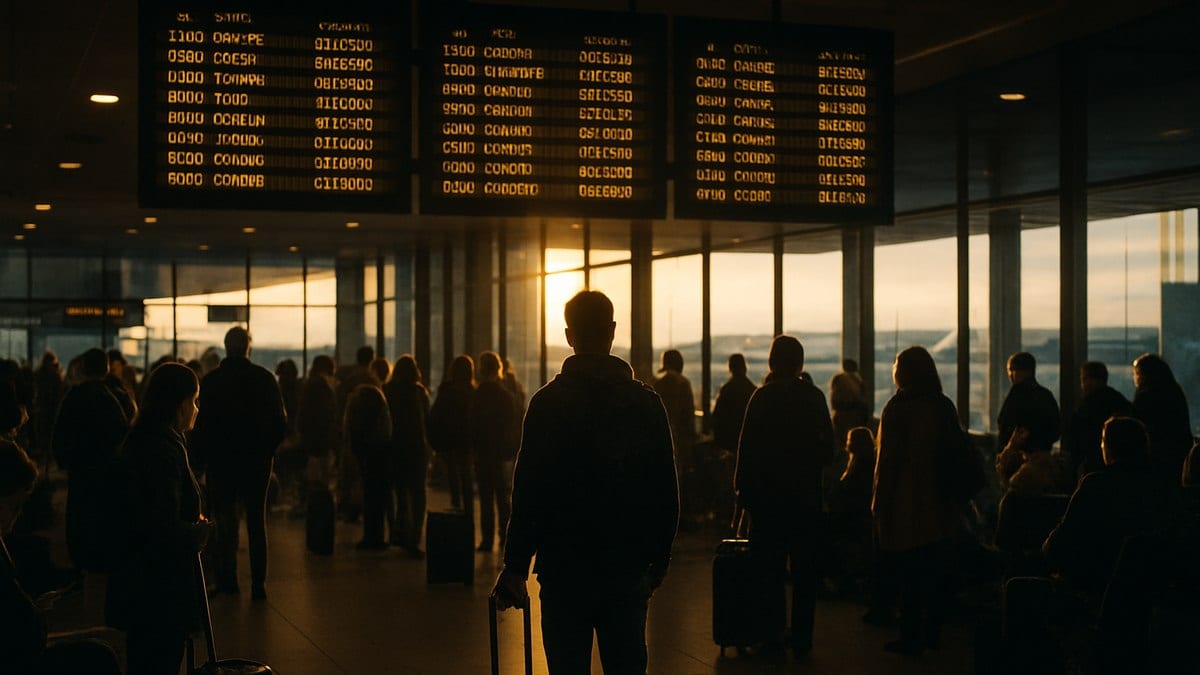
April Turbulence Turns Detroit Into a Pressure Point
Detroit Metro has emerged as a focal point in a broader pattern of April flight disruption, with multiple days of elevated delays and cancellations. Publicly available aviation data and recent travel coverage indicate that storms, reduced visibility and gusty winds in the Great Lakes region have repeatedly slowed operations, forcing airlines to reset schedules and reassign aircraft at short notice.
Reports from travel industry outlets in early April describe Detroit facing waves of disruption involving dozens of delayed departures and a cluster of cancellations on several days, particularly around April 5 and April 9. These operational challenges affected both domestic and international services, including routes linking Detroit with Atlanta, New York, Chicago and key transatlantic gateways.
The timing has amplified the impact. April is a transitional month in the Midwest, with lingering winter systems overlapping with early spring thunderstorms. When that variable weather intersects with already full flights and compressed turnaround times, even minor slowdowns at a hub such as Detroit can quickly cascade across an airline’s network.
Detroit’s role as a primary hub for Delta Air Lines and an important base for carriers such as Spirit means that local disruptions rarely stay local for long. Once inbound aircraft arrive late or crews reach duty-time limits, the knock-on effects can reach connecting banks at airports thousands of miles away.
Weather, Congestion and Crew Limits Combine
Recent aviation advisories and weather alerts show that thunderstorms and high winds have been a recurrent trigger for delays across the eastern United States in early April, with Detroit included among the airports experiencing the most consistent turbulence in operations. On some days, national tracking services counted several thousand disrupted flights across dozens of airports, with Detroit listed alongside other major hubs such as New York, Chicago, Denver and Los Angeles.
Weather is only part of the picture. Operational reports highlight how congestion, maintenance issues and staffing constraints have compounded the impact of storms. When aircraft are held on the ground due to lightning or visibility limits, crews may quickly approach regulatory duty-time thresholds, forcing airlines to cancel or further delay flights even after conditions improve.
That combination has been visible at Detroit, where coverage notes multiple carriers wrestling with delayed turnarounds and aircraft repositioning. Regional partners feeding Detroit with smaller jets have reported clusters of late arrivals, while widebody flights connecting to Europe and other long haul destinations have seen schedule adjustments as airlines work to protect their most in-demand services.
For airlines already operating at high load factors, the margin for absorbing these shocks is slim. With few spare aircraft and reserve crew available, a single weather system passing over southeastern Michigan can send ripples through evening departure banks and the following morning’s first wave of flights.
Ripple Effects Across Major US Hubs
The disruption centered at Detroit has been felt across a network of major US hubs that rely on timely connections from Michigan. Travel data and media coverage suggest that knock-on delays have extended to airports including Atlanta, New York area hubs, Chicago, Boston and key sun destinations in Florida.
As Detroit departures push back or cancel, passengers miss onward connections at downline hubs, leading to rolling rebookings and additional pressure on later flights. In Atlanta, for example, delayed Detroit arrivals can affect connection windows to cities throughout the Southeast and Latin America. At Chicago and New York, disrupted Detroit feed can complicate banks of departures to the Midwest, New England and international gateways.
Reports on recent FAA traffic management initiatives indicate that ground delay programs and occasional short-term ground stops at busy hubs have intersected with Detroit’s problems to magnify the impact. When multiple airports along a corridor are subject to flow restrictions at the same time, airlines have little flexibility to recover quickly, and aircraft may be held at origin or routed through less congested points.
The result has been a patchwork of delays felt by travelers who may not realize that a storm over Michigan or a congestion spike in Detroit earlier in the day is the underlying cause of their late departure in another state. With hub-and-spoke networks so tightly intertwined, Detroit’s rough April has quietly shaped travel experiences far beyond the Midwest.
Traveler Impact and Emerging Patterns
For passengers, the practical impact has ranged from modest schedule slips to overnight disruptions. Accounts compiled in recent travel coverage describe long lines at customer service desks in Detroit during the most intense days of disruption, as travelers sought rebooking options, hotel vouchers or alternative routings via other hubs.
Publicly available airport performance snapshots point to several recurring patterns. Late afternoon and evening departures from Detroit appear particularly vulnerable, as the cumulative effect of earlier delays, rolling thunderstorms and air traffic flow programs converges during peak travel hours. Short-haul flights to nearby cities are often among the first to be adjusted to free aircraft and crews for longer and more constrained routes.
There are also signs that airlines are increasingly leaning on digital tools to manage high-stress days. Carrier advisories have encouraged travelers through Detroit and other affected hubs to monitor mobile apps for automatic rebooking, gate changes and same-day standby options. This digital triage aims to reduce pressure on in-person counters and call centers during sudden disruption spikes.
Despite the difficulties, industry data suggests that many flights still operate, albeit late, rather than being canceled outright. In several recent events, airlines recorded far more delays than cancellations, indicating an emphasis on keeping aircraft moving whenever feasible, even at the cost of significant schedule slippage.
What April’s Disruptions Signal for Peak Summer
Analysts following the aviation sector note that Detroit’s April difficulties may preview how the US network will behave under summer peak demand. Publicly available commentary from travel and consumer groups stresses that airlines are running tight schedules with little slack in fleets or staffing, making hub operations vulnerable when weather or airspace constraints arise.
Recent reporting on broader April disruption trends indicates that storms, lingering winter patterns and air traffic control capacity have created recurring pockets of instability from the Midwest to the East Coast. Detroit’s experience, in which several separate days of heavy disruption have come in quick succession, highlights how quickly backlogs can build when operational recovery windows are short.
For travelers planning trips through Detroit and other major hubs later in 2026, the lessons are already emerging. Flexible itineraries, longer connection times and early departures are likely to remain prudent strategies, particularly during storm-prone periods. Monitoring airline alerts, airport status boards and national aviation advisories can also help passengers anticipate trouble before arriving at the terminal.
As April progresses, operational data from Detroit and the wider US network will provide a clearer picture of how resilient airline schedules are heading into the busy summer season. For now, Detroit’s role in the latest wave of disruption underscores how a single hub’s rough week can reverberate through airports nationwide.