

More news on this day
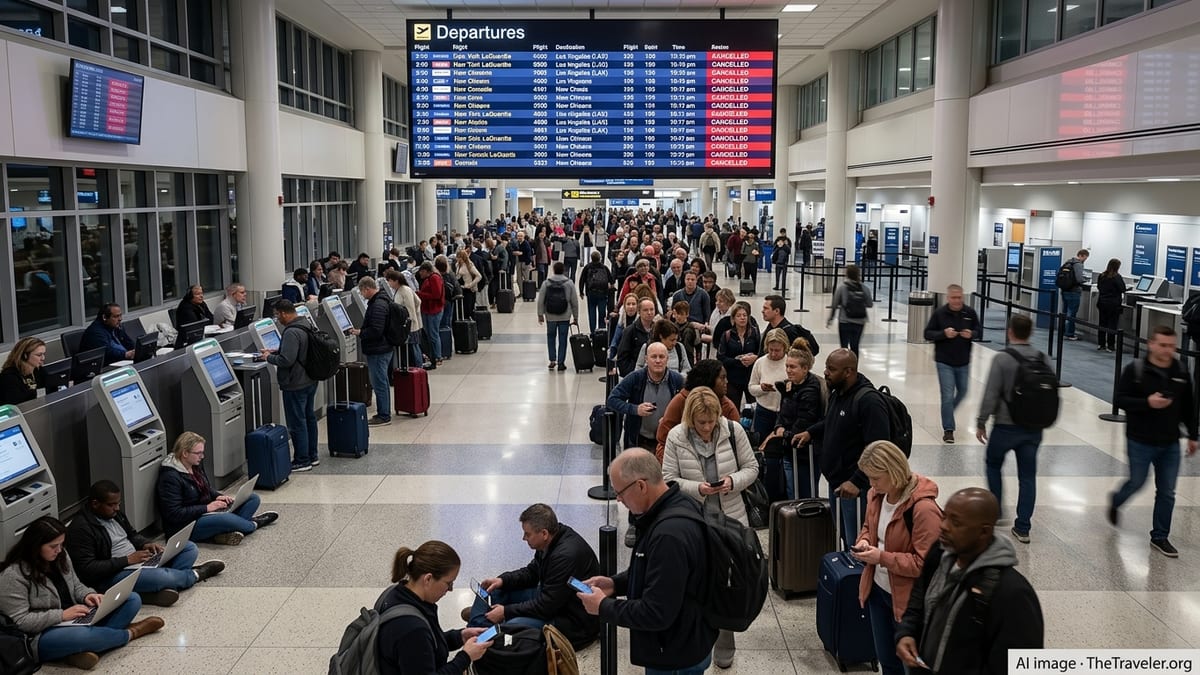
Hundreds of travelers connecting through Detroit Metropolitan Wayne County Airport are facing sudden cancellations on key routes to New York LaGuardia, Los Angeles and New Orleans, as a wave of operational disruptions turns tightly planned spring journeys into a scramble for scarce alternative seats.
Get the latest news straight to your inbox!
Key Detroit Routes Scrapped With Little Warning
Reports from airline tracking services and passenger accounts indicate that a concentrated cluster of flights from Detroit to LaGuardia, Los Angeles and New Orleans was abruptly pulled from schedules over the past 24 hours, affecting both nonstop and connecting itineraries. The cancellations appear heavily focused on peak business and leisure departures, magnifying the disruption for travelers using Detroit as a central hub.
Publicly available schedule data show that these city pairs are normally among Detroit’s most important domestic links, supporting a mix of corporate travel, convention traffic, and connecting passengers heading onward to international destinations. With those departures suddenly removed, travelers are being rerouted through already busy alternative hubs or told to wait days for the next available seats.
The timing of the cancellations has compounded the impact. Many passengers only learned of the changes after arriving at Detroit Metro or while already mid-journey from another city, reducing their ability to pivot to rail, car rentals or rival carriers. Social media posts describe long queues at rebooking desks and crowded gate areas as agents work through backlogs of disrupted itineraries.
Weather, Staffing Strains and Systemic Weakness
The latest Detroit disruptions are unfolding against a backdrop of a volatile winter travel season across the United States. Major storms, including a large late-winter system that recently battered parts of the Midwest and Northeast, have repeatedly forced airlines to thin schedules, reposition aircraft, and stretch crew resources close to regulatory limits. Each new disturbance adds stress to an aviation system still operating with limited slack.
In addition to weather, industry reports over recent months have highlighted persistent staffing challenges in key roles such as pilots, flight attendants, ground handlers and security screeners. Even small gaps in those workforces can ripple through hub operations like Detroit, especially when multiple airlines are competing for the same specialized personnel. When a single crew is out of position or a security checkpoint is short-staffed, airlines may choose to proactively cancel, focusing remaining resources on higher-density routes.
Detroit’s role as a major connecting point between the industrial Midwest, the East Coast and the Sun Belt means that it is acutely exposed to these systemic pressures. When storms or staffing shortfalls hit any part of the network, Detroit can quickly become a chokepoint, with flights to coastal airports such as LaGuardia, Los Angeles and New Orleans among the first to be thinned or scrubbed.
Passengers Stranded From New York to the West Coast
The sudden loss of Detroit departures has left travelers bound for LaGuardia, Los Angeles and New Orleans scattered across terminals and airport hotels in multiple cities. Accounts circulating on travel forums describe travelers from New York who were routed through Detroit only to find their connecting flights erased, as well as Midwestern passengers who watched their nonstop Detroit to Los Angeles or Detroit to New Orleans services vanish overnight.
Many affected travelers report being offered circuitous rebooking options, involving multiple connections and overnight layovers, or being asked to wait one or two days for the next open seat on their original route. For those traveling for weddings, cruises, conferences or tight work schedules, even a rebooking can render the trip effectively useless, turning vacations and business plans into costly losses.
Major destination cities are also feeling the secondary impact. With flights from Detroit curtailed, inbound capacity into New York, southern California and the Gulf Coast has shrunk slightly at precisely the time when spring travel demand is building. This can lead to higher last-minute fares on remaining flights and make it harder for stranded travelers to simply switch carriers, since competitors may already be close to booked out.
How Airlines Are Responding at Detroit Metro
Publicly available airline statements in recent months have emphasized efforts to improve reliability, particularly at large hubs such as Detroit. Carriers have described strategies such as trimming marginal routes, adding extra reserve crews and repositioning aircraft earlier ahead of forecast storms. However, the latest wave of cancellations out of Detroit underscores how fragile these plans can be when several stressors align.
Operational data indicate that airlines are prioritizing their densest and most profitable trunk routes while cutting smaller or less time-sensitive frequencies, which may explain why certain Detroit departures to New Orleans or off-peak flights to Los Angeles have been disproportionately affected. LaGuardia, which already operates within tight slot and curfew constraints, presents additional scheduling complexity, leaving little room to absorb irregular operations once a delay cycle begins.
Airlines are encouraging passengers to use mobile apps and websites to self-service rebookings, but travelers report that available alternatives often involve lengthy journeys or require departure from a different airport entirely. In some cases, customer-service agents have been seen advising passengers to consider driving to an alternate hub such as Chicago or Cleveland to access more stable schedules.
What Travelers Can Do If Their Plans Collapse
Travel experts generally recommend that passengers caught in a hub meltdown move quickly to secure any acceptable alternative, even if it is not ideal, before limited capacity disappears. In the current Detroit situation, that may mean accepting an early-morning departure, a different New York-area airport, or an indirect path to Los Angeles or New Orleans if it avoids being stranded for another day.
Passengers are also encouraged to document all expenses and retain records of cancellations and delays. Depending on the airline’s policies and the cause of disruption, travelers may qualify for refunds on unused tickets, meal vouchers, or hotel accommodations. Those who booked through online travel agencies or corporate travel departments may have additional support channels for rebooking and reimbursement.
The Detroit cancellations serve as an early-season warning that the wider U.S. aviation network remains vulnerable to sharp, localized breakdowns. For upcoming trips, especially those connecting through busy hubs or heading to constrained airports like LaGuardia, travelers may wish to build longer connection times, favor earlier departures, and keep contingency plans in mind in case their carefully layered itineraries unravel with little notice.